Art Deco is among the easiest styles to recognise and among the most frequently misapplied, because the word gets attached to almost anything from the interwar decades. The genuine article has a consistent visual logic: geometry rather than organic form, symmetry rather than flow, and an open enthusiasm for materials that were new at the time.
What defines the style?
Straight lines, angles and repetition. Where the preceding movement drew its forms from plant stems and flowing hair, Art Deco takes them from machinery, architecture and speed.
Look for strong symmetry, stepped profiles resembling a ziggurat, and bold simple shapes with no apologetic transitions. The overall effect is confident and streamlined rather than delicate, and the ornament is integrated into the form rather than applied on top of it.
Which motifs recur?
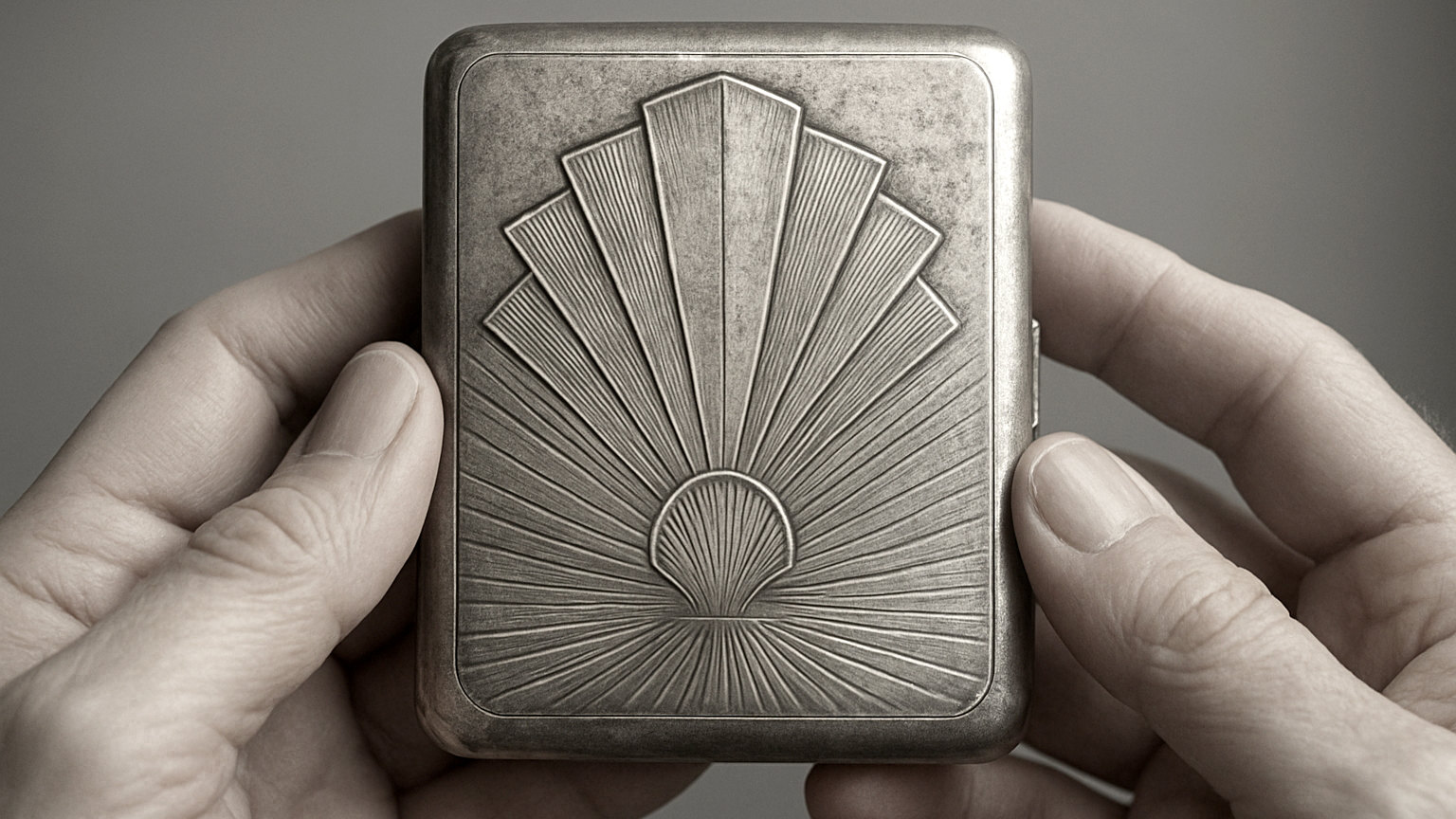
The sunburst above all, radiating lines fanning out from a corner or a centre, which appears on everything from mirrors to fire screens to clock cases. Chevrons and zigzags are equally characteristic.
Stylised fountains, lightning bolts, stepped pyramids and repeated geometric borders all belong here. Where figures appear they are stylised and elongated rather than naturalistic, and animals are simplified into strong outlines. Any motif that could be drawn with a ruler and a compass fits the vocabulary.
What materials should you look for?
New ones, used deliberately. Chrome plated steel, bakelite and other early plastics, mirrored glass, and chrome combined with exotic veneers all appear in the same object without embarrassment.
Expensive veneers were used in bold geometric patterns, book matched so the figure of the timber becomes a symmetrical design in its own right. Look for macassar ebony, burr walnut and other strongly figured woods laid in blocks and bands rather than as a continuous surface.
What colours are typical?
Strong and contrasting. Black with cream, deep greens, oranges and jade, silver and chrome against dark timber. The palette is confident rather than subtle.
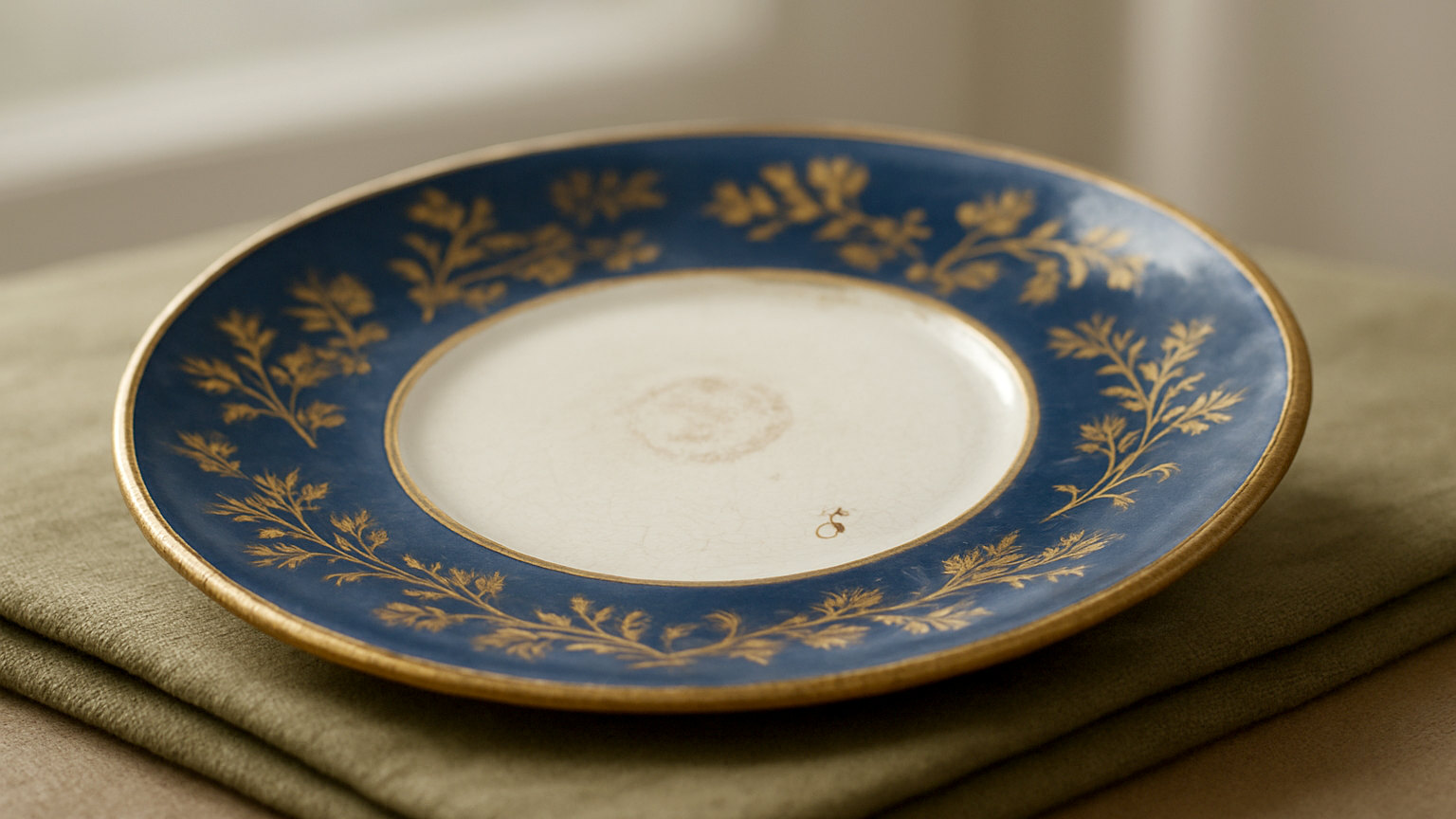
In ceramics this shows as bold blocks of colour with hard edges and geometric banding, quite unlike the soft naturalistic painting of earlier periods. In glass, look for frosted and moulded surfaces with geometric relief rather than the iridescent finishes of the preceding movement.
How does furniture differ from what came before?
It is lower, heavier and more architectural. Cabinets and sideboards have strong horizontal emphasis, often with stepped or curved ends, and legs are frequently absent altogether in favour of a solid plinth.
Handles are integral, chrome or bakelite, and set flush rather than projecting. Look at the silhouette from across a room: if it reads as a solid block with strong horizontals and no visible framing, that is the tell. Surfaces are polished to a high gloss rather than waxed.
How do you separate genuine from revival?
By construction and materials, as always. The style has been revived repeatedly and reproduction pieces are made continuously, some of them convincing at a glance.
Check the veneer thickness, since period veneers are thicker than modern ones and later pieces frequently use a thin sheet over manufactured board rather than solid timber or blockboard. Look at the chrome, which on period pieces was plated over brass or steel and shows characteristic wear and pitting. Examine drawer construction and fixings exactly as you would on any furniture.
Is it worth collecting now?
Very much so, and it has been rising while more traditional categories fell. It suits modern interiors, the best designers are followed internationally, and pieces are generally smaller than the Victorian furniture they replaced.
Prices for named designers and documented pieces are substantial. Ordinary commercial furniture in the style remains affordable and is frequently very well made, so it is a sensible entry point for anyone starting out. Check the condition of veneers and chrome with particular care before buying, since both are expensive to restore properly and lifting veneer on a curved surface is among the more difficult repairs there is.