A great many pictures sold as paintings are reproductions, some of them convincingly framed and artificially textured. The tests that separate them are physical rather than aesthetic, they take under a minute, and most of them can be done without removing anything from its frame.
What does raking light reveal?
Texture, and whether it corresponds to the image. Hold the picture so light skims across the surface at a shallow angle rather than falling straight onto it, then look across the surface from the side.
An oil painting has genuine relief. Brushstrokes stand proud, paint is thicker in highlights and thinner in shadows, and the texture follows the forms in the picture. A flat surface under raking light indicates a print, whatever the image looks like from the front.
What does magnification show?
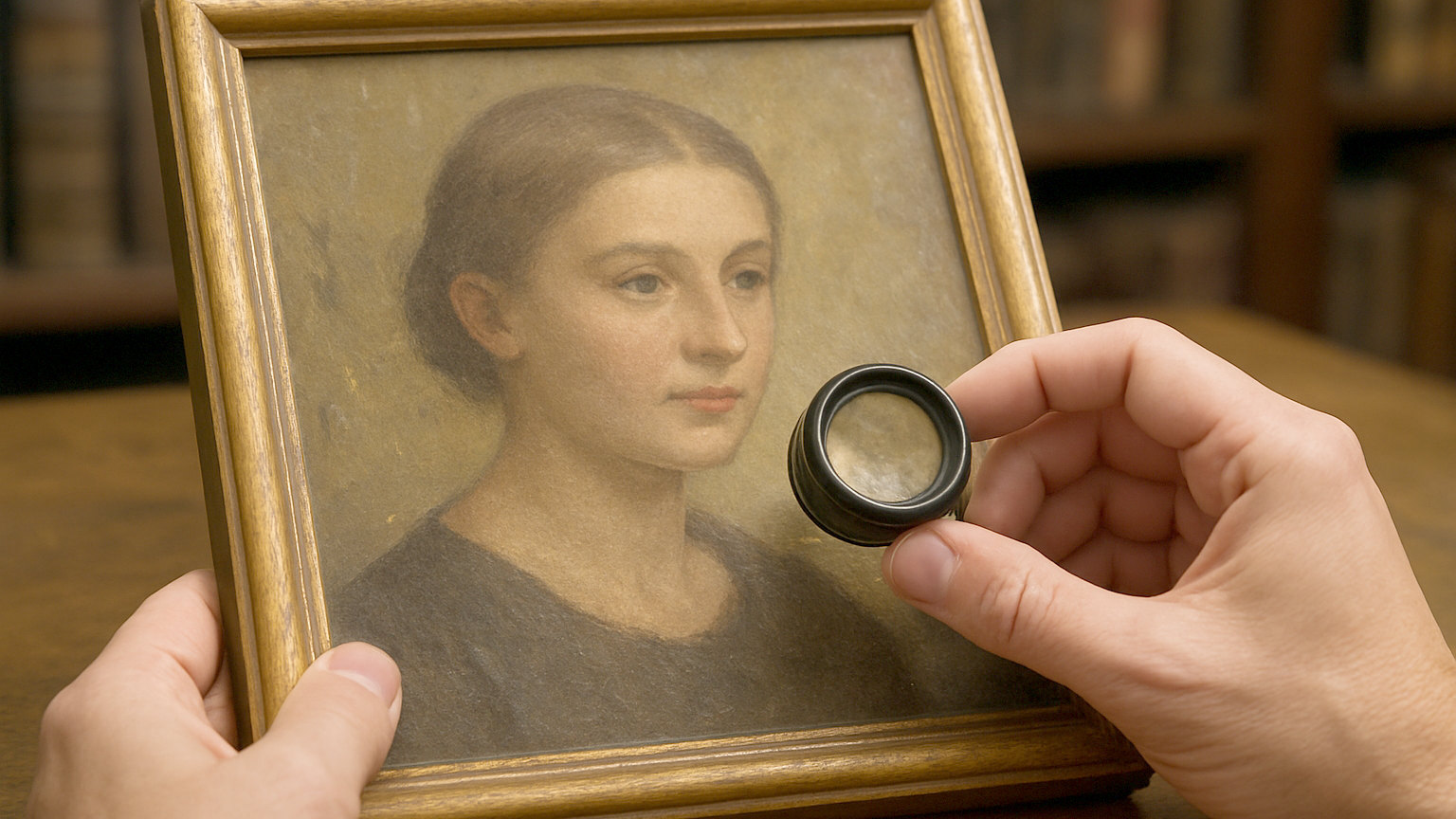
The most conclusive evidence. Look at a mid tone area under a loupe, somewhere the image is neither pure light nor pure dark.
A painting shows continuous colour, with pigment blending and brush marks visible. A printed reproduction shows a regular pattern of dots or a mechanical screen, because the image was broken into a grid to be printed. Look also at a solid dark area, where a print frequently reveals the dot structure most clearly.
What about artificial texture?
It is common on better quality reproductions, applied as a clear gel or embossed into the surface to imitate brushwork. The test is whether the texture agrees with the image.
On a genuine painting, a raised ridge corresponds to a stroke the artist made, so texture and image align exactly. On a textured print the pattern runs across the surface regardless of what is depicted, so you will find brush texture crossing a smooth sky or continuing over an edge where no stroke could have gone.
What do the edges tell you?
A great deal, and they are worth examining wherever the frame allows. On a painting on canvas, paint frequently continues around the edge where the canvas wraps the stretcher, or stops with an irregular hand made boundary.
A reproduction printed on canvas usually has a mechanically clean edge, or the image simply stops at a straight line. Look also for the weave: printed canvas has a uniform machine weave, while older artists canvas is frequently coarser and more variable.
What should you look at on the back?
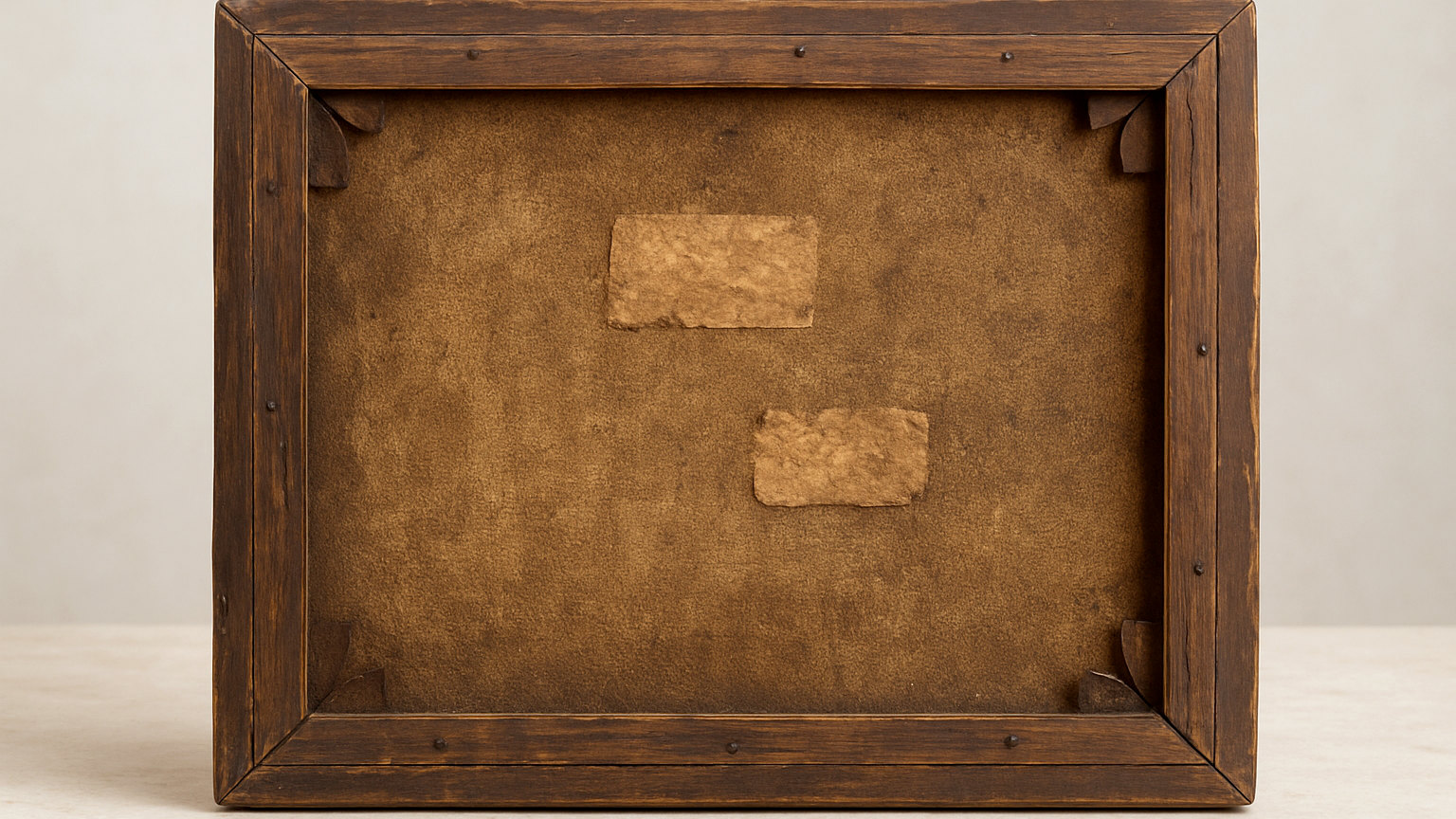
Everything. The stretcher construction, the canvas colour and its age, tack holes, labels, stamps and inscriptions. The reverse of a genuine old painting accumulates dust unevenly, heavier along the top edge where it settles.
A reproduction usually has a clean modern back, frequently sealed with board or paper so nothing can be seen at all. A picture whose back is entirely covered and which the seller is reluctant to open is worth being cautious about.
Are watercolours different?
Yes, and harder, because a watercolour has almost no texture to begin with. Rely on magnification instead, looking for the dot pattern that betrays a print.
Look at how pigment sits in the paper. A genuine watercolour shows colour absorbed into the fibres with soft edges where washes met, and frequently slight granulation. Hold the sheet to the light where possible, since paper texture and any watermark are informative and prints are usually on smoother modern stock.
Does a print have any value?
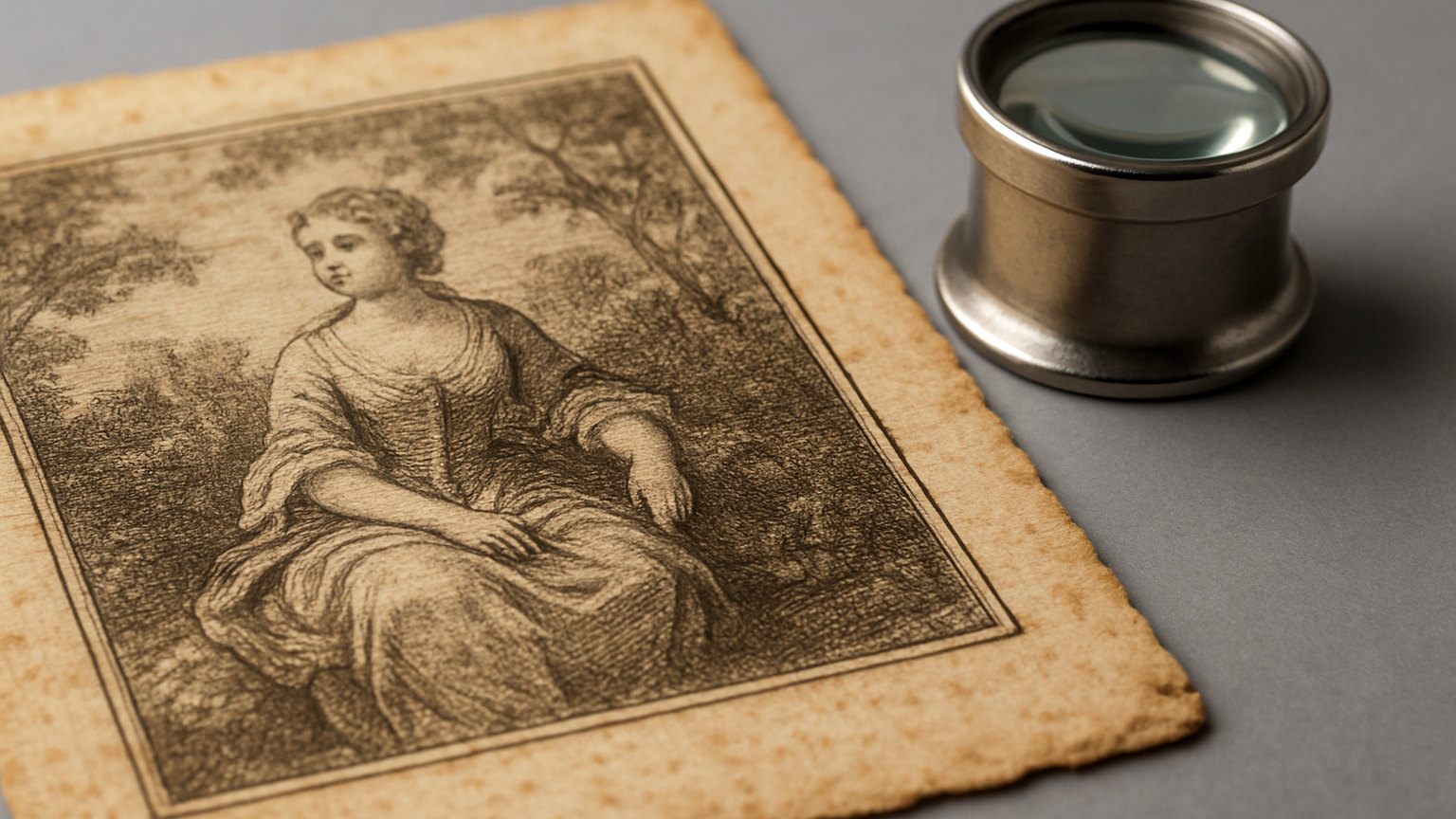
Certainly, and original prints are a serious collecting field in their own right. An original etching, engraving or lithograph made by the artist is quite different from a photographic reproduction of a painting.
Original prints show a plate mark on engravings, ink standing very slightly proud of the paper, and are frequently signed and numbered in pencil in the margin below the image. The distinction that matters commercially is between an original print and a photomechanical copy of a painting, not between painting and print, and a fine original etching may be worth considerably more than a mediocre oil.