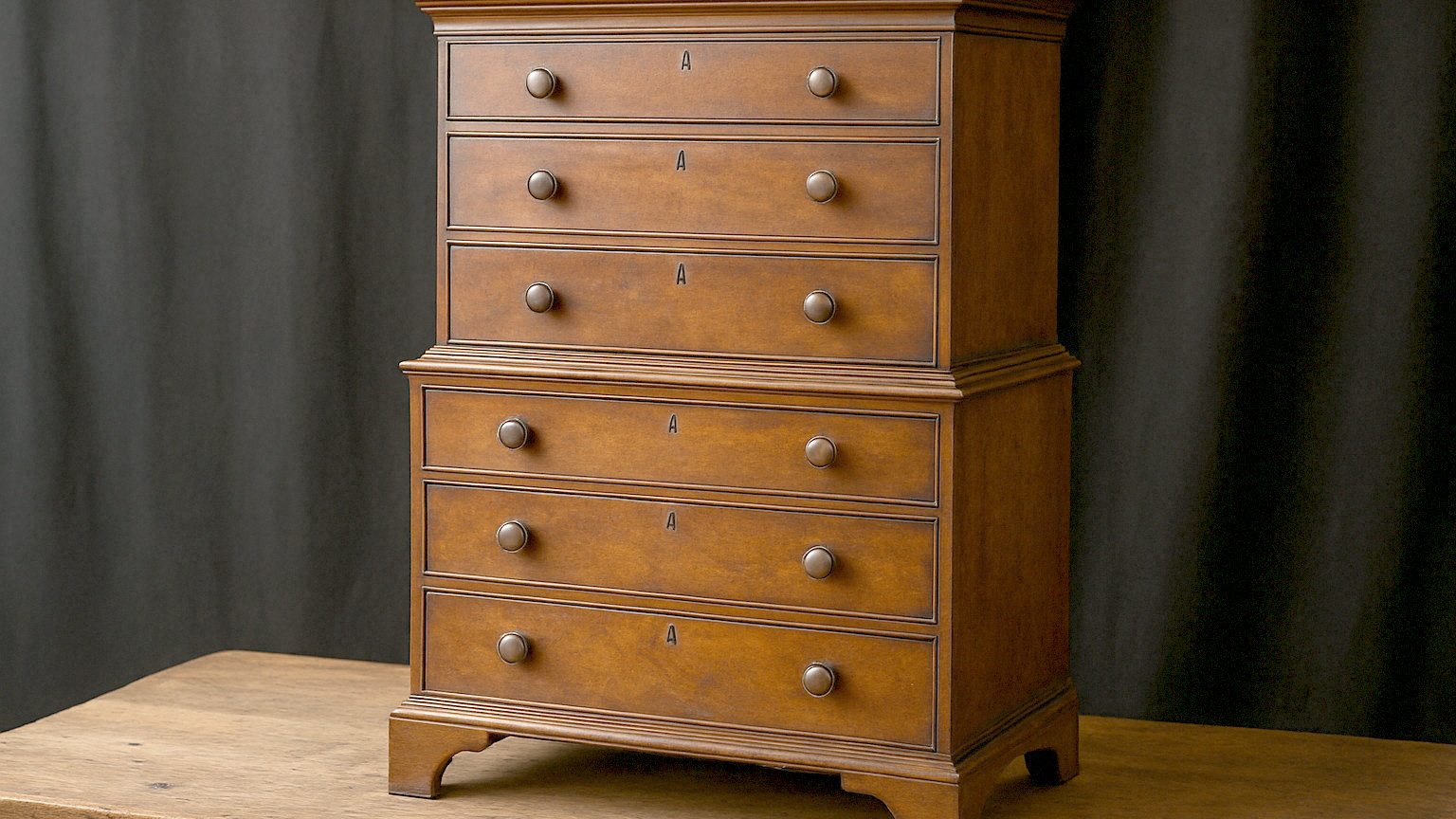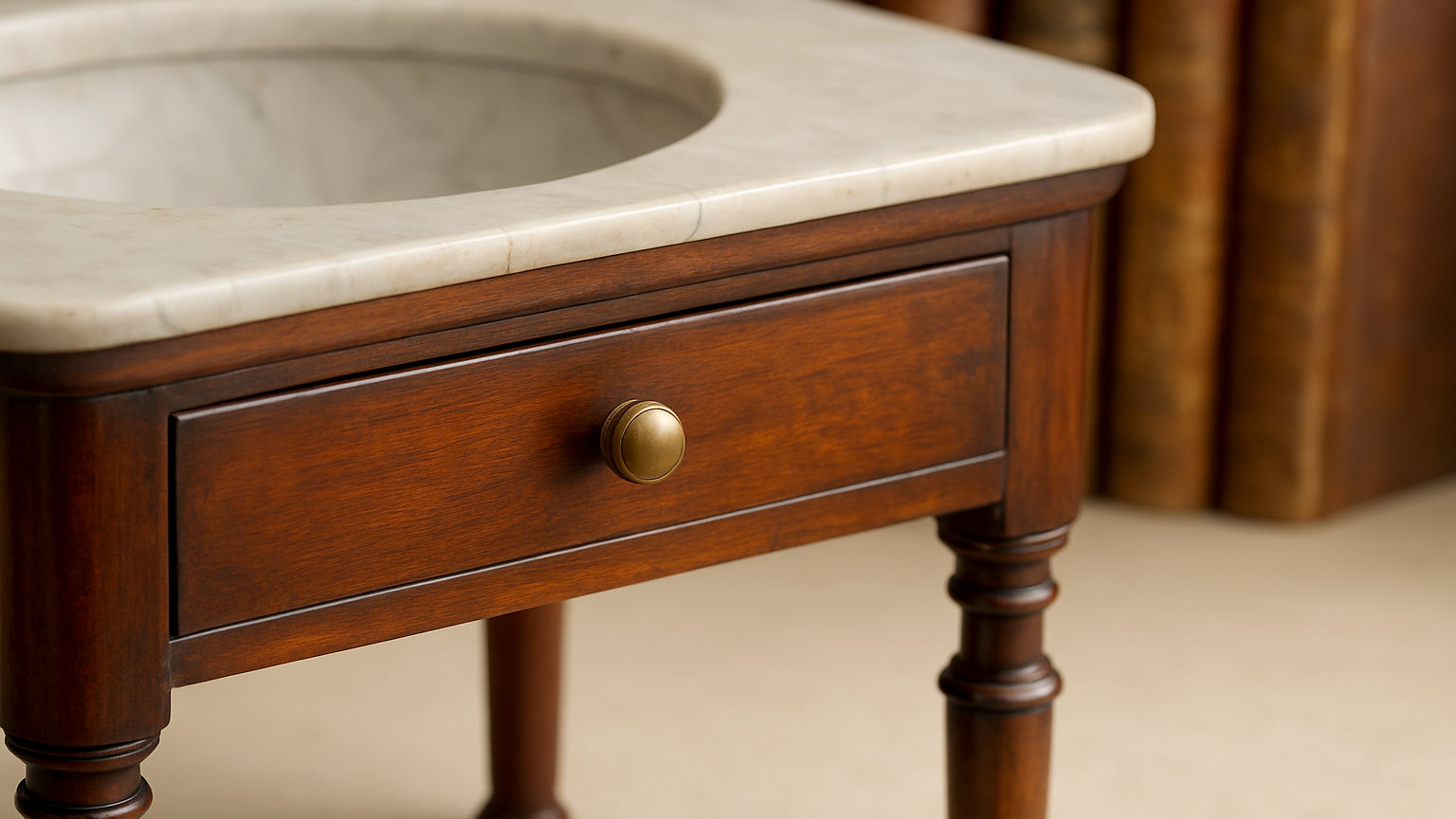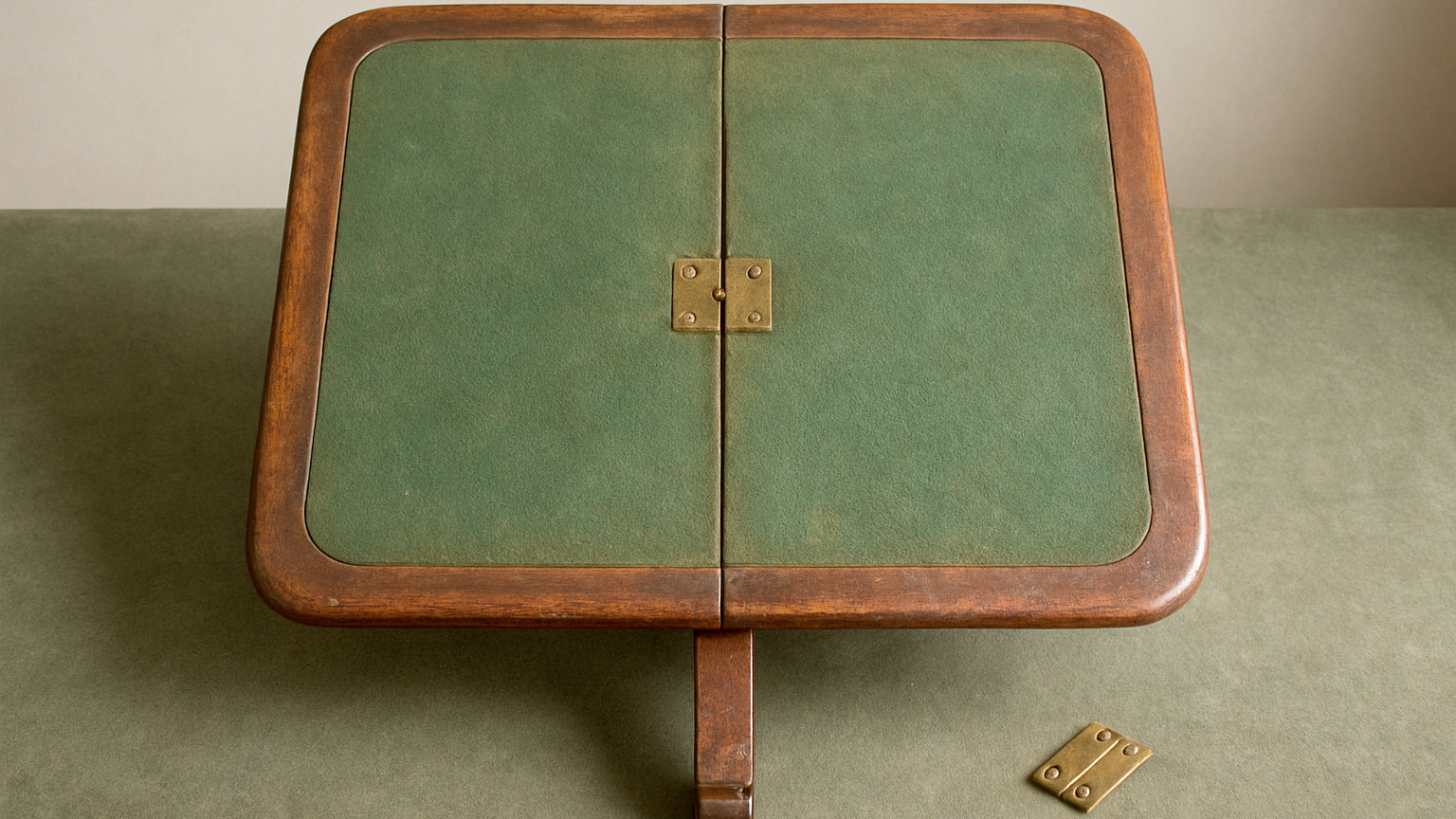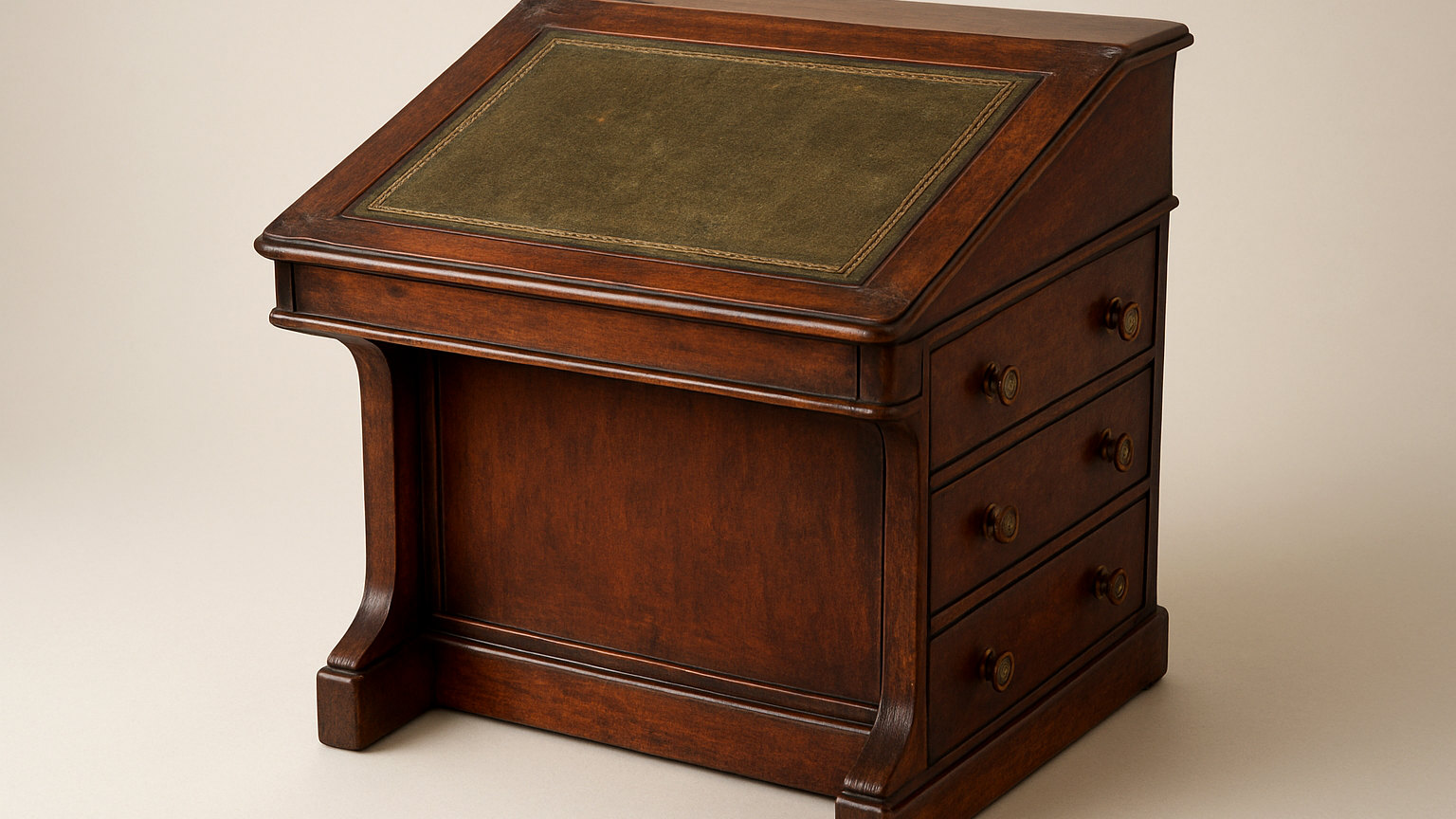
The davenport is a small writing desk with a sloping lid over a bank of drawers running down one side, and dummy drawer fronts down the other. It was designed for a lady drawing room rather than a study, which explains the compact size and the decorative treatment, and it is among the more useful antique desks for a modern house.
What are the parts?
A sloping writing surface hinged at the back, a fitted interior beneath it, a bank of real drawers opening from one side, and matching dummy fronts on the other side for symmetry.
Many have small stationery compartments in a raised section at the back, sometimes with a lid of their own. The top section frequently slides forward on runners to give knee room, which is one of the features to test before buying.
How does the sliding top work?
On better examples the whole upper section pulls forward, supported on runners or on pull out lopers, so the writer has space for their knees beneath.
Operate it several times and feel whether it runs smoothly or binds. Look at the runners for wear and repair. A davenport with a seized or repaired slide is common, and correcting it is straightforward joinery, but it should be reflected in the price.
What is inside?
Under the sloping lid, a fitted interior of small drawers, pigeonholes and pen compartments, frequently in a contrasting timber and sometimes with a leather or velvet lining.
Count the small drawers and check whether the arrangement is symmetrical, since missing fittings are common. Look for empty runners, for slots with nothing in them, and for pale unweathered timber where a divider once stood.
Are there secret compartments?
Frequently, and they were a normal feature rather than a novelty. Look behind the interior drawers, beneath the pen tray, and in the rear stationery section.
Some davenports have a spring released compartment operated by a concealed catch. Be gentle rather than forceful, since these mechanisms are lightly made. Their presence adds interest though not necessarily great value on its own.
What about the drawers?
Check the real ones against the dummies. The working side should have graduated drawers running the full depth, with the dummy fronts on the opposite side matching them exactly in appearance.
Pull each drawer and examine the dovetails, linings and runners. Look for the small brass or timber stops that prevent drawers being pushed too far, and check the locks and escutcheons for wear consistent with the piece.
How do you assess the leather?
By whether it is original and what state it is in. Original leather on a writing surface is usually a century old and dry, with the tooled gilt border worn away at the front edge.
Replacement is normal, acceptable and not expensive, and it does not materially affect value provided the work is sympathetic. What matters is that the recess beneath is sound, so lift a corner if you can and check the timber underneath.
What alterations are common?
Replaced tops, replaced leather, converted interiors, and reduced height. Look underneath and at the back for fresh timber, filled holes and modern fixings.
Check the proportions look right for the form, since a davenport that seems low may have lost height at the feet. Compare the timber and colour of the sloping lid against the carcass, since replaced lids occur where the original warped or split.
What condition problems matter?
Splits in the sloping lid, which is a wide panel that shrinks, and damage to the hinges where the lid is opened and closed constantly.
Check the feet, which are frequently turned or carved and take knocks, and look for lifting veneer on veneered examples. Test that the lid closes flush and that the lock engages, since a warped lid is difficult to correct.
Are they worth buying?
Genuinely useful and well priced. A davenport takes very little floor space, provides real storage, and works as a desk in a room where a full sized one would not fit.
Buy on the soundness of the slide and the completeness of the interior, since those are the features that make the form worth having. Check the drawers all run properly before agreeing a price, and expect to replace the leather at some point.