Before coinage could be trusted by appearance, people weighed it. Gold coins were clipped, shaved and worn, and a coin light of its proper weight was worth less than its face value. Small folding balances with sets of weights existed to check, and they survive in reasonable numbers as neat, self contained objects.
What is a coin balance?
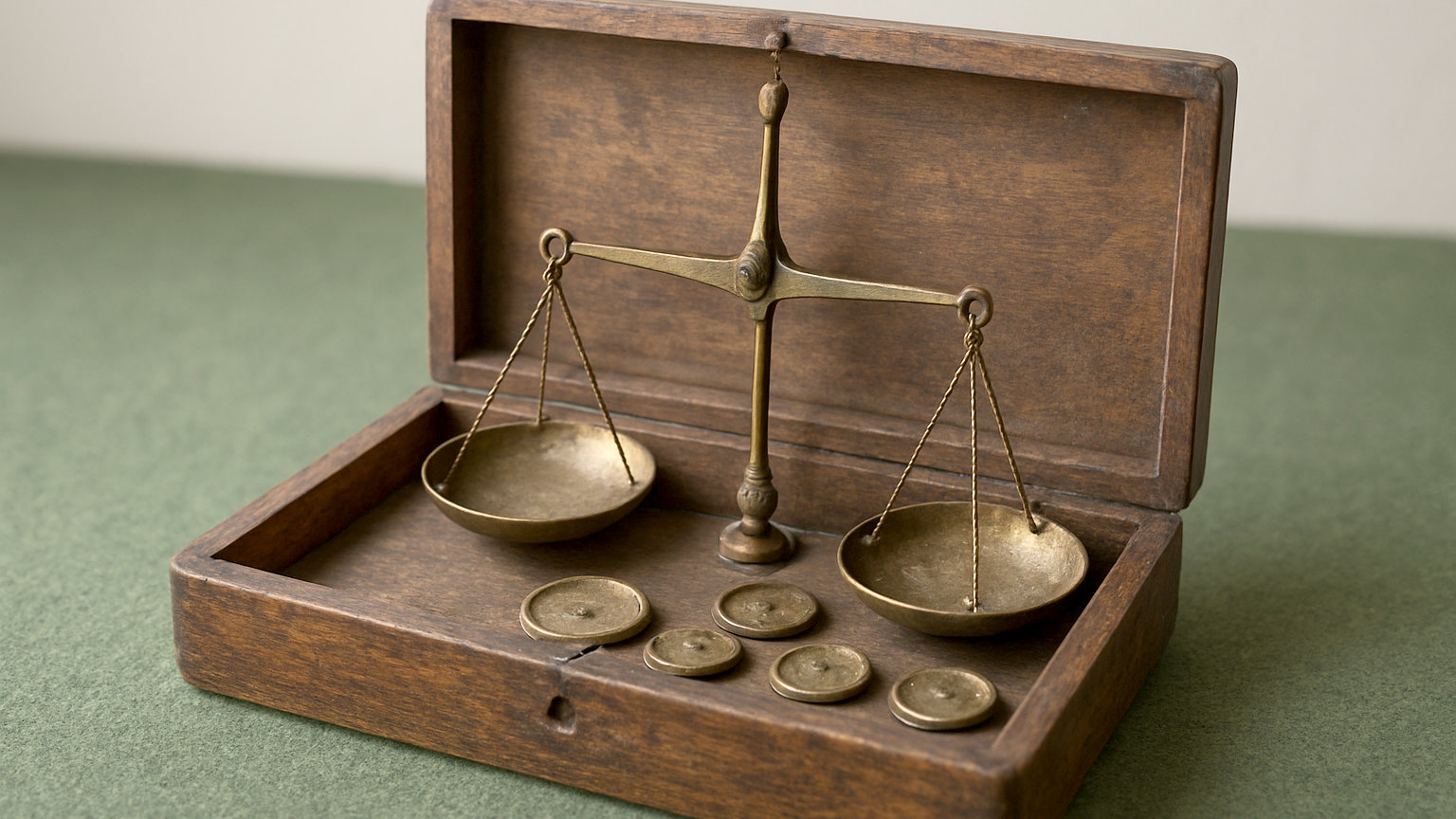
A small beam scale, frequently folding, with a pan at each end and a set of weights corresponding to the coins in circulation. The coin goes in one pan and its matching weight in the other.
If the beam balances, the coin is of full weight. If it rises, the coin is light and has been clipped or worn. The whole apparatus fits in a pocket sized case, which is what makes these such appealing objects now.
What should a complete set contain?
The balance itself, the weights, and the fitted case that holds them. The case has shaped recesses for each component, which is how you check nothing is missing.
Count the recesses and count the weights. An empty recess means a missing weight, and matching a replacement is difficult since weights were made for specific coins in specific denominations. A complete boxed set is worth considerably more than an incomplete one.
How do you identify the weights?
By what is stamped on them. Coin weights are usually marked with the name or the value of the coin they correspond to, and frequently with the weight itself.
They may be square, circular or shaped, in brass or occasionally other metals. Read every one under raking light, since the stamping is shallow and wears. Some carry a maker name or a verification mark, both of which help with dating.
How do you date a set?
By the coins the weights correspond to, which is the most useful evidence. A set including weights for coins withdrawn at a known date cannot postdate that withdrawal by much.
The case construction, the printed trade label frequently pasted inside the lid, and the maker name on the beam all help. Trade labels give a name and address which can be traced through directories, and these labels survive surprisingly often.
What is the trade label?
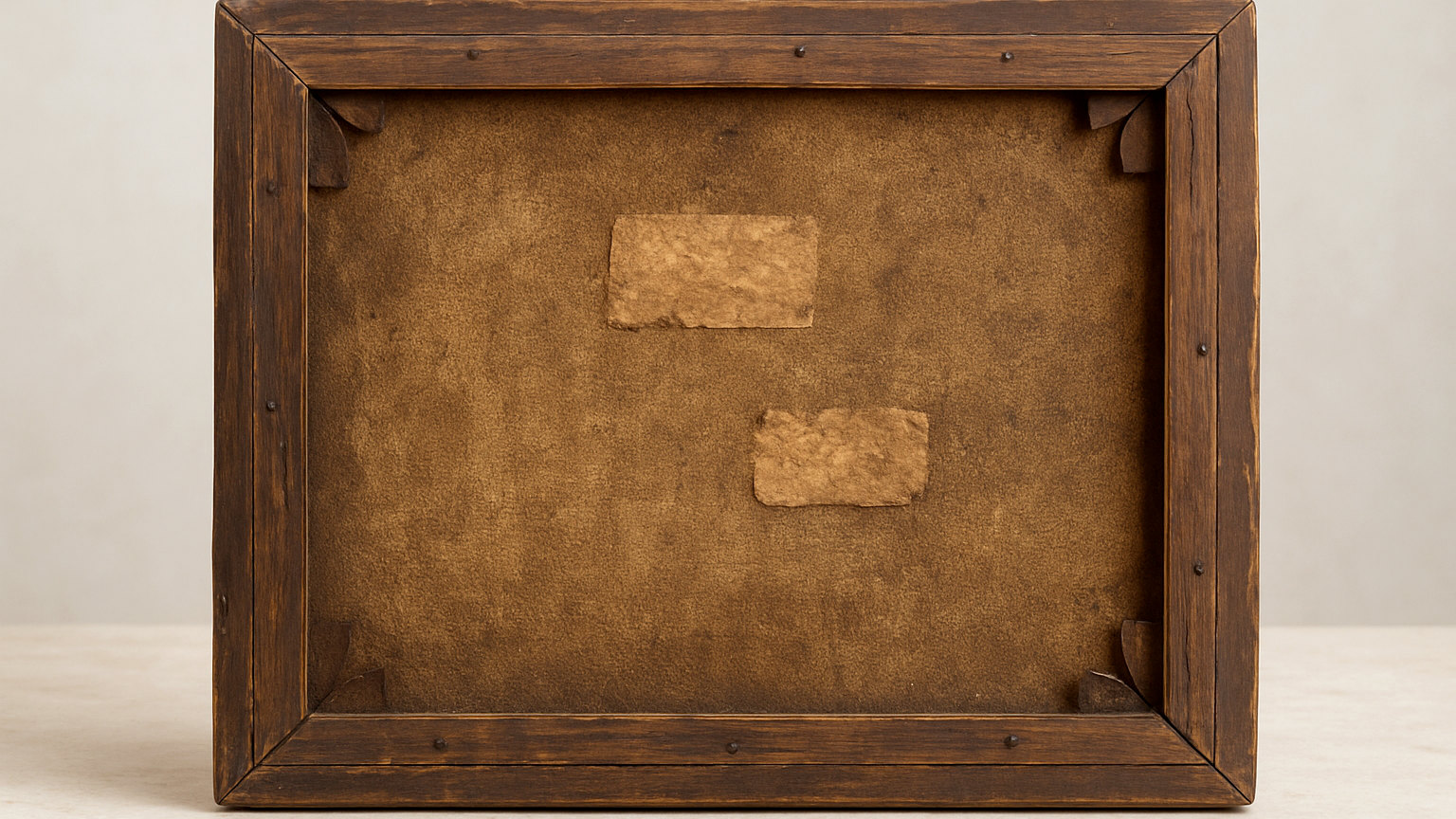
A printed paper label inside the case lid, giving the maker name, address and frequently a list of what the set weighs. It is the single most informative component.
Never clean, wet or peel a label however tattered. Photograph it in place. A set retaining a legible label is worth noticeably more, since it converts an anonymous object into one that can be traced to a business and a period.
What condition issues matter?
A bent or damaged beam, missing pans, missing weights and a damaged case. The beam is the delicate part and it bends easily, which affects whether the balance still works.
Check the beam is straight by sighting along it, and that both pans hang freely from their cords or chains. Cords perish and are frequently replaced, which is acceptable. Look at the case hinges and the covering, which is usually shagreen, leather or fishskin.
Are the weights themselves collected?
Yes, in their own right, particularly early ones and those for scarce coins. Loose weights turn up separately from their sets and are collected by denomination.
Do not clean them, since patina is expected and cleaning brass removes both colour and stamped detail. Weigh them if you are curious, since a weight noticeably light has itself worn or been tampered with, which is a small irony worth noting.
What related objects turn up?
Apothecary scales and weights, jeweller balances, and postal scales, all built on the same principle and frequently confused with coin balances.
The distinction is in the weights: coin weights name coins, apothecary weights name apothecary units, and postal scales are calibrated for letter rates. Read the markings rather than assuming from the appearance of the case.
Are they worth buying?
Complete boxed sets with a legible label are genuinely desirable and reasonably priced for what they are. Incomplete sets and loose balances are considerably cheaper.
Buy on completeness and on the label above all, since those cannot be replaced. Check the beam and the case before agreeing anything, and treat any missing weight as permanent rather than something you will find later.