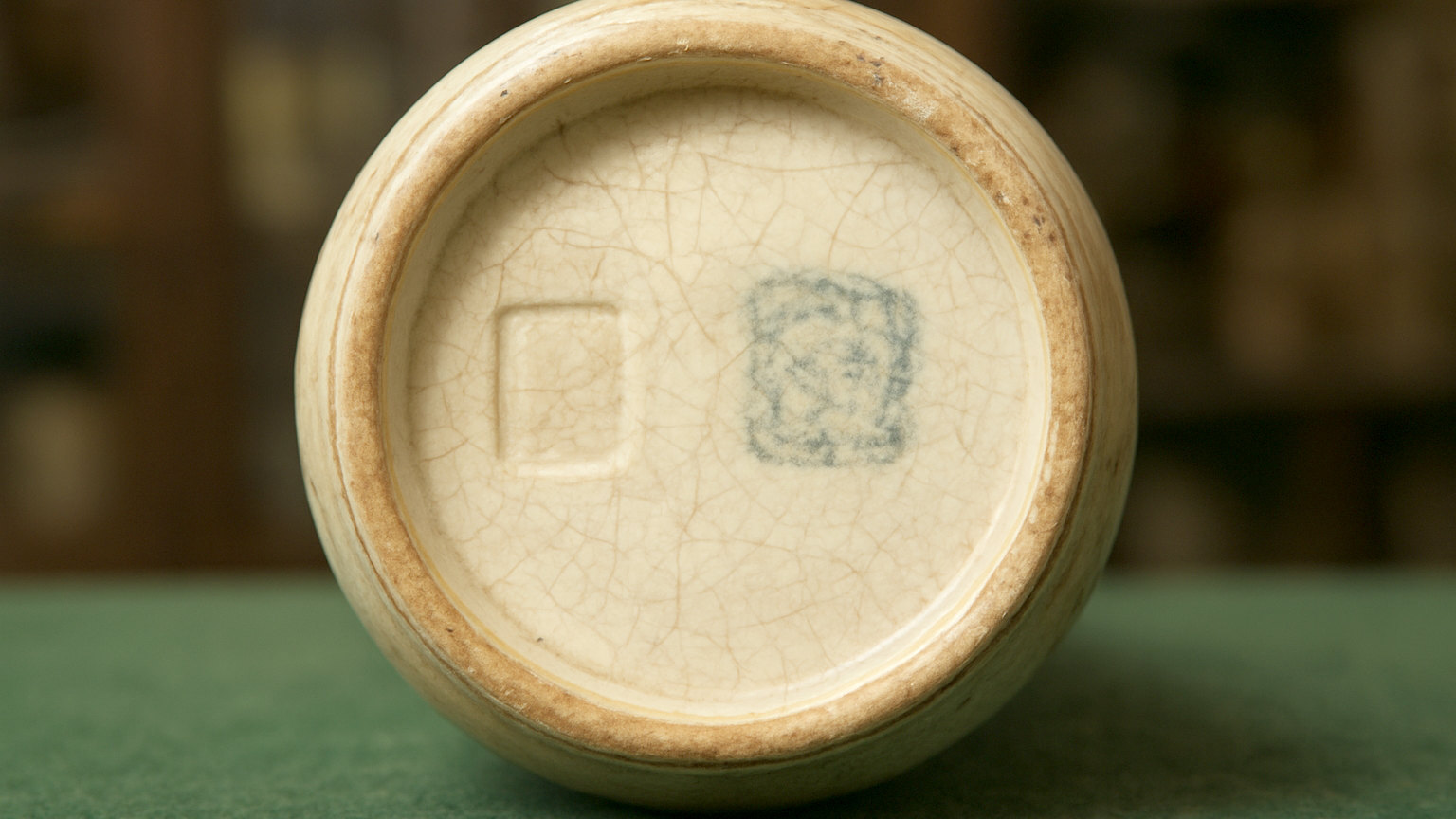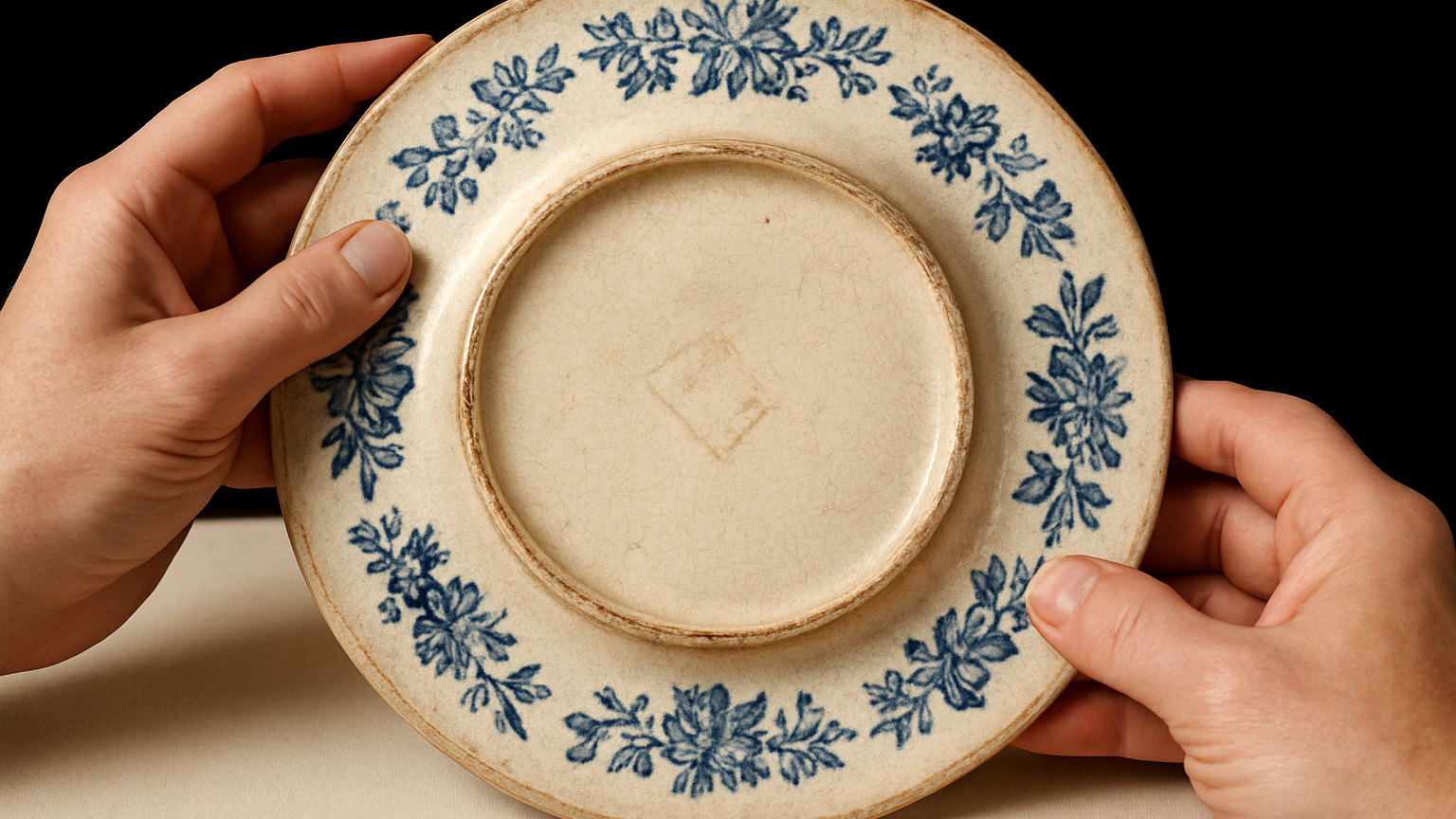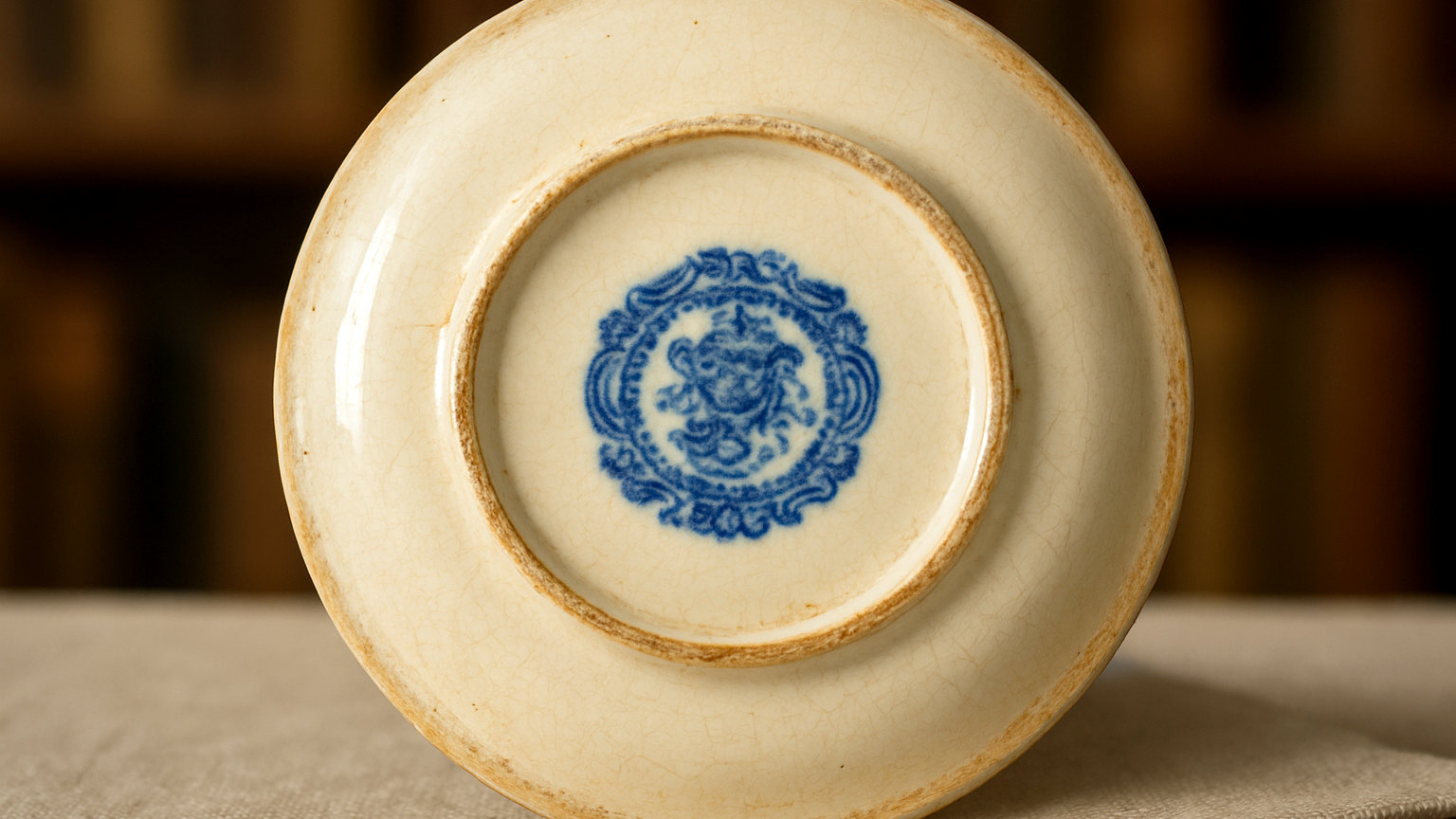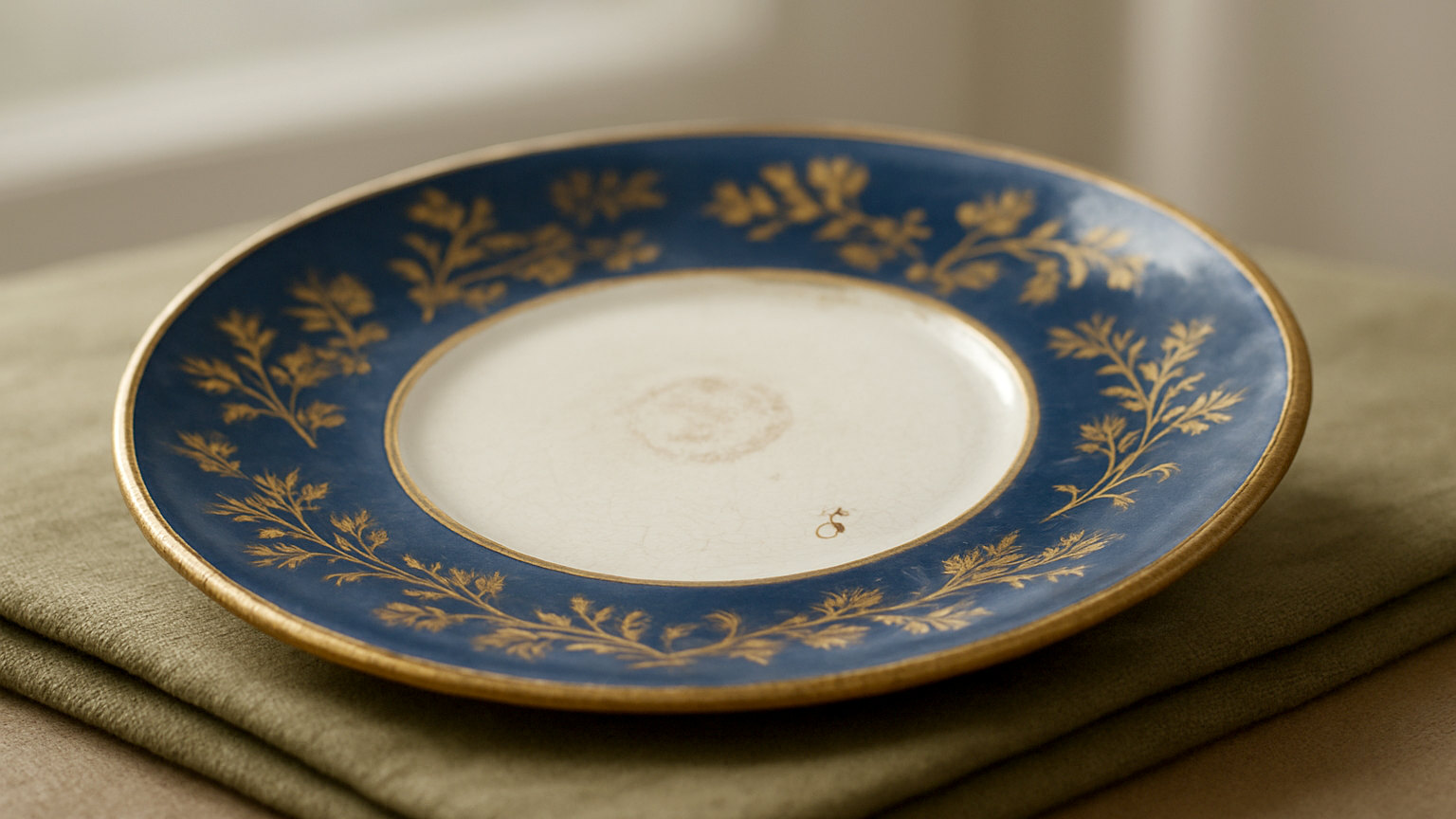
Alongside the factory mark on many decorated ceramics sit small painted numerals, letters or symbols that look like blemishes and are routinely ignored. They record who applied the decoration, and because individual decorators worked known spans of years at known factories, they occasionally date a piece more precisely than the backstamp does.
Why were decorators marked?
Because they were paid by the piece. A decorator working piecework needed their output identified so it could be counted and paid, and so that faults could be traced back to the responsible hand.
Gilders were marked separately for the same reason, since gilding was applied after painting and by different workers. The result is that a well decorated piece may carry two or three small marks alongside the factory device, each recording a different pair of hands.
What do they look like?
Very small, usually a single numeral or a pair of initials, painted in enamel or gold rather than printed. They sit apart from the backstamp, frequently tucked near the footrim or inside the foot.
Gilders marks are typically applied in gold, matching the gilding they identify. Painters marks are usually in a colour drawn from the palette used on the piece. Both are easy to mistake for a spot of stray colour until you know what to look for.
How do they help with dating?
For the major factories, individual decorators are documented, with records showing which numbers or initials belonged to whom and which years they worked.
Where such records survive, a decorator mark narrows a piece to that person working life, which may be a much tighter range than the backstamp version gives. Combining a factory mark, a pattern number and a decorator mark frequently produces a date within a few years.
What is a tally mark?
A simple stroke, cross or dot used for counting rather than identification, applied so that batches could be tallied through the works. These carry no information about who did the work.
They are frequently confused with decorator marks. The distinction is usually that tally marks are crude, repetitive and appear in groups, while decorator marks are consistent single devices applied in the same position on every piece by that hand.
Where should you look?
Around the footrim and inside the foot, and on flatware near the edge of the reverse. Use magnification and good light, and turn the piece slowly.
Photograph the whole base at high resolution rather than relying on the naked eye, since these marks are frequently only a millimetre or two across. Note the position as well as the mark, since consistent positioning is itself evidence that a mark is systematic rather than accidental.
Do outside decorators mark differently?
Yes, and it matters. Independent decorating studios bought factory blanks and painted them, and they sometimes added their own mark alongside the factory device.
Where you find a decorating studio mark on a piece carrying a factory backstamp, the decoration was applied outside the factory. That is entirely legitimate and some outside decorators are highly regarded, but it changes the attribution and should be described accurately.
What if a mark is unrecorded?
Many are, particularly from smaller factories where employment records do not survive. An unidentified decorator mark is still worth recording, since attributions get established as archives are researched.
Note it exactly, photograph it, and describe rather than guess. Collector societies for individual factories frequently hold detailed unpublished information on decorators and are the best source when standard references fail.
Does a decorator mark affect value?
On ordinary wares, barely. On fine hand painted pieces it can matter considerably, since certain decorators are followed by collectors and their work commands a premium.
A signed cabinet plate or vase by a recognised painter is a different market from an anonymous one, and the signature or mark is what establishes it. Look for a full signature within the decoration itself on the best pieces, usually small and at the edge of a painted scene.