Most marks on British ceramics give you a factory and a rough period. The registration mark is different, because it encodes an actual date. Where a piece carries one, you can establish the day, month and year on which the design was registered, which is as precise as ceramic dating ever gets without written records.
What is a registered design?
A shape or a pattern formally registered with a government office to protect it from being copied by competitors. Registration gave the owner exclusive rights for a period, and the mark on the object was notice of that protection.
It applied to ceramics, glass, metalware, textiles and furniture alike, so the same system turns up across many categories. If you learn to read it once, it serves you everywhere.
What does the diamond mark look like?
A lozenge or diamond shape with a circle at the top and letters or numbers positioned at each of the four corners plus one inside the circle. Each position carries a different piece of information.
The character in the circle indicates the class of goods, so ceramics carry one code and textiles another. The four corner positions encode the year, the month, the day of the month and a bundle or parcel reference. Which corner holds which value changed once during the life of the system, which is why two conversion keys exist.
How do you convert it to a date?
Using a published key, which lists the letter or number used for each year and each month. The keys are widely available in reference books and online, and they are straightforward once you know which of the two arrangements applies.
Identify the arrangement first by looking at which positions hold letters and which hold numbers, then read each corner against the correct table. Work carefully, because several year codes are letters that also appear as month codes, and reading a corner in the wrong position gives a plausible but entirely wrong date.
What replaced the diamond?
A simple sequential registration number, usually preceded by letters indicating registration and printed alongside the maker mark. These numbers were issued in order as designs were registered, so they convert to a year through published tables.
A number gives you the year rather than the exact day, which is less precise than the diamond but perfectly adequate. Because the numbering ran continuously for a very long period, high numbers indicate later registrations, and even a rough sense of the sequence helps place a piece quickly.
What does the mark actually date?
The registration of the design, not the manufacture of your piece. This is the point most often misunderstood and it matters considerably.
A successful pattern stayed in production for decades after registration, so a piece carrying a registration mark may have been made many years later. The mark therefore gives you an earliest possible date, which is genuinely useful, rather than the date the object was made. Combine it with the factory mark, which may have changed several times during that production run, to narrow the range.
Where should you look for it?
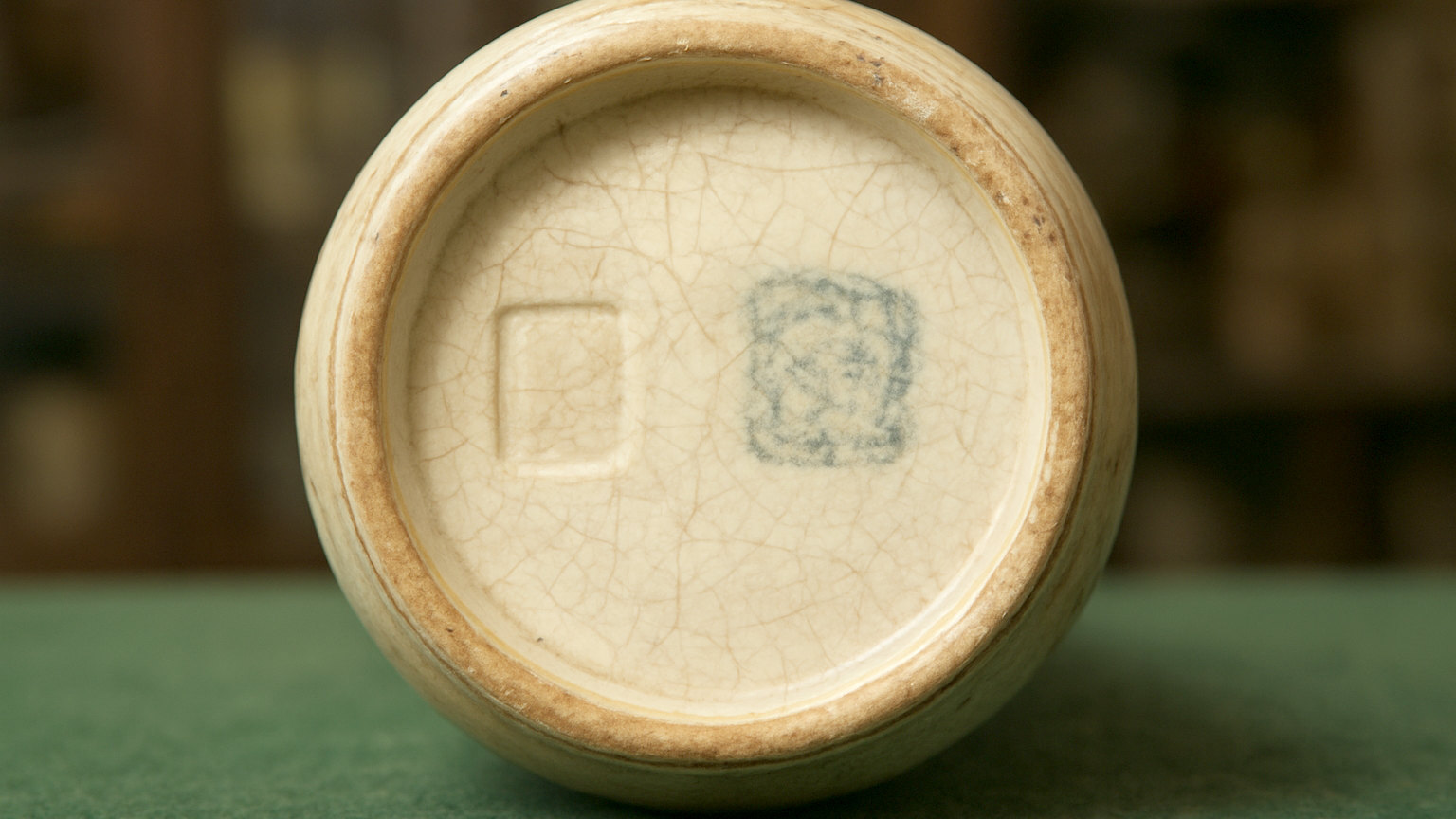
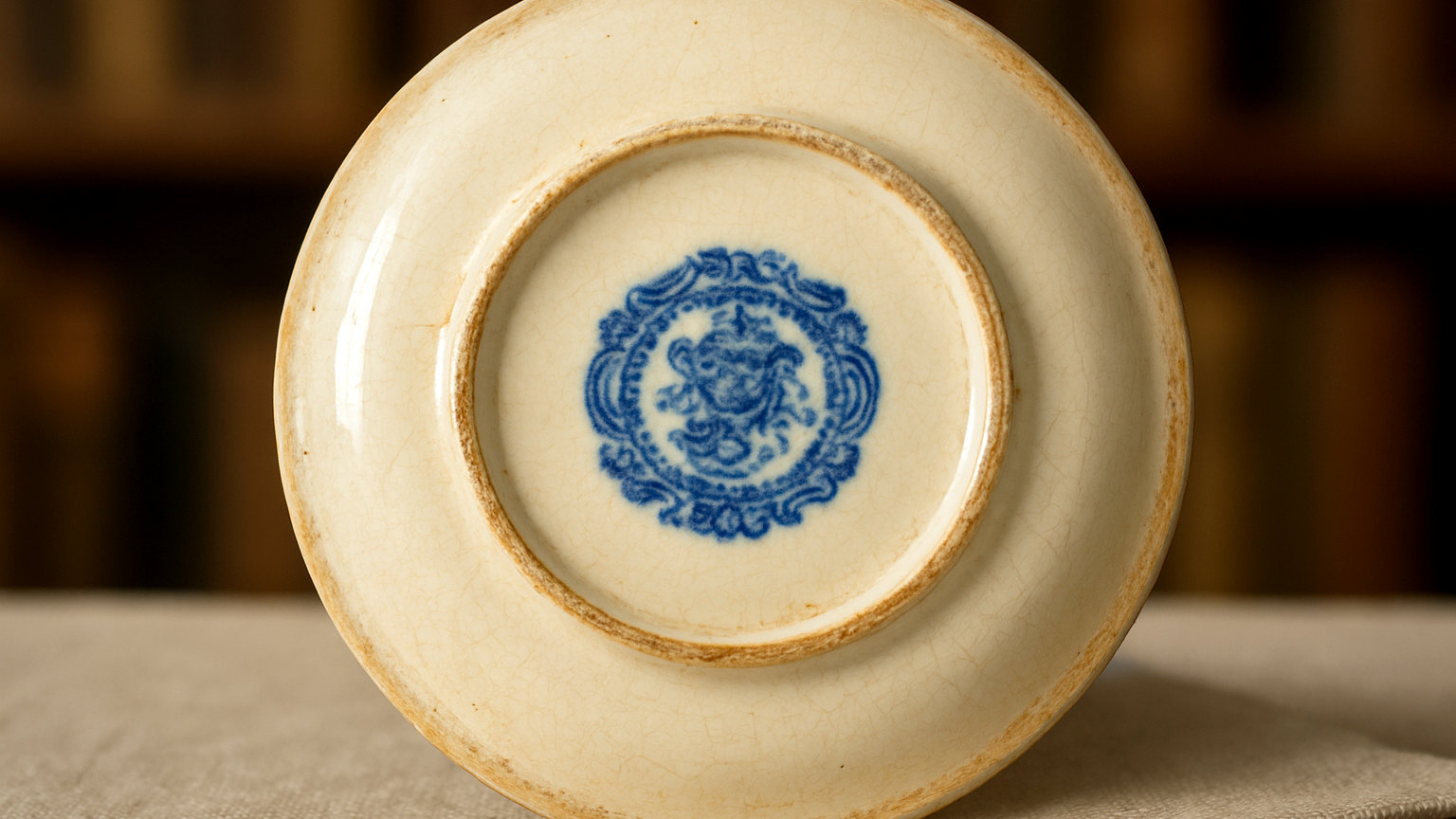
On the base, alongside the factory mark, usually printed but sometimes impressed into the body. On some pieces it appears moulded as part of the form rather than applied afterwards.
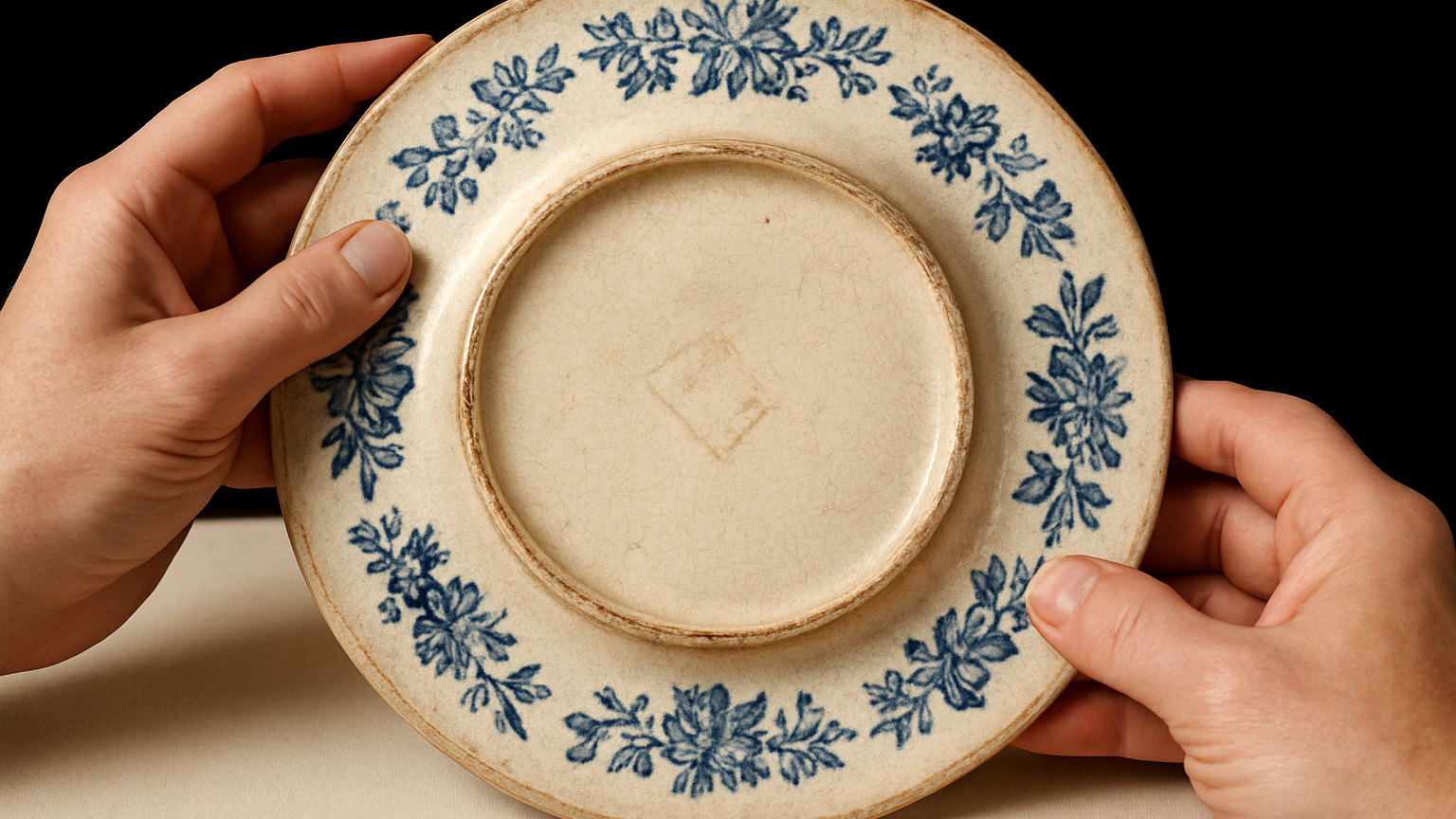
Impressed marks fill with glaze and become difficult to read, so use raking light and photograph from several angles. On tiles and flatware it may be on the reverse face rather than in the foot rim, and on hollow wares it is occasionally inside the base.
What if the mark is incomplete?
Partial marks are common, since printed marks wear and impressed ones fill. Even a fragment is useful, because the class code alone confirms the category and the presence of a diamond at all brackets the piece within the period the system operated.
Where you can read two corners but not four, you may still establish the year even if the day is lost. Record exactly what is legible rather than guessing at the rest, and cross check whatever you obtain against the factory mark, which should agree with it.