The word complication sounds like a fault and means the opposite: any function a watch performs beyond simply indicating the time. Each one required additional wheels, levers and springs, which made the watch more expensive to build and more interesting to collect. It also made it more expensive to repair.
What counts as a complication?
Anything beyond hours, minutes and seconds. A calendar, a moon phase, a stopwatch function, an alarm, a repeating mechanism, a second time zone or a power reserve indicator all qualify.
The more complications a movement carries, the more components it contains and the greater the skill required to build and service it. That is why complicated watches command premiums and why they cost considerably more to maintain.
What is a repeater?
A watch that chimes the time on demand when a slide or button is operated, developed so the time could be told in darkness before artificial light was reliable.
Repeaters strike the hours, and better ones the quarters and minutes as well. They are among the most valuable complications because the mechanism is genuinely difficult, requiring tiny hammers, gongs and a racking system within a pocket watch case.
What is a chronograph?
A stopwatch function integrated into a watch, with a hand that can be started, stopped and reset independently while the watch continues running.
Check it works through the full cycle: start, stop, and a clean reset with the hand returning exactly to zero. A hand that does not reset precisely indicates a fault. Chronographs with additional features such as a rattrapante, where two hands allow split timing, are considerably scarcer.
What calendar functions turn up?
Simple date, day and date, full calendar showing day, date and month, and perpetual calendar which accounts for varying month lengths and leap years without adjustment.
A perpetual calendar is a major complication and adds substantially. A simple date adds little. Check that any calendar advances correctly and never adjust one during the hours around midnight, when the change mechanism is engaged and forcing it breaks parts.
Do moon phases add value?
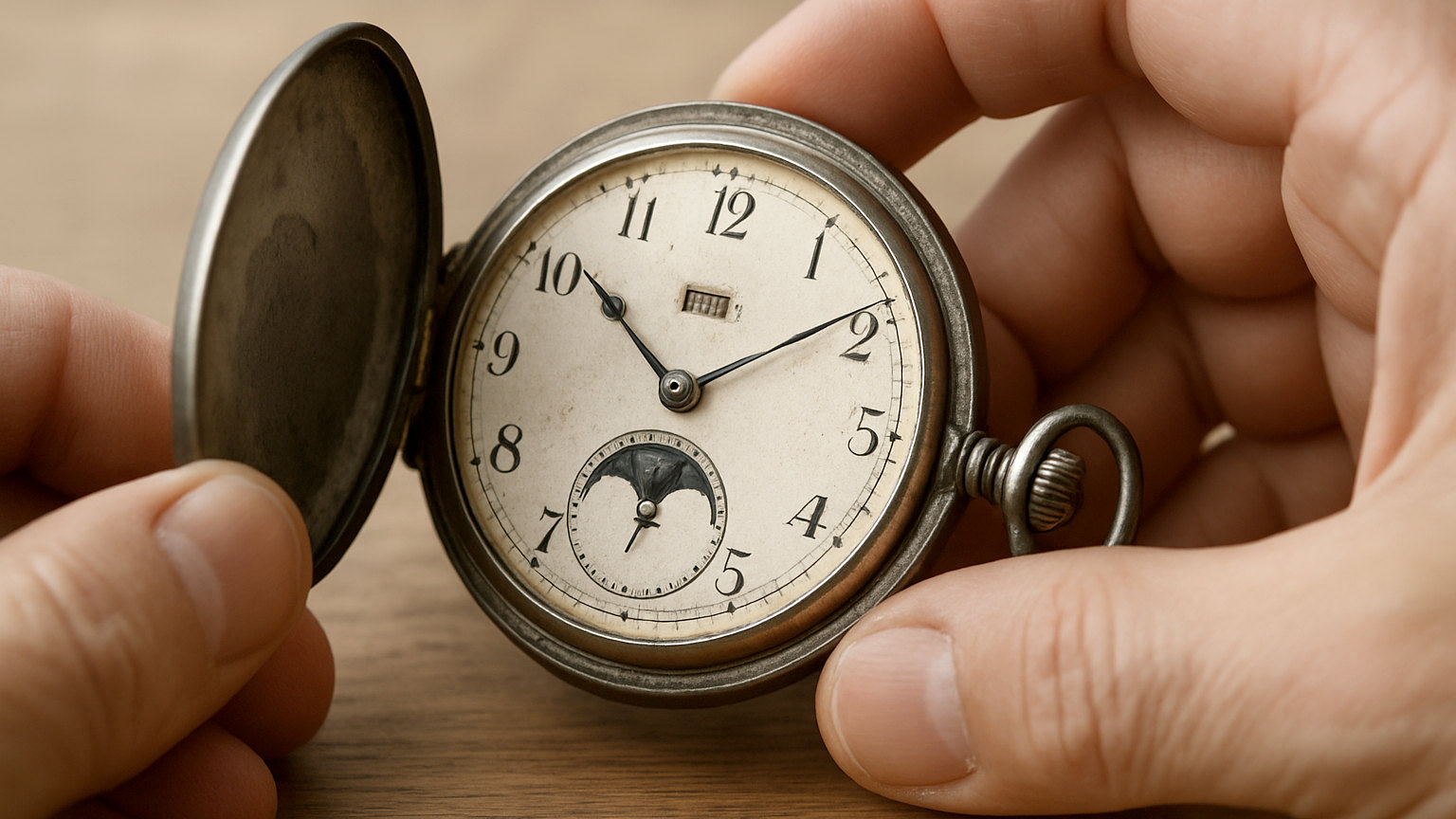
Modestly on their own and more as part of a fuller calendar. A moon phase aperture showing the lunar cycle is decorative and mechanically straightforward.
Check the disc advances and that the aperture is clean and the painting unworn. Moon phase discs are frequently repainted, which reduces value in the same way a refinished dial does, so look for printing that is too crisp or colours that are subtly wrong.
Which complications reduce value?
Any that no longer work, and any that are not original to the watch. A broken complication is a liability, since parts for early movements frequently have to be made by hand at real expense.
Added complications are worse. A movement altered later to add a function is not an original complicated watch and is worth considerably less. Look for filled or redundant holes in the plates and for components whose finish does not match the surrounding work.
How should you test them before buying?
Operate every function through its full cycle, gently, and stop immediately at any resistance. Wind carefully and never force anything.
Have the watch examined by a watchmaker familiar with the type before committing to anything significant, and get the assessment in writing. Ask specifically whether all functions are original and working, and whether parts have been replaced.
What does servicing cost?
Considerably more than for a simple watch, since every additional mechanism must be dismantled, cleaned, checked and adjusted. A repeater or a perpetual calendar is specialist work.
Use a watchmaker experienced with complicated movements rather than a general repairer, since unfamiliar hands cause damage that is expensive to correct. Budget for servicing before buying a complicated watch, and ask for an estimate rather than assuming.
Are simple watches ever preferable?
Frequently, for anybody intending to wear one. A plain movement is cheaper to service, less likely to fail and easier to find parts for.
Complications are collected because they demonstrate skill, not because they are practical. Buy one for the mechanism if that interests you, and buy a simple watch if you mainly want to know the time.