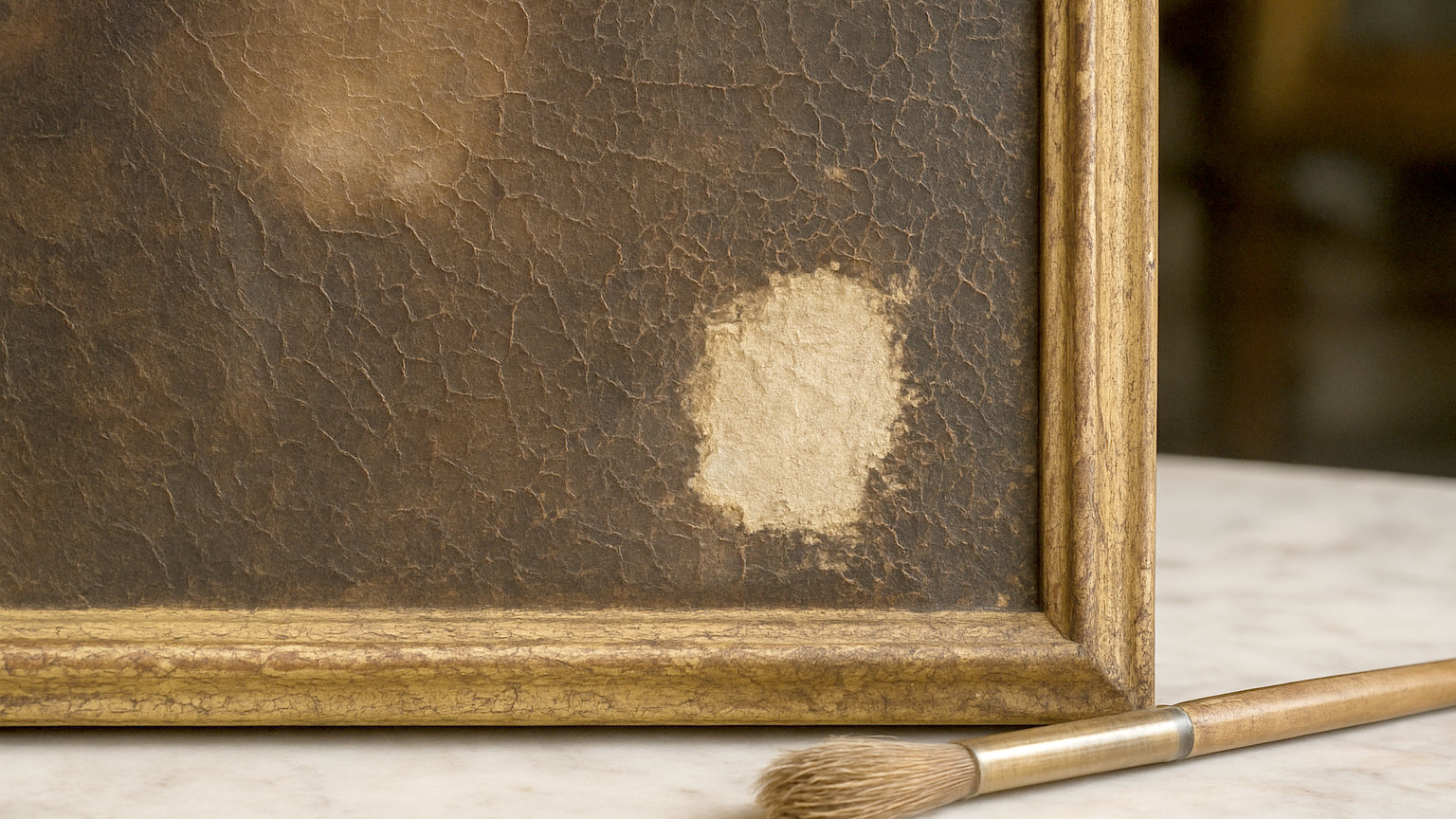
Old oil paintings darken, and the temptation to clean them is strong. It is also the source of an enormous amount of destroyed value, because the varnish that has yellowed, the glazes the artist applied on top of the paint, and the dirt on the surface are chemically similar enough that removing one takes the others with it.
Why does a painting darken?
Mostly because the varnish yellows. Natural resin varnishes were applied to protect the paint and to saturate the colours, and they oxidise over decades, going yellow then brown.
Surface dirt, smoke and nicotine add to it. The paint underneath is frequently in far better condition than the surface suggests, which is why a properly cleaned painting can look transformed. That transformation is exactly what tempts people to attempt it themselves.
Why is home cleaning so risky?
Because the solvents that dissolve old varnish also dissolve paint, and the artist final glazes are the thinnest and most vulnerable layer of all. Once a glaze is gone the modelling of a face or a sky is gone with it.
The traditional remedies circulate widely and are all damaging. Bread, potato, saliva, white spirit and proprietary cleaners have all been used on paintings and all remove more than dirt. There is no safe household method.
What can you do safely?
Dust the surface very gently with a clean soft brush, working from the top down, with the painting flat if possible. That is genuinely the limit of safe home care.
Never use water, never use any solvent, and never rub the surface with a cloth. Do not attempt to flatten a bulge, do not press on the canvas from behind, and do not attempt to reattach flaking paint with adhesive.
What does flaking paint indicate?
That the paint layer is separating from its ground, usually because of movement in the support or fluctuating humidity. It is urgent, because every flake that lifts eventually falls off.
Lay the painting flat, face up, and stop moving it. Collect any fallen flakes in an envelope, since a conservator can sometimes reattach them. Do not apply anything to hold the paint down. Get it to a conservator promptly rather than waiting.
What is relining?
Attaching a new canvas to the back of the original to support a weakened one. It is a conservation measure rather than a fault, and a great many older paintings have been relined at least once.
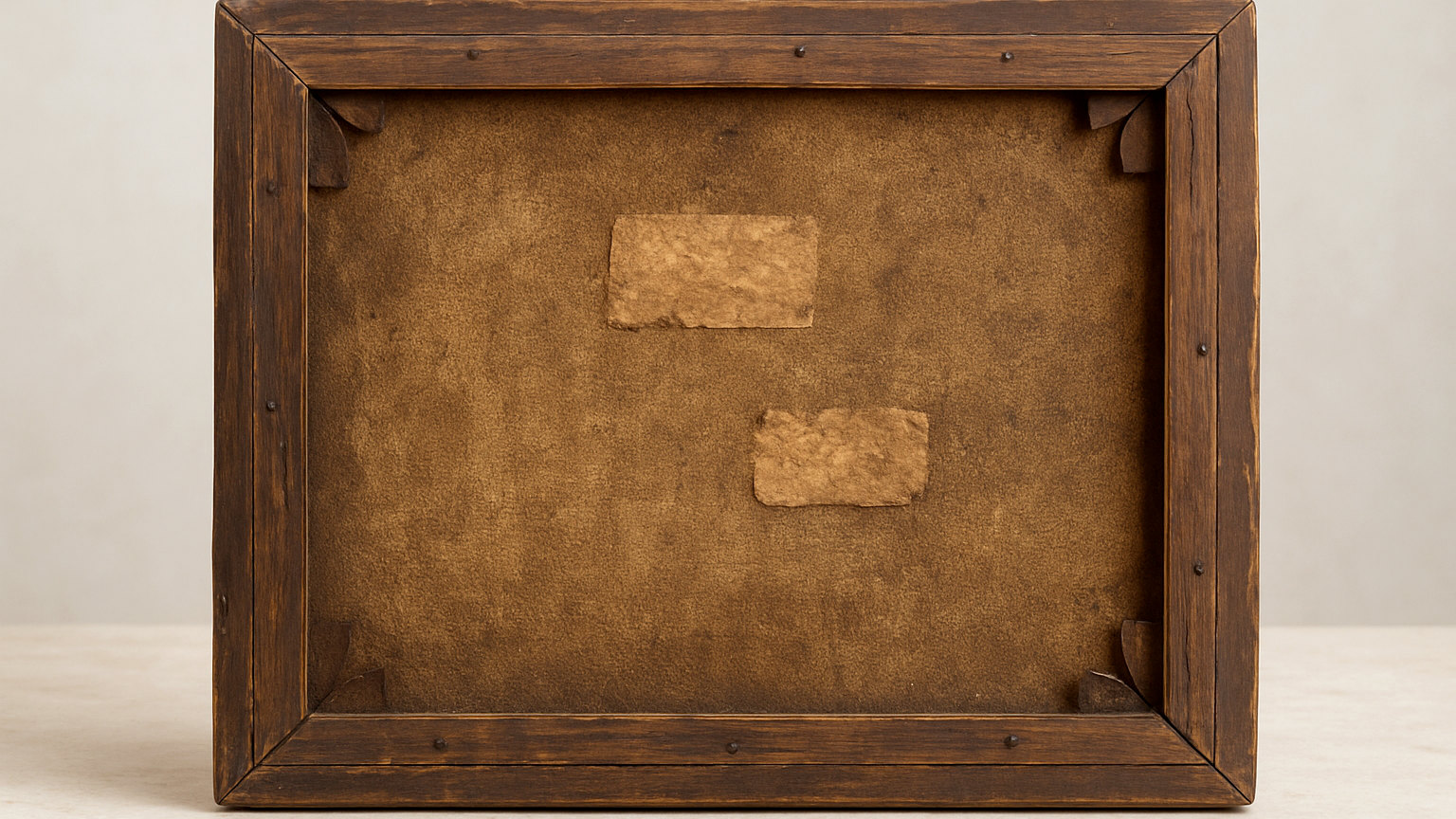
It does conceal the original reverse, including labels and inscriptions, so photograph the back of any painting before it goes for treatment. Modern conservation prefers less invasive support methods where possible, so discuss the options rather than accepting relining as automatic.
How should a painting be hung?
On an interior wall, away from direct sunlight, radiators, fireplaces and anywhere prone to damp or temperature swings. Stable conditions matter far more than any particular temperature.
Use two fixings rather than one so the painting hangs level and cannot swing. Check the frame and its hanging fittings, since old cord and screw eyes fail and a fallen painting is the commonest cause of serious damage.
How should one be stored or moved?
Vertically, face to face with another painting or with a board between, never stacked flat with weight on top. Carry with both hands on the frame, never touching the canvas.
Never lean anything against the front or back of a canvas, since a point of pressure produces a permanent distortion. When transporting, protect the corners and keep the painting upright. Do not store paintings in lofts or garages under any circumstances.
When should you use a conservator?
For any cleaning, any flaking, any tear, and before selling anything of consequence. A conservator will test solvents on a small area first and work under magnification, which is why they can remove varnish without removing paint.
Get a written proposal explaining what will be done and confirming the work is reversible. Ask for a condition report and photographs before and after. The fee is substantial and it is small against the value a badly cleaned painting loses permanently.