Buyers look at the picture and dealers turn it over. The reverse of a painting carries the evidence that the front cannot: how old the support is, where the work has been, who has handled it and whether it has been treated. It is also the part nobody thought to falsify until relatively recently, which makes it more reliable than a signature.
What do the stretcher bars reveal?
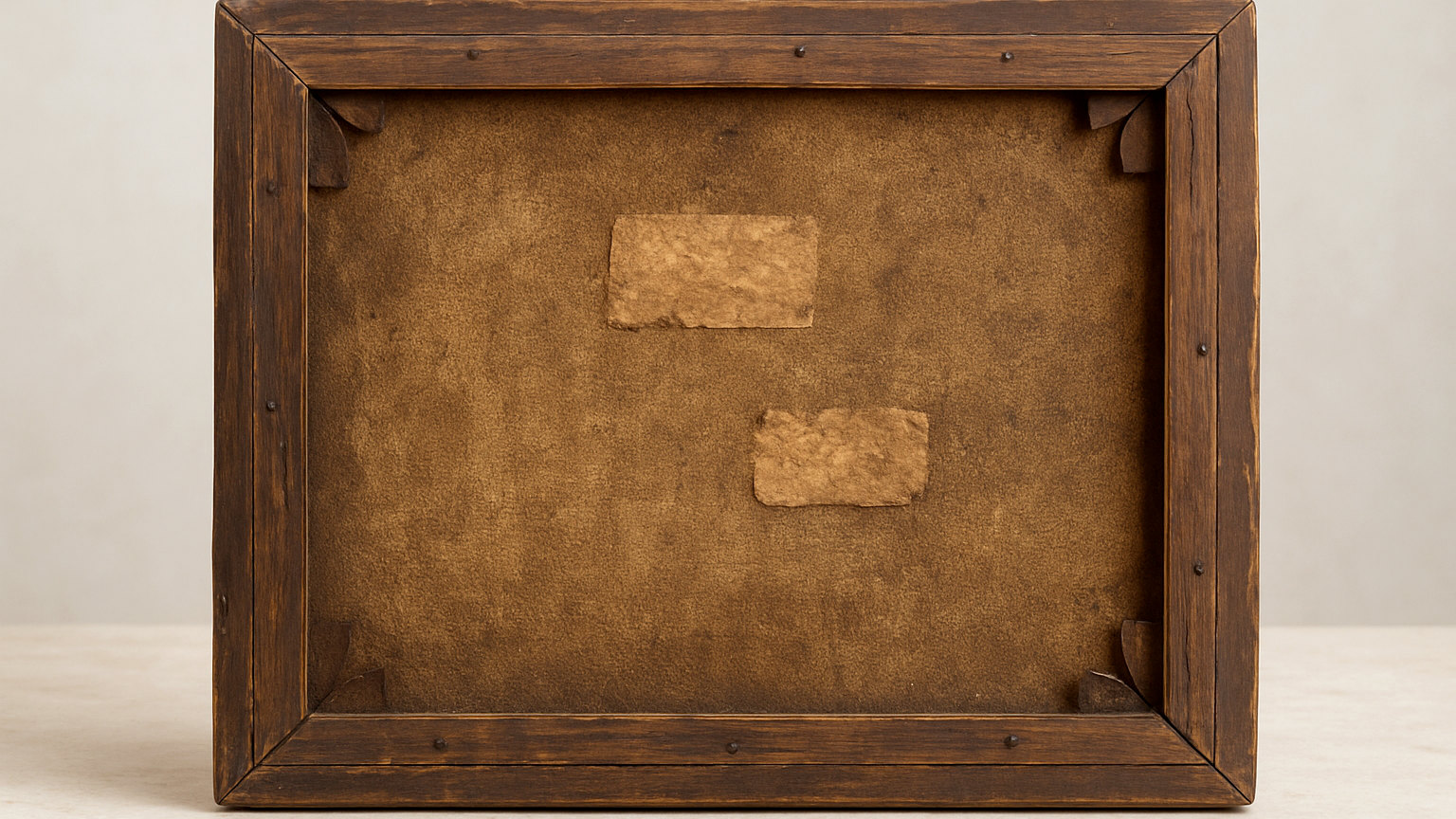
The stretcher is the wooden frame the canvas is tensioned over, and its construction is datable in much the same way as furniture. Look at how the corners are joined and whether small wooden wedges, called keys, sit in the corners.
Examine the timber colour and the accumulation of dust and grime, which should be consistent with the claimed age and heavier along the top edge where dust settles. Fresh clean timber on a picture presented as old means the work has been restretched, which is common, or that the painting is not what it appears.
What can the canvas itself tell you?
Weave, colour and edges. Older canvas is generally hand woven with slight irregularity in the threads, while later material is machine woven and perfectly regular. The reverse should be darkened with age, unevenly, with the tacking edges usually darker still.
Look at the tacking edges where the canvas wraps around the stretcher. Original tack holes, sometimes several sets from previous stretchings, and old square cut tacks are good signs. A canvas with a single set of modern staples has been restretched at some point.
What is relining and does it matter?
Relining means attaching a new canvas to the back of the original to support a weakened or damaged one. It is a conservation measure rather than a fault, and a great many older paintings have been relined at least once.
The drawback is that it conceals the original reverse, including any inscriptions or stamps that were there. A relined picture is not less genuine, but you have lost a source of evidence. Look for the edges of the lining canvas and for a slightly flattened paint surface, since relining involves heat and pressure.
Why do labels matter so much?
Because they document where a picture has been. Gallery labels, exhibition labels, auction stencils, framers stickers and shipping marks together build a provenance, and provenance adds real value by removing doubt about authenticity.
Never remove a label, however tattered or apparently irrelevant. Even a fragment carrying part of an address can be traced. Photograph the entire reverse in good light before doing anything else to a picture, since labels get lost during reframing and cannot be replaced.
What about inscriptions and stamps?
Artists frequently inscribed the reverse with a title, a date, a location or their own name, sometimes more legibly than any signature on the front. Colourmen and canvas suppliers stamped their names on the back of prepared canvases, and those firms traded at known addresses in known years.
A supplier stamp is one of the more useful dating tools available, because it gives a firm earliest possible date for the support. Look for it in the centre of the reverse or on the tacking edge, often faint and easily missed under dust.
How do you tell a painting from a print?
Look at the surface under raking light. An oil painting has texture, with visible brushstrokes standing proud, and the paint layer varies in thickness across the picture.
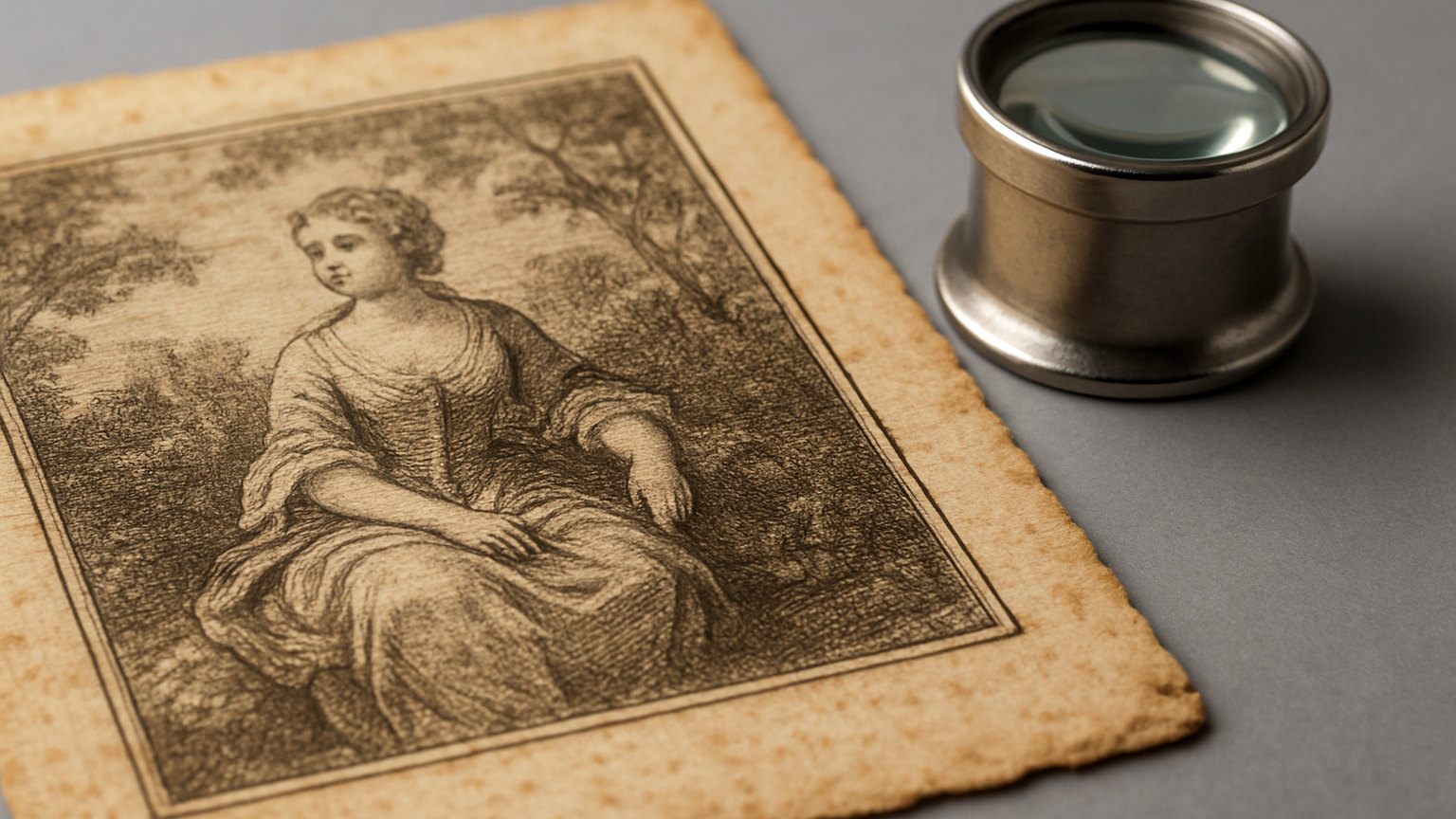
A printed reproduction is flat, and under magnification frequently shows a regular pattern of dots or a mechanical screen. Some prints have artificial texture applied over them to imitate brushwork, so check whether the texture actually corresponds to the strokes in the image or simply runs across it regardless.
What should you photograph before buying?
The whole reverse, then close ups of every label, stamp and inscription, then the corners of the stretcher and the tacking edges. Take the front square on in even light as well.
Record everything before the picture is reframed or restored, since both processes routinely lose labels and cover inscriptions. If you are buying at auction, ask to see the reverse at the viewing rather than relying on catalogue images, which almost never show it.