Almost every ceramic question begins here, because the answer changes which reference books apply, which factories are candidates and what the object is likely to be worth. Fortunately the distinction is physical rather than a matter of opinion, and one test settles it in seconds using nothing more than a window or a lamp.
What is the quickest test?
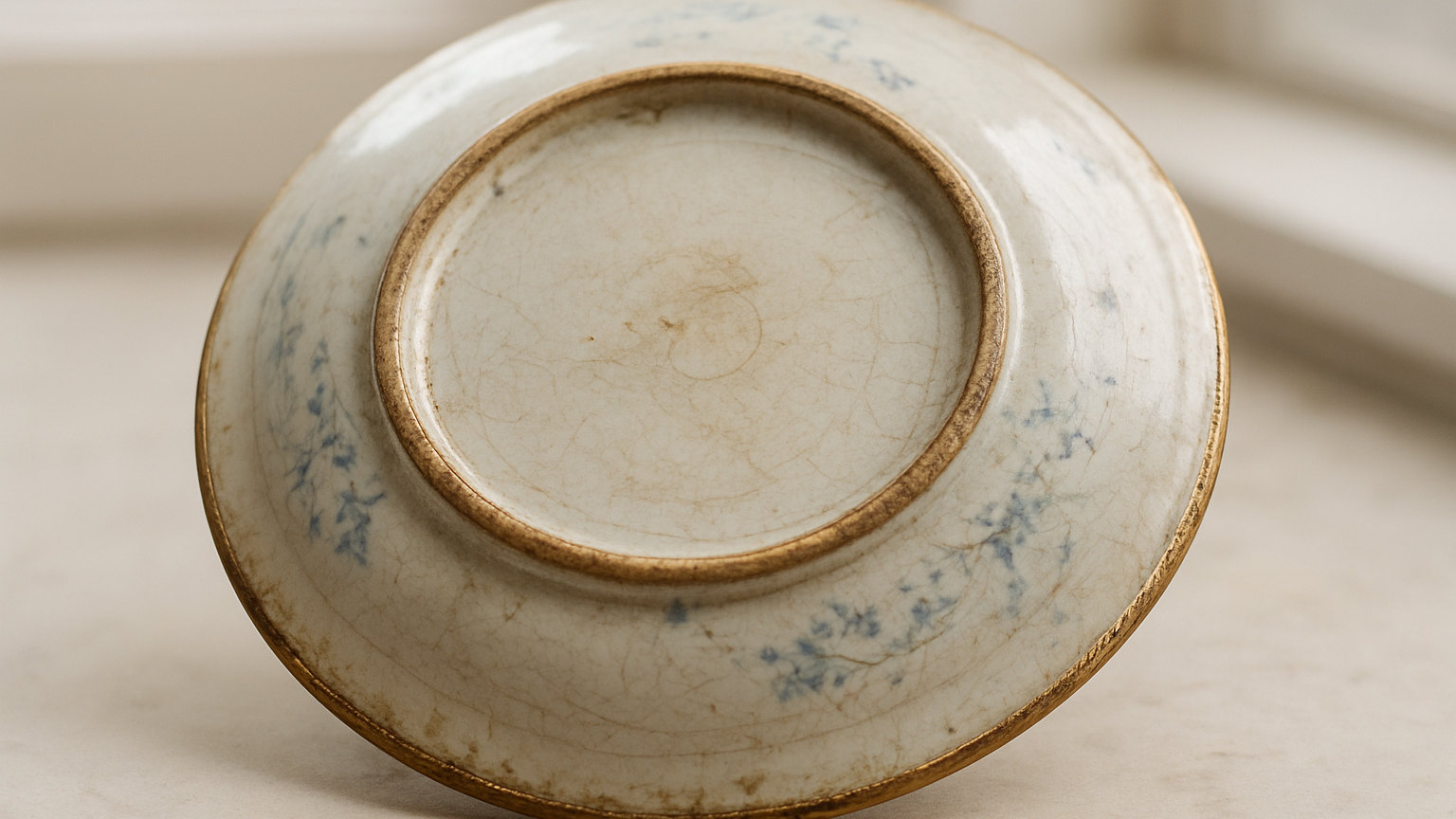
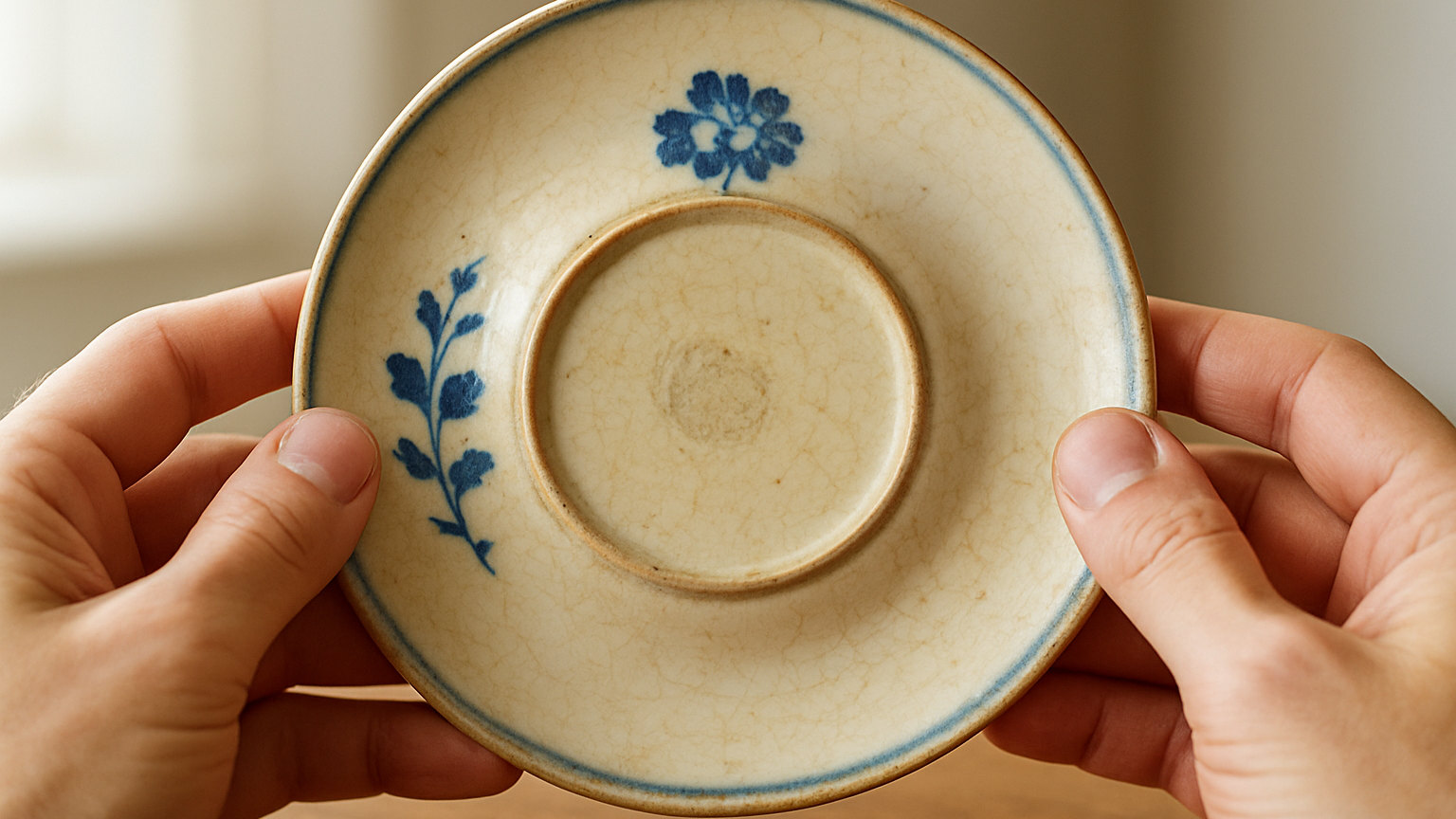
Hold a thin part of the piece, usually the foot rim or the edge of a base, up against a strong light. True porcelain is translucent, so the light passes through and the area glows, and you may even see the shadow of your fingers behind it. Pottery is opaque and blocks the light entirely.
Use the thinnest section available, since thick porcelain transmits less light and can appear opaque. A cup rim or the base of a plate works well. Daylight from a window is better than a torch because it is more even.
What else separates the two?
Sound and weight help confirm the answer. Tap the rim gently with a fingernail: porcelain gives a clear ringing note that continues briefly, while pottery gives a duller thud. A cracked piece will thud regardless, so use this as a supporting test rather than a primary one.
Look at any chip. Porcelain chips to reveal a dense white body that looks the same all the way through, with a glassy fracture. Pottery chips to reveal a coarser, more granular body that is frequently a different colour from the glaze, often buff, cream or reddish.
What is the difference in how they were made?
The difference is the clay and the firing temperature. Porcelain uses a body containing china clay and a fusible mineral, fired high enough that it partly vitrifies, meaning it turns glassy. That vitrification is what makes it translucent and non porous.
Pottery is fired at lower temperatures and does not vitrify, so the body stays porous and needs glaze to hold liquid. Stoneware sits between the two, fired hot enough to become non porous but remaining opaque, which is why a stoneware jug can hold water without glaze inside.
What are hard paste and soft paste?
Hard paste is the original formula, fired very hot, and it feels cold and glassy. The glaze fuses so completely with the body that a chip shows no clear boundary between the two, and the surface resists scratching.
Soft paste was developed as a substitute before the true recipe was understood in Europe. It fires lower, feels slightly warmer and softer to the touch, and the glaze sits more distinctly on the surface, so a chip often shows a visible line where glaze meets body. Soft paste also tends to show more firing faults, and those small imperfections are evidence of authenticity rather than defects.
Where does bone china fit in?
Bone china is a distinct body that includes bone ash, developed to combine translucency with greater strength and a warmer whiteness. It is translucent, so it passes the light test, and it will usually show a slightly warmer tone than hard paste when held to the light.
It is more chip resistant than early porcelain, which is why so much of it survives in daily use. Most British tea and dinner services of the last two centuries are bone china rather than true porcelain, and marks on the base often state this directly.
Why does the distinction affect value?
Because it narrows the field of possible makers dramatically, and because the two categories have different collector bases and price levels. Early European porcelain from the first factories attracts serious money, while much decorative pottery is affordable.
Getting this wrong sends your research in the wrong direction entirely. Someone searching porcelain factory marks for a piece of pottery will find nothing, conclude the item is unmarked and stop, when the answer was in a different set of references all along.
When should you not rely on the tests?
Thickly potted porcelain may not glow convincingly, and some fine stoneware bodies are unusually dense. Heavily gilded or painted areas block light, so always test an undecorated section.
If the piece is valuable enough that the answer matters financially, have it examined by someone who can handle it. A specialist identifies a body by feel, sound and appearance together in a way that photographs and descriptions cannot reproduce.