People treat hallmarks as reliable without generally knowing why. The reason is that the mark is applied by an independent third party after testing, not by the person selling the object, and that structure is what makes it different from every other kind of mark in antiques.
What does an assay office do?
It tests submitted articles to establish the actual precious metal content, then applies marks recording the result. It is independent of both maker and buyer, and it has statutory authority.
That independence is the whole point. A maker stamping a number on their own work is making a claim; an assay office striking a standard mark is certifying a tested result. This is why the presence of a genuine hallmark carries weight that a bare purity number does not.
How is the metal tested?
Historically by cupellation, in which a small sample is scraped from the article and heated with lead so that base metals oxidise away, leaving the precious metal to be weighed. It is destructive of the sample but extremely accurate.
Modern offices also use spectrometric methods that determine composition without removing material. Both establish whether the article meets the claimed standard. An article that fails is not marked and may be destroyed rather than returned.
Why does the sample position matter?
Because an article must be of the standard throughout, not just where it was tested. Sampling is taken from a position that represents the whole piece, and separately made components are tested and marked in their own right.
That is the reason lids, nozzles and detachable parts carry their own marks. It also explains why checking every component against the others is such a useful way of detecting a marriage: each was supposed to pass through the office independently.
How are the marks applied?
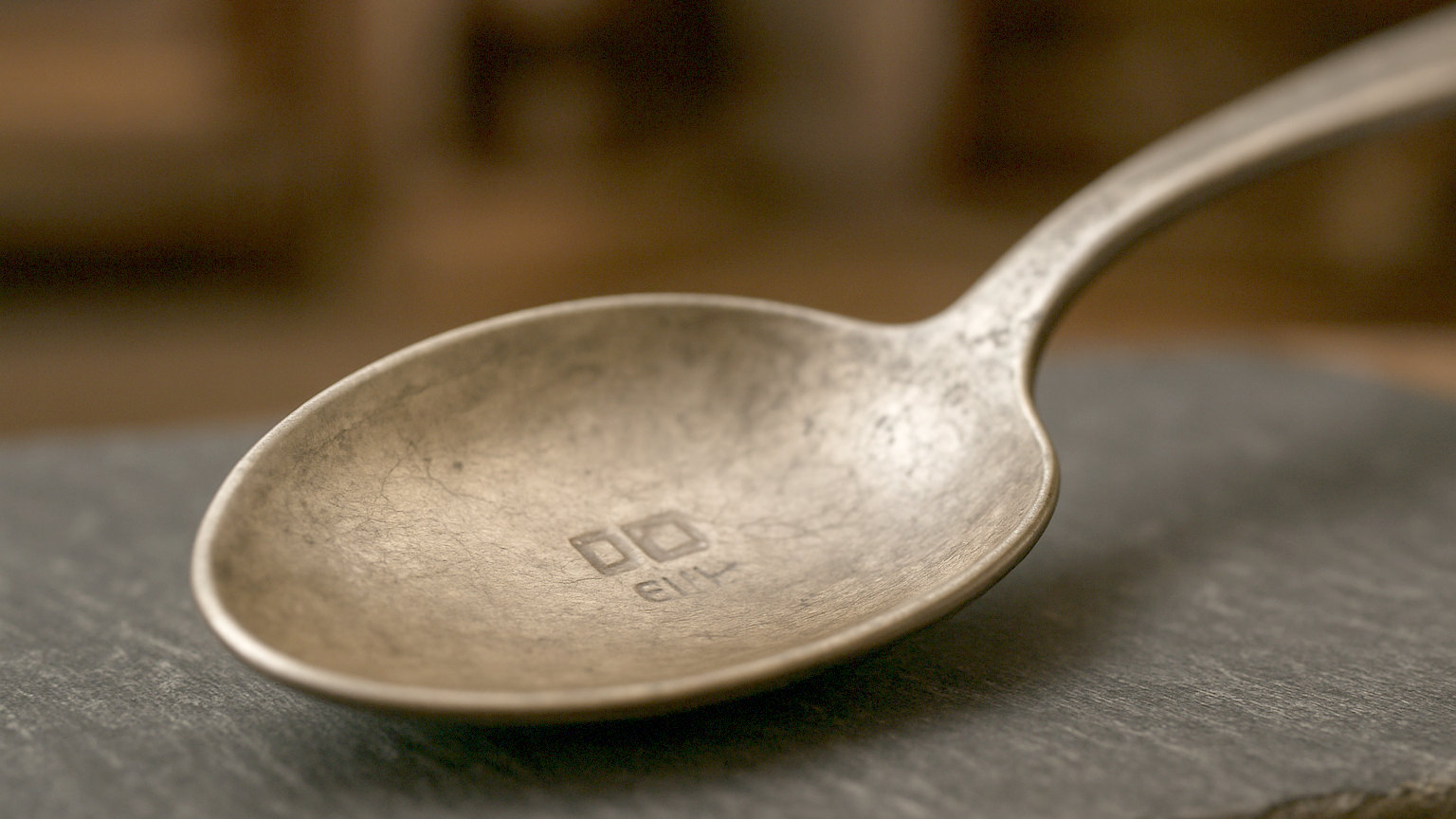
Traditionally by struck punches, driven into the metal with a hammer or a press, which is why a genuine mark is a depression with sharp walls and displaced metal at the edges.
The article must be supported carefully so it is not distorted by the blow, which is skilled work on thin or hollow pieces. Laser marking is now also used, which removes material rather than displacing it and looks quite different under magnification, being shallower with no raised lip.
Why do the marks look worn on old silver?
Because punches are shallow and centuries of polishing wear them down. Every polish removes a microscopic layer of metal, and the edges of a struck punch round off first.
This is the practical reason for polishing around hallmarks rather than across them. A piece that has been enthusiastically cleaned for two hundred years may have marks so soft they cannot be read, which reduces value considerably since it removes the certainty the marks were there to provide.
What happens with imported goods?
Foreign articles brought in for sale must be assayed domestically and receive an import mark, which uses a decimal standard figure and a town mark in a distinct shape reserved for imports.
This is entirely legitimate and indicates nothing improper. It also means a piece made abroad can carry a domestic assay year, which is worth knowing when a mark seems inconsistent with the style of the object.
Are the offices still operating?
Four continue to assay and mark British precious metal, so their town marks appear on modern work as well as antique. That is why a town mark alone never proves age.
Always read the date letter alongside it. Modern marks look broadly similar to old ones at a glance, which regularly catches out people who assume any hallmark indicates an antique piece.
Can you have an unmarked piece tested?
Yes. Assay offices will test and advise on unmarked articles, and jewellers can test electronically without damage. For anything where the answer matters financially, this is the sensible route.
Avoid acid testing kits, which work by damaging a small area permanently to obtain information a specialist can get without marking the piece. Never file into an object to reach base metal, which reduces the value of a genuine item to satisfy a curiosity.