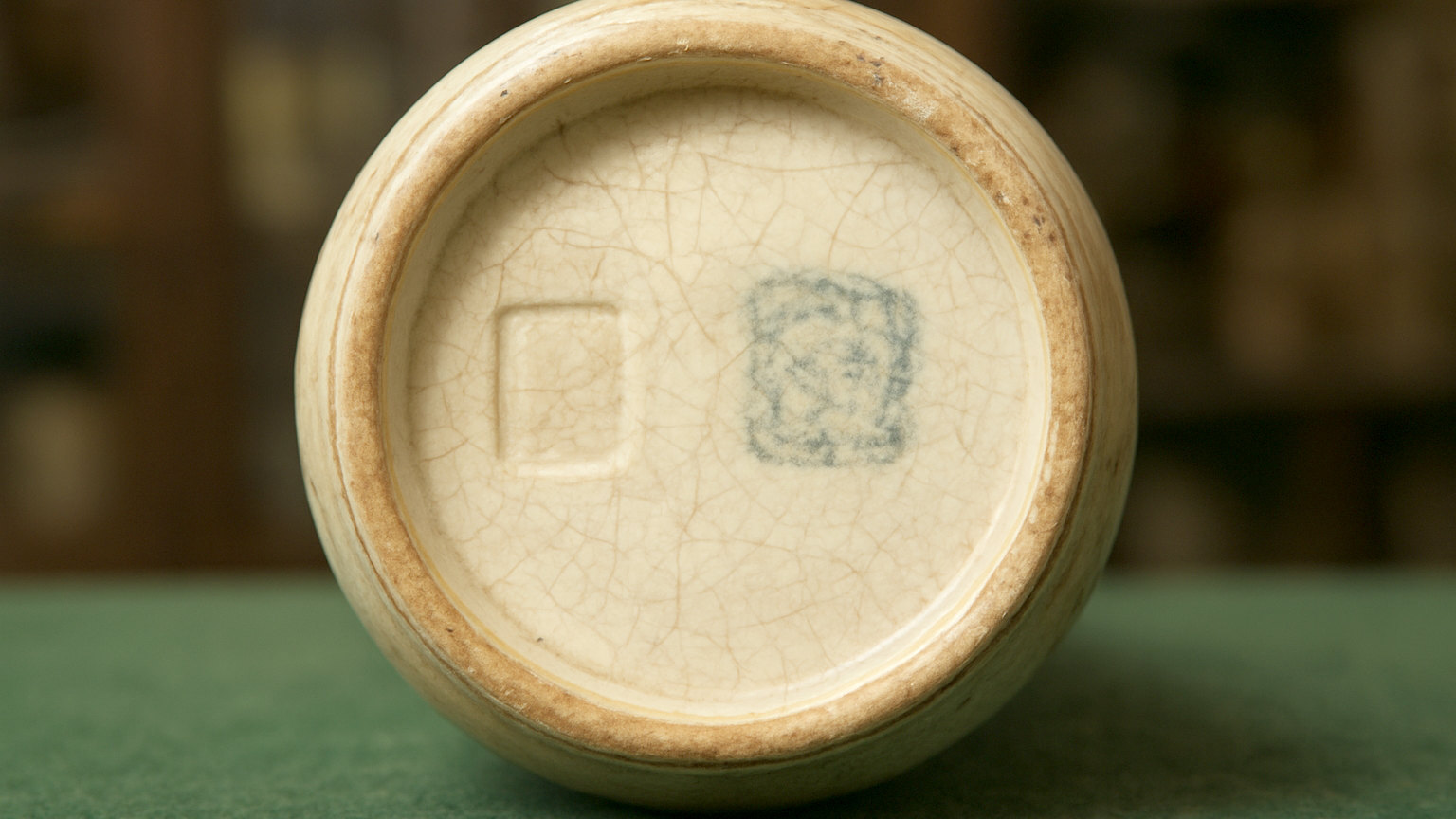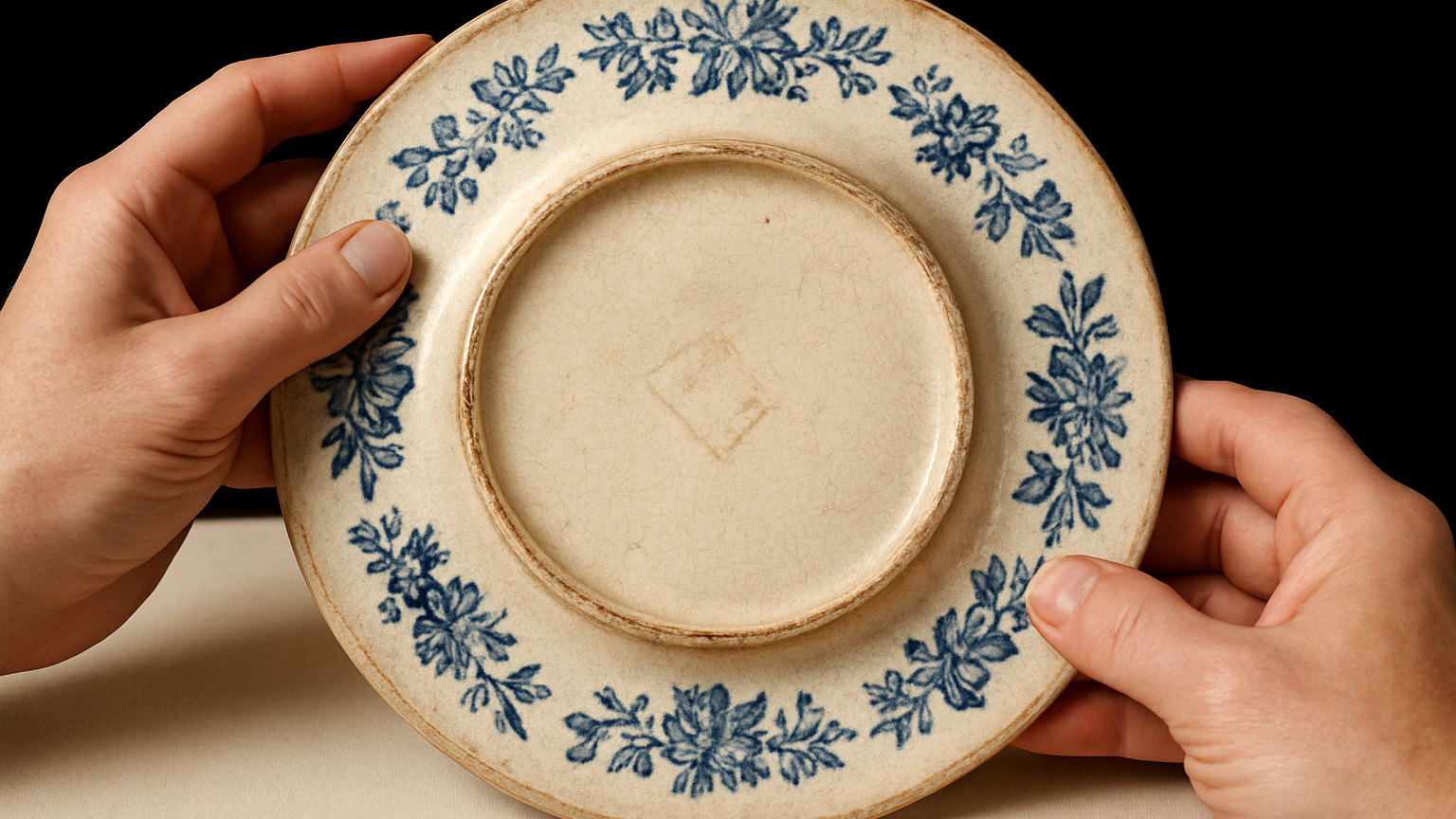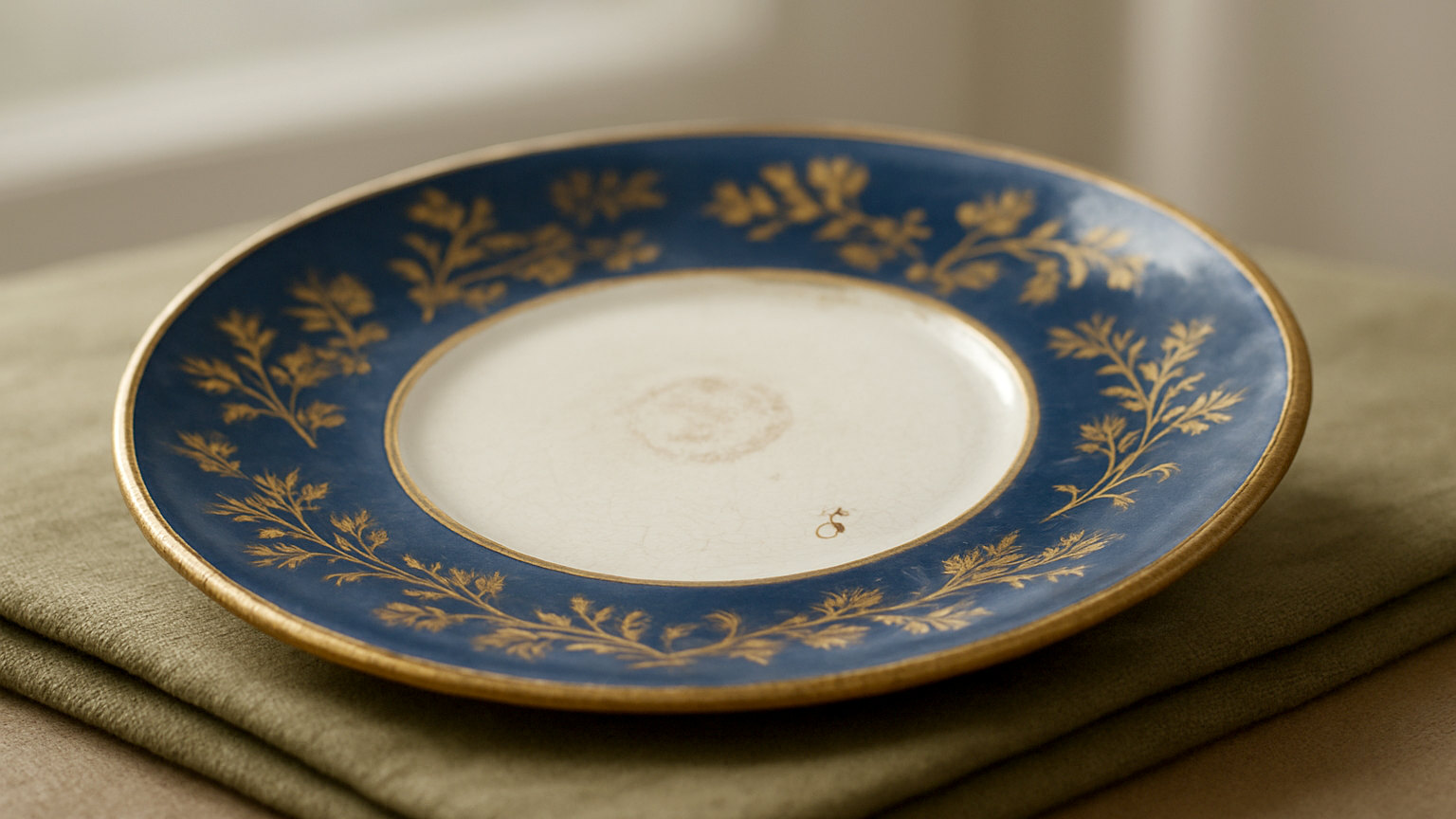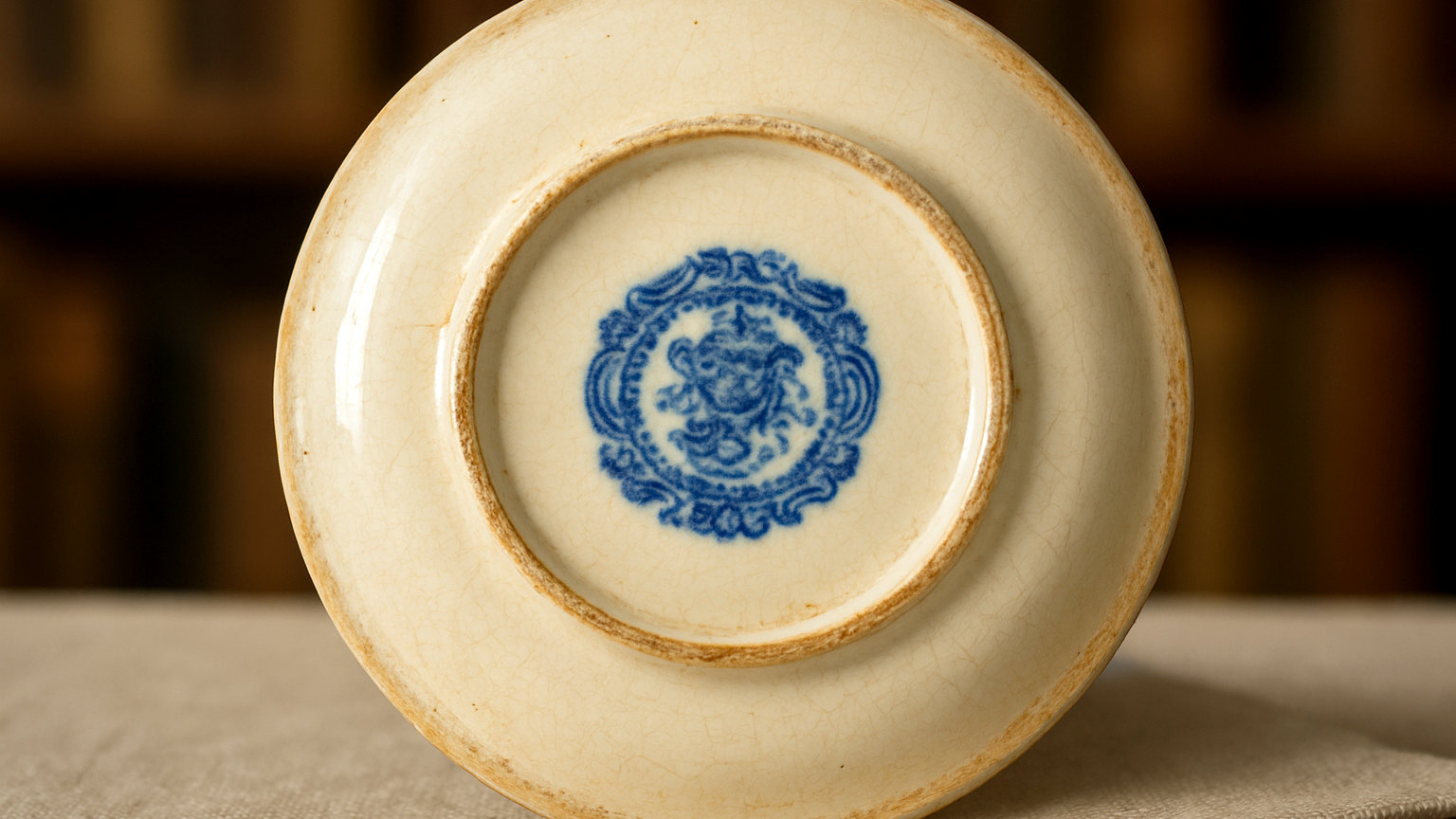
Ceramic marks are copied more than any others, because they are painted or printed rather than struck and because a few factory devices carry enormous premiums. The good news is that adding a mark to a finished piece leaves physical evidence, and the checks take under a minute.
What is the single most useful check?
Whether the mark is under the glaze or on top of it. Run a fingernail across the mark. An underglaze mark is completely smooth because glaze covers it; an overglaze mark can frequently be felt standing very slightly proud.
Then establish what that factory actually did. Where a maker is known to have marked underglaze and you find an overglaze mark instead, that inconsistency is a serious warning, because a mark added after firing must sit on the surface.
How do you spot a copied device?
By execution rather than design. Genuine marks were applied by decorators who painted the same device thousands of times, so the line weight is confident and consistent throughout.
Copies show hesitancy: uneven thickness, wobbling where the brush changed direction, and proportions that are subtly wrong. Compare against a reliable reference image at the same scale, paying attention to the angle between strokes and the length of one element relative to another.
Which marks are copied most?
Simple, symmetrical and instantly recognisable devices belonging to celebrated factories. Crossed swords, crowned shields, anchors and monograms were all imitated extensively, some legally at the time and some not.
The practical consequence is that finding one of these marks makes a piece less certain rather than more. Assess the body, glaze, potting and painting first, and treat the mark as confirmation rather than as evidence.
Does the wear match?
It should. A mark applied at manufacture has been washed and handled for as long as the piece has, so it shows wear consistent with the base around it.
A bright unworn mark on a footrim showing a century of genuine scratching is inconsistent. Look at whether the mark has faded, scratched or worn at the edges in the way the surrounding surface has, and be suspicious of anything that looks fresher than its context.
What about the body and glaze?
These are far harder to fake than a mark and should be checked first. Establish whether you are holding porcelain or pottery, hard paste or soft paste, and whether the potting thickness and glaze behaviour suit the claimed factory.
A convincing mark on an unconvincing body tells you the mark is wrong, not that the body is right. Where everything except the mark points one way, believe everything else.
What is a cancelled mark?
A factory mark scored through with lines, indicating a piece sold as a second or as an undecorated blank. Some makers did this systematically.
A cancelled mark under elaborate decoration is genuinely informative, because it says the factory released the piece white. If the decoration then claims to be factory work, those two facts contradict each other and the decoration was almost certainly added later by an outside hand.
What do country names indicate?
Generally a later date, since marking country of origin became usual because of import legislation. A mark naming a country is therefore unlikely to be early.
The fuller phrasing stating an item was made in a country is later still than the bare country name. Wording indicating a limited company, trade mark registration or an award all give earliest possible dates in the same way. Read the words as evidence rather than as decoration.
When should you get an opinion?
Whenever the mark carries most of the value, which is precisely when copying is worthwhile. A ceramics specialist assesses body, glaze, potting and painting together in a way no photograph allows.
Take the piece rather than images, do not clean it first, and describe what you have observed rather than what you hope. The fee is small against the difference these marks can create in price.