Among the numbers and symbols on a ceramic base, a few factories included something genuinely precise: a private code recording when the piece was actually made. These are the most useful marks in the whole field when you can recognise them, and they are routinely dismissed as meaningless impressed numerals.
What is a date code?
A private system used by a factory to record the month and year of production, usually for internal quality control so that a fault could be traced back to a batch.
Because they were internal, the systems vary completely between makers and none of them are self explanatory. They only become readable once you know which factory used which scheme, which is why identifying the maker always comes first.
What forms do they take?
Several. Some use a group of letters, one for the month and one or more for the year. Some use a small symbol or cypher that changed annually. Some use a numeral pair that reads directly as a month and year.
Others use dots or notches arranged around a mark, where the count indicates the year within a cycle. A few impressed a two or three digit number that converts to a year through a published key. The variety is exactly why guessing is unproductive.
How do you tell a date code from a pattern number?
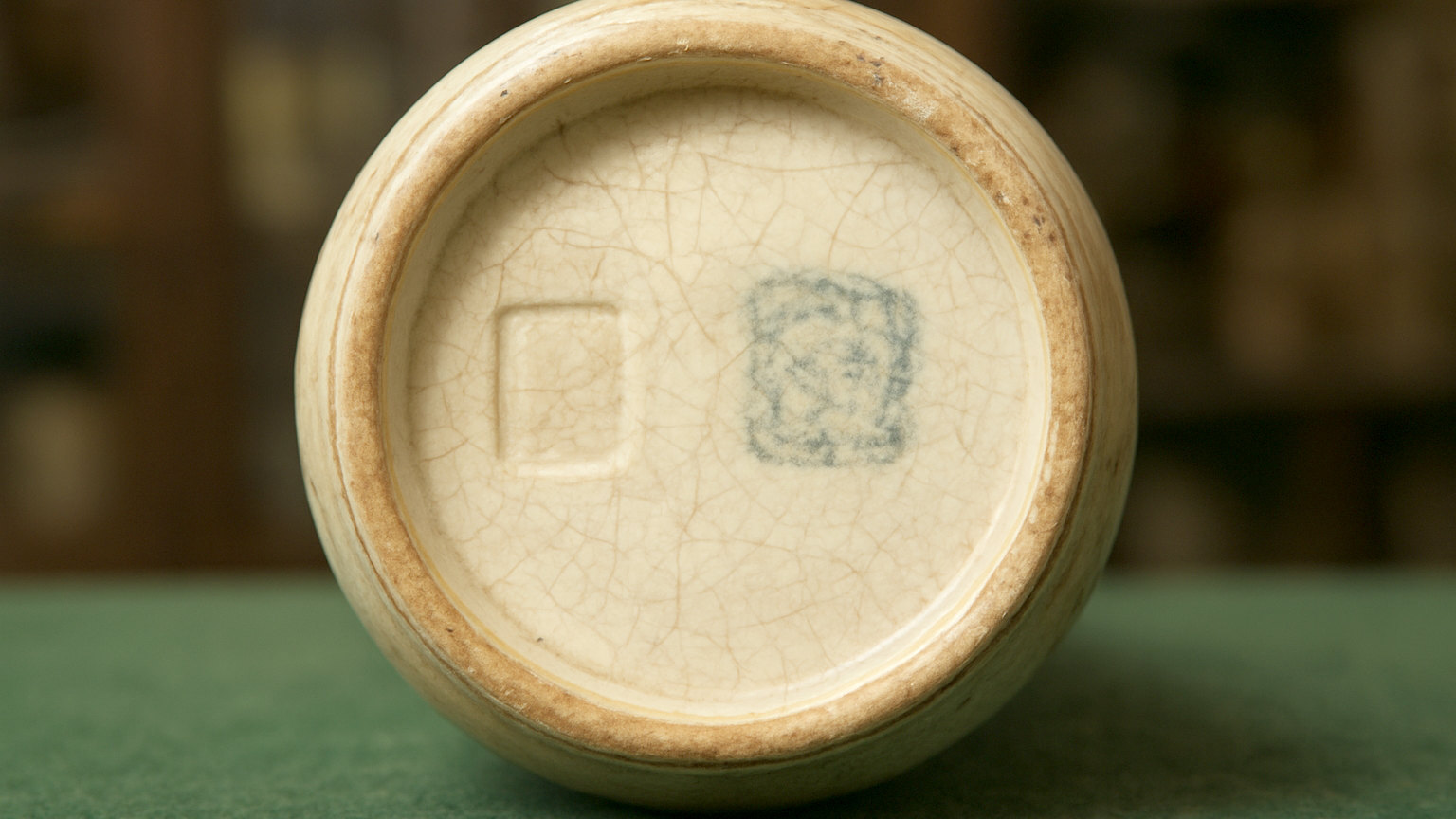
By how it was applied and where it sits. Date codes are usually impressed into the clay before firing, since they belong to the potting stage, and they sit apart from the printed factory mark.
Pattern numbers are usually painted or printed, applied at the decorating stage, and frequently sit directly beneath the backstamp. If you find an impressed group of characters separate from a printed mark, that is the candidate worth researching.
Where should you look?
On the base, around the footrim, and sometimes on the side of the foot rather than underneath. Impressed marks fill with glaze and become very faint.
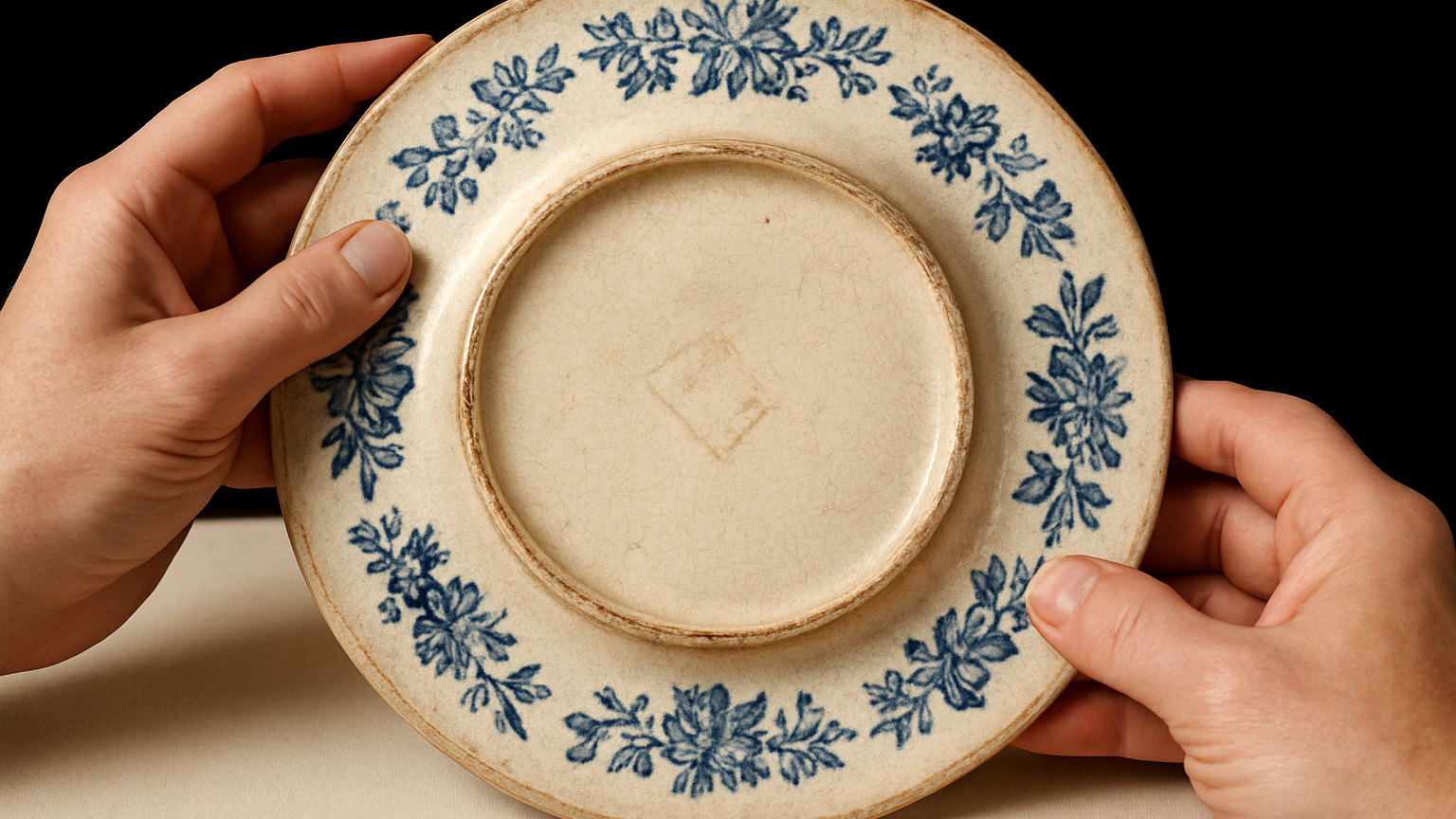
Use raking light and turn the piece slowly, since these will only read at certain angles. Photograph rather than trying to decipher directly. On hollow wares check inside the foot as well, and on flatware check the reverse near the rim as well as the centre.
Why are they so frequently missed?
Because they look like damage or manufacturing debris. A small impressed cluster of letters and dots reads as an imperfection rather than as information, particularly under glaze.
People photograph the printed backstamp and ignore everything else on the base, which discards the most precise dating evidence the object carries. Photograph the whole base twice, once flat on for printed marks and once under raking light for impressed ones.
How do you find the key?
Through references specific to that factory, since no general table covers them. Published mark encyclopedias give the scheme where one is documented, and collector societies for individual factories hold detailed information.
Museum collection databases help, because catalogued examples frequently record the code and the attributed date together, which lets you work out the system by comparison. Start with the factory mark, establish the maker, then search for that maker dating scheme specifically.
What does a date code actually prove?
When the body was made, which is not always when the piece was finished. A blank could be stored and decorated later, sometimes considerably later, particularly where it left the factory undecorated.
So the code gives an earliest date for the finished object rather than a definitive one. Where a code and a printed mark version disagree, that gap is informative rather than contradictory, and it may indicate a piece decorated outside the factory.
What should you record?
Everything on the base, noting for each mark whether it is impressed, printed under the glaze or painted on top, and where it sits relative to the others.
Copy characters exactly as they appear rather than interpreting them, including any dots, bars or notches, since those are frequently the operative part of the system. A code recorded accurately can be decoded later; one recorded approximately usually cannot.