Two marks reading the same words can mean quite different things depending on how they were applied. A mark stamped into wet clay was made at the potting stage; one painted over a fired glaze could have been added at any time afterwards, including much later by someone hoping to improve a piece. Establishing which you have is the first step in reading any base.
What is an impressed mark?
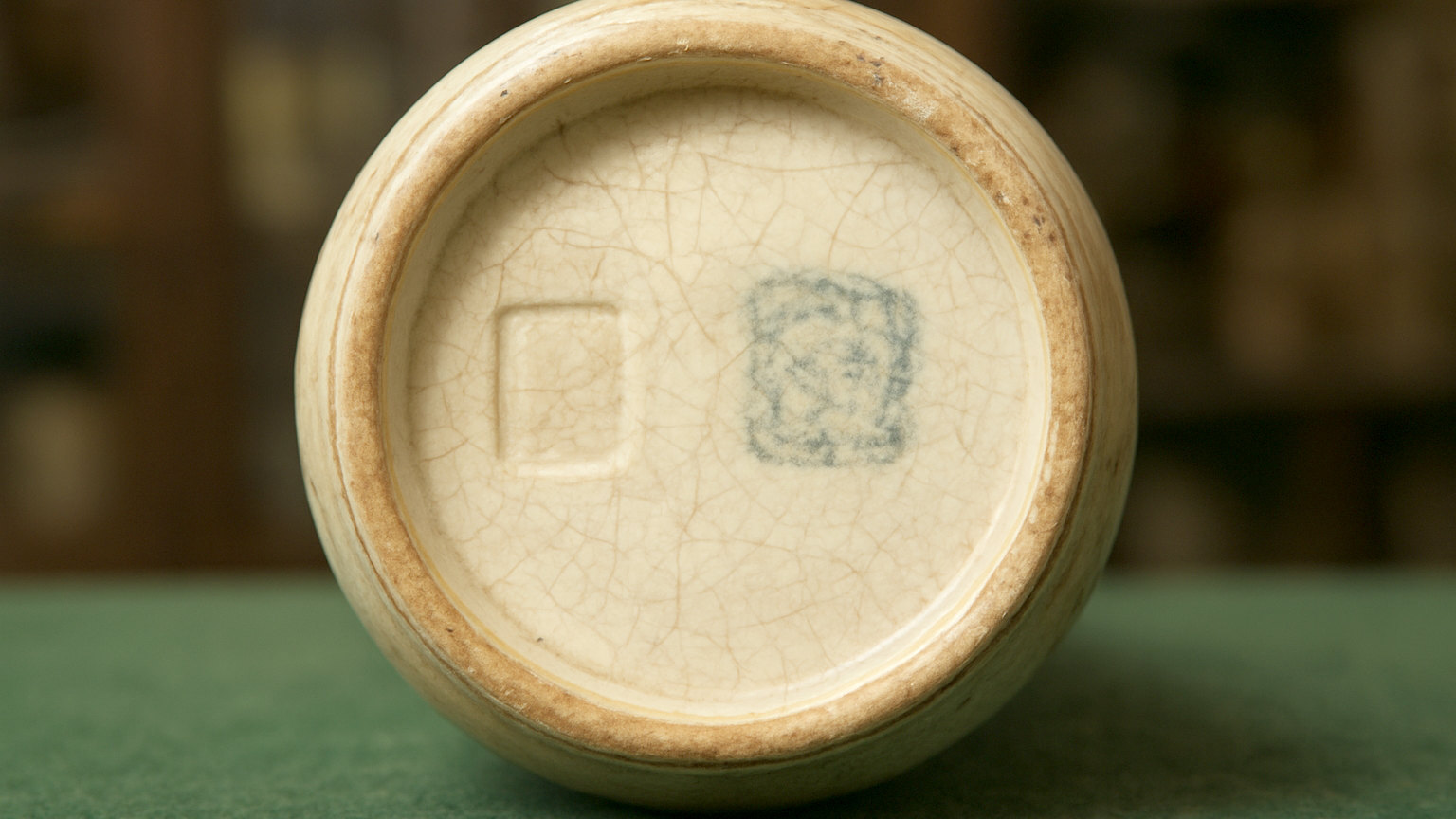
A mark pressed into the clay body while it was still soft, before firing and before glazing. It sits physically below the surrounding surface as a depression.
Because it was applied at the forming stage, an impressed mark is contemporary with the making of the object and cannot have been added afterwards. That makes it the most reliable kind of mark there is. It is also frequently the hardest to read, since glaze pools into the depression and softens the outlines.
How do you find an impressed mark?
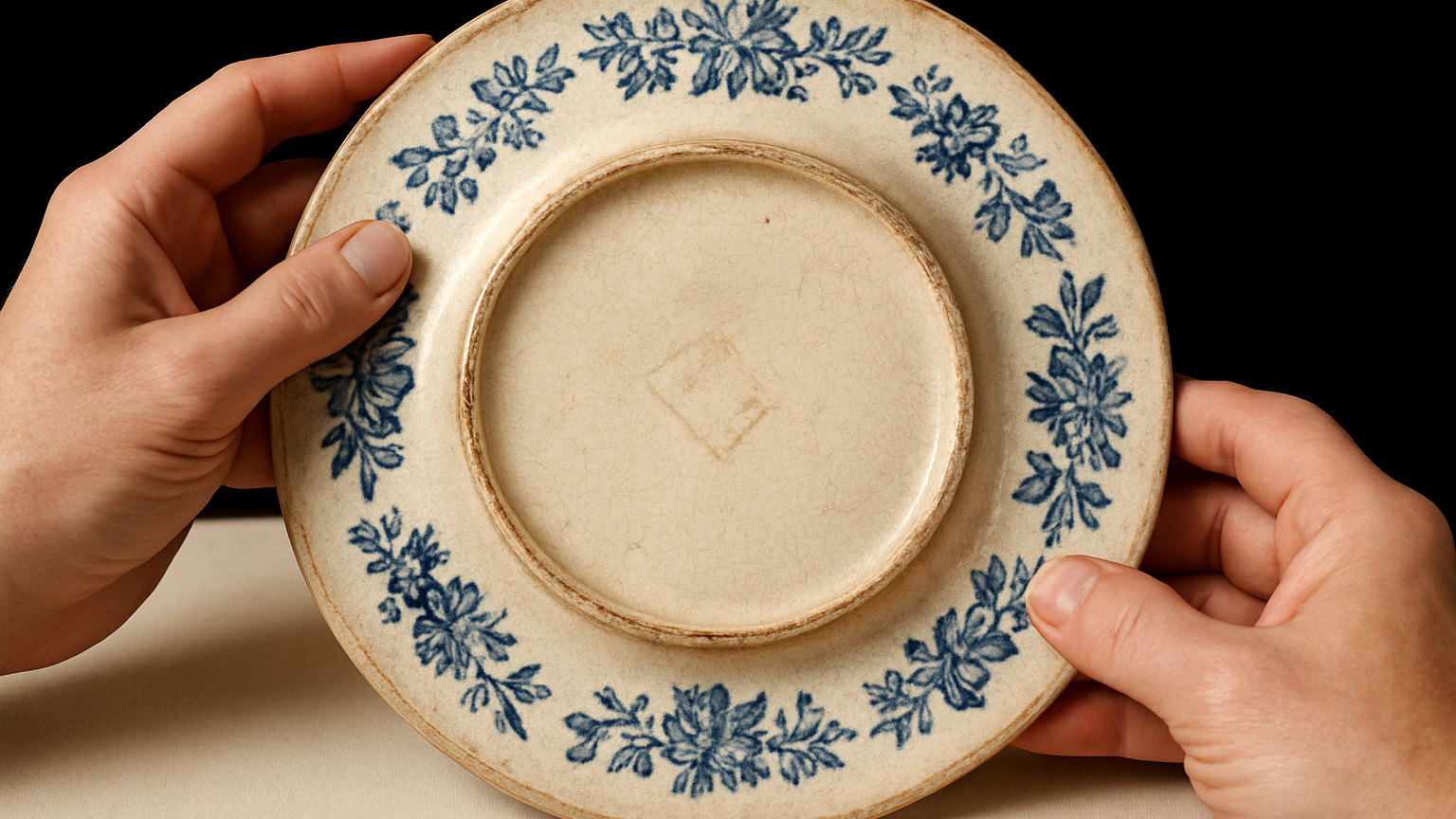
By touch and by raking light. Run a fingertip over the base and feel for a change in level, then hold the piece so light skims across the surface at a shallow angle rather than falling straight onto it.
The shadows cast by the depression are what make the design visible. Turn the piece slowly through several positions, since a worn or glaze filled mark may only read at one particular angle. Photograph it at that angle rather than trying to read it directly.
What is an underglaze printed mark?
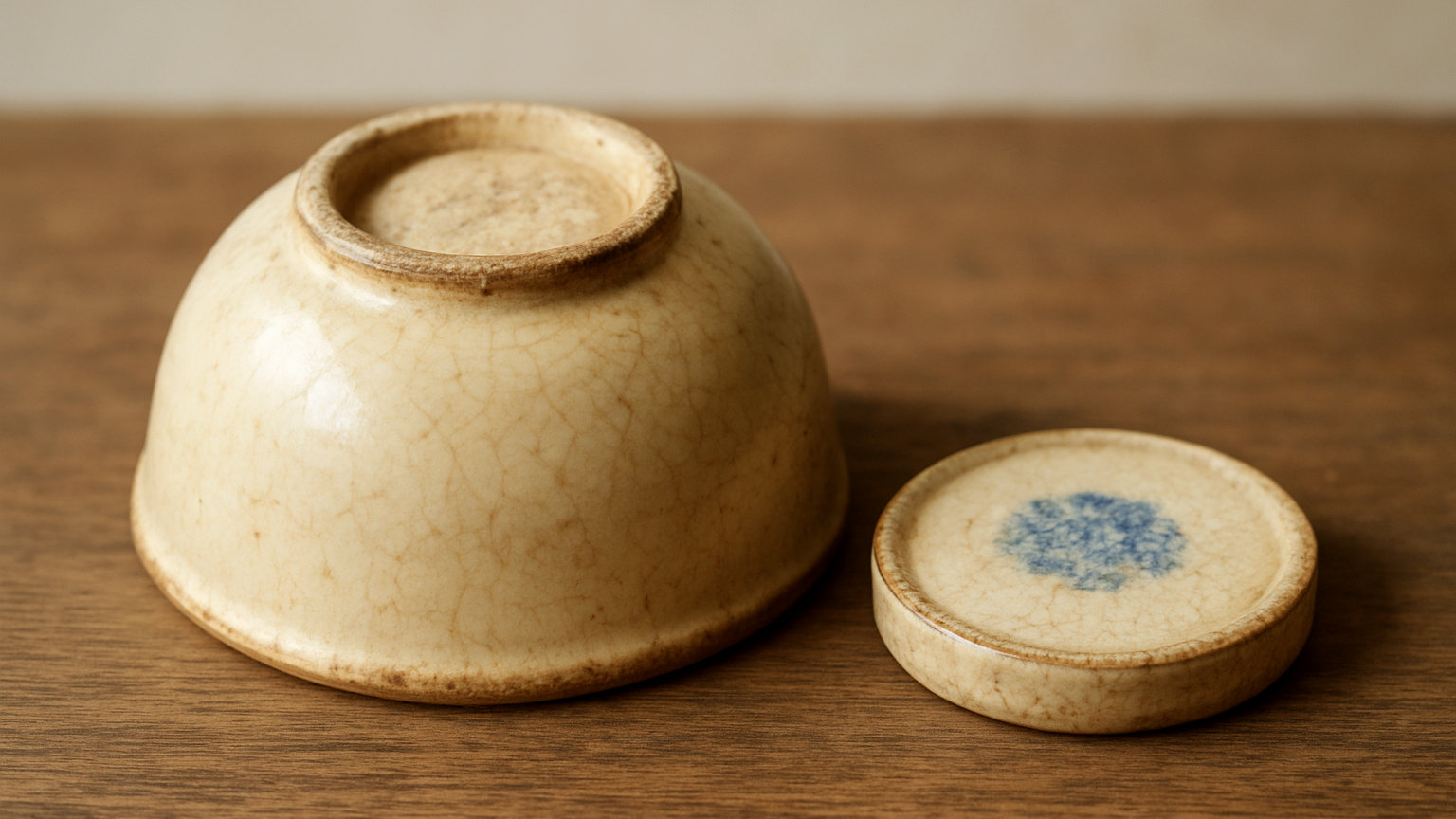
A mark applied by transfer to the fired but unglazed body, then covered by the glaze and fired again. It sits beneath the glass layer, so it is protected and cannot be worn away.
Test by running a fingernail across it. An underglaze mark is completely smooth, because the glaze covers it, and it feels no different from the surrounding surface. Cobalt blue was the usual colour for underglaze printing, because very few pigments survived the high glaze firing.
How does an overglaze mark differ?
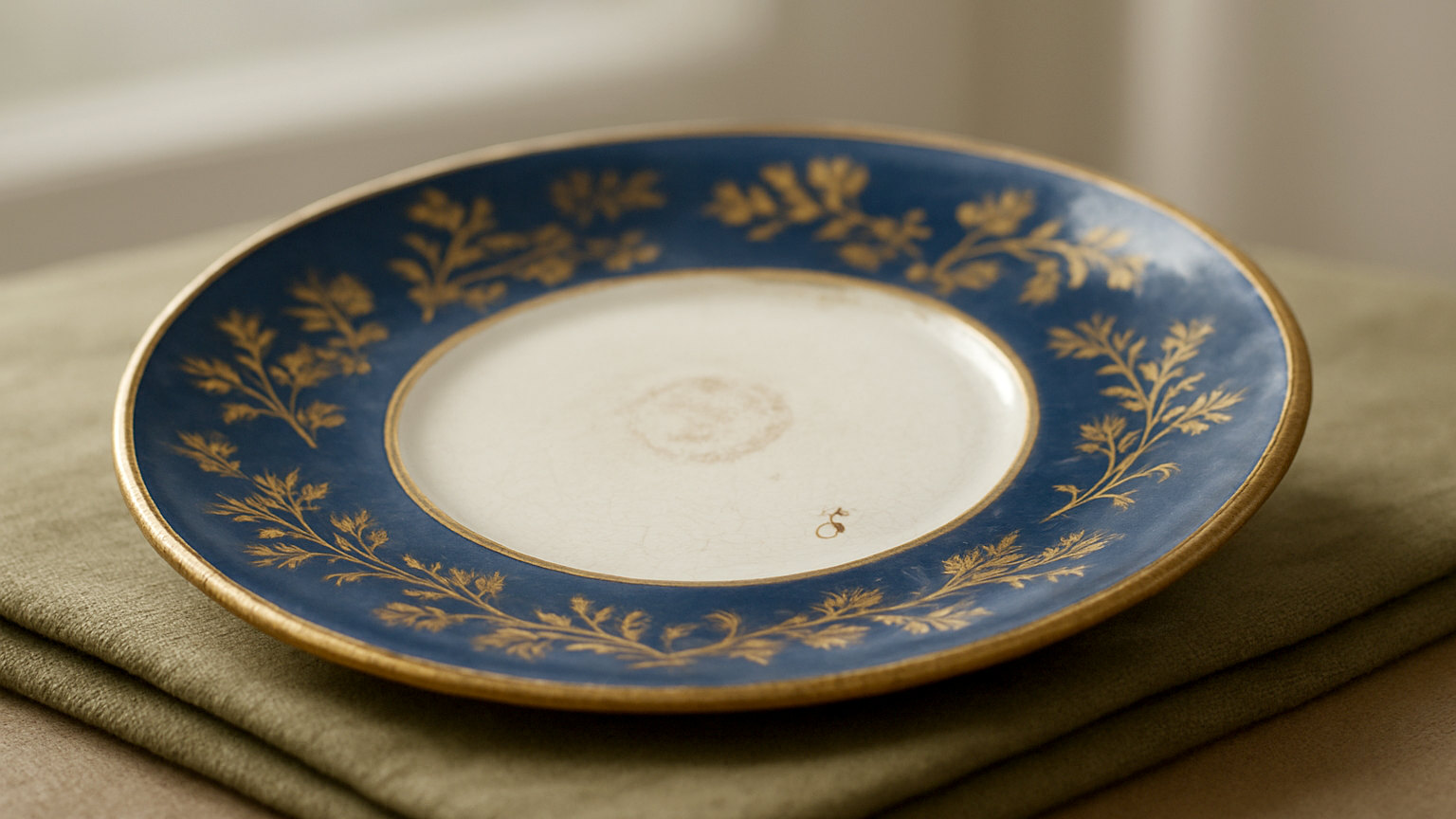
It sits on top of the fired glaze and was fixed at a much lower temperature. That makes it the exposed surface, so it wears, scratches and can be removed.
You can often feel an overglaze mark standing very slightly proud, and under magnification the edges may look slightly raised. Colours other than blue, particularly red, black, green and gold, generally indicate overglaze application. Wear to the mark while the surrounding glaze is unmarked is another giveaway.
Why does the distinction matter?
Because it affects how much you can trust the mark. An impressed mark is contemporary with manufacture. An underglaze mark was applied before the final firing, so it is contemporary too. An overglaze mark could have been added at any point in the object life.
Added marks are a genuine problem in ceramics, painted onto genuinely old but unmarked wares to attribute them to a valuable factory. Where a factory is known to have marked underglaze and you find an overglaze mark instead, that inconsistency is a serious warning.
What about painted marks?
Painted marks were applied by hand rather than transferred, and they may be either under or over the glaze. Because each was drawn individually, they vary from piece to piece, and that variation is normal rather than suspicious.
Genuine painted marks show the confident consistent line weight of someone who painted the same device thousands of times. Copies frequently show hesitancy, uneven thickness and wobbling where the brush changed direction. Compare against a reliable reference at the same scale rather than judging by impression.
How should you record what you find?
Note for every mark on the base whether it is impressed, printed under the glaze, or applied on top, and record the colour of each. Those three facts frequently narrow a piece more than the words in the mark do.
Photograph the base twice, once flat on and once under raking light, so both printed and impressed marks are captured. When you research, search the factory first to establish which methods and colours that maker actually used, then check whether your piece agrees.