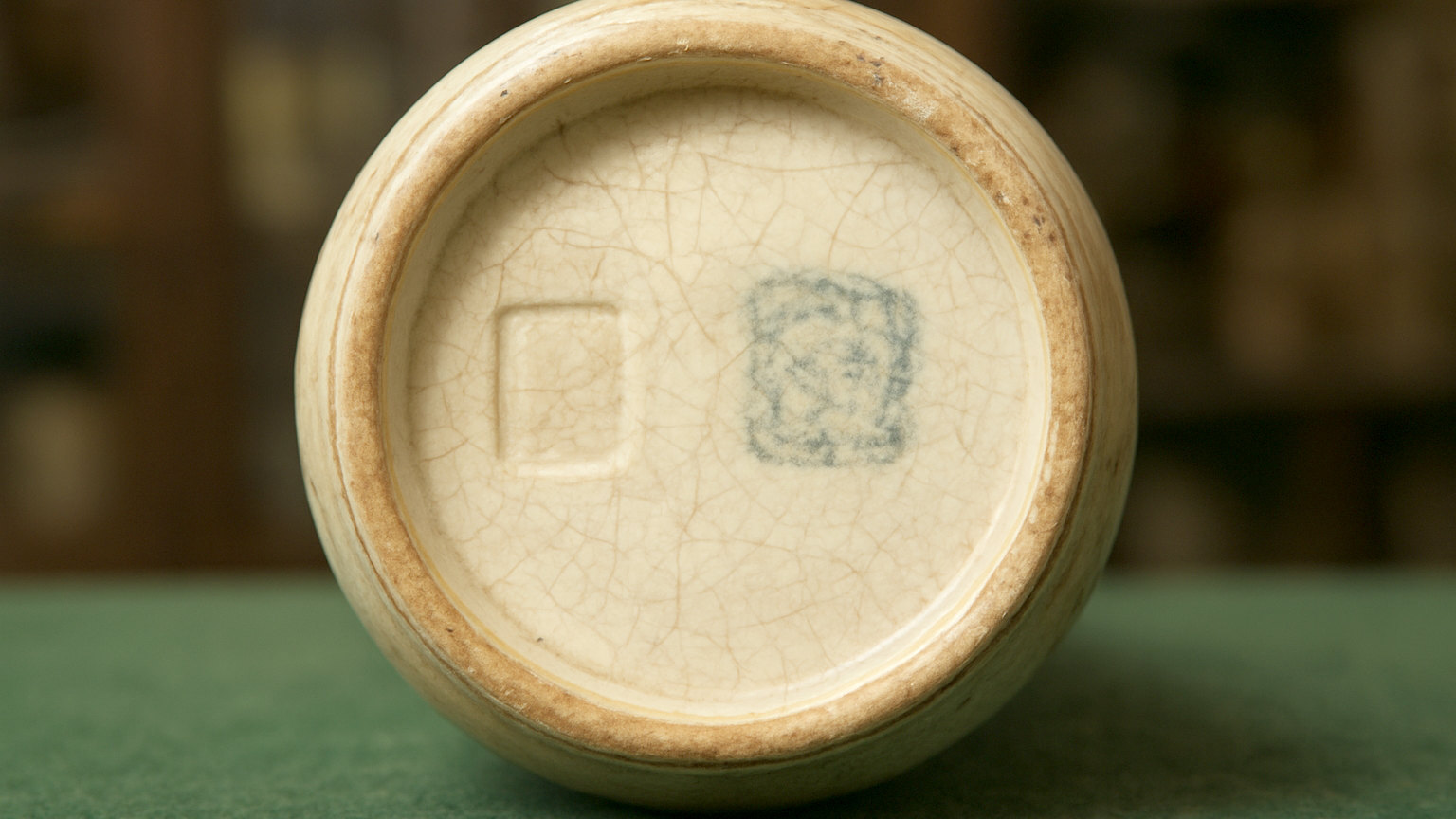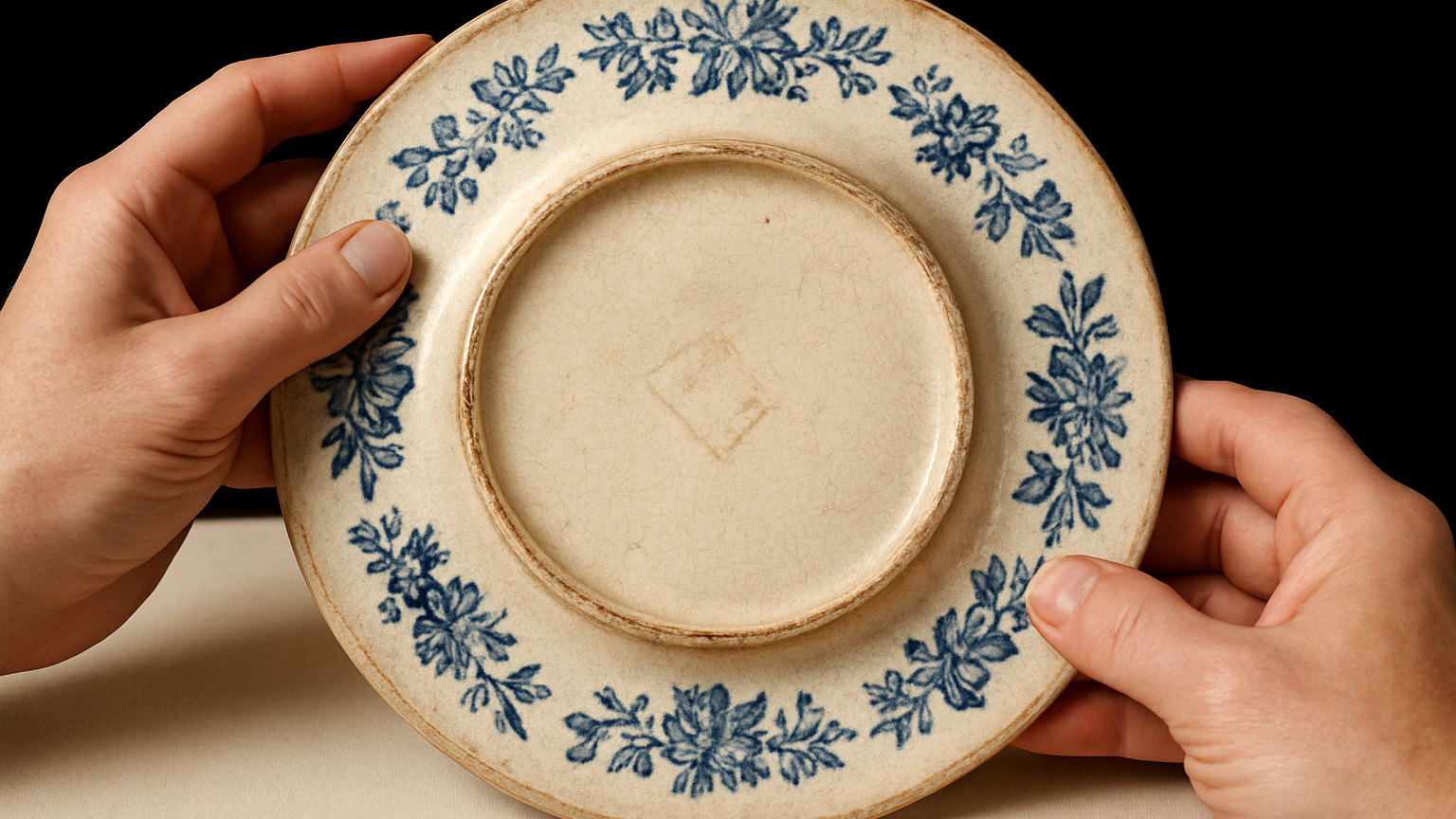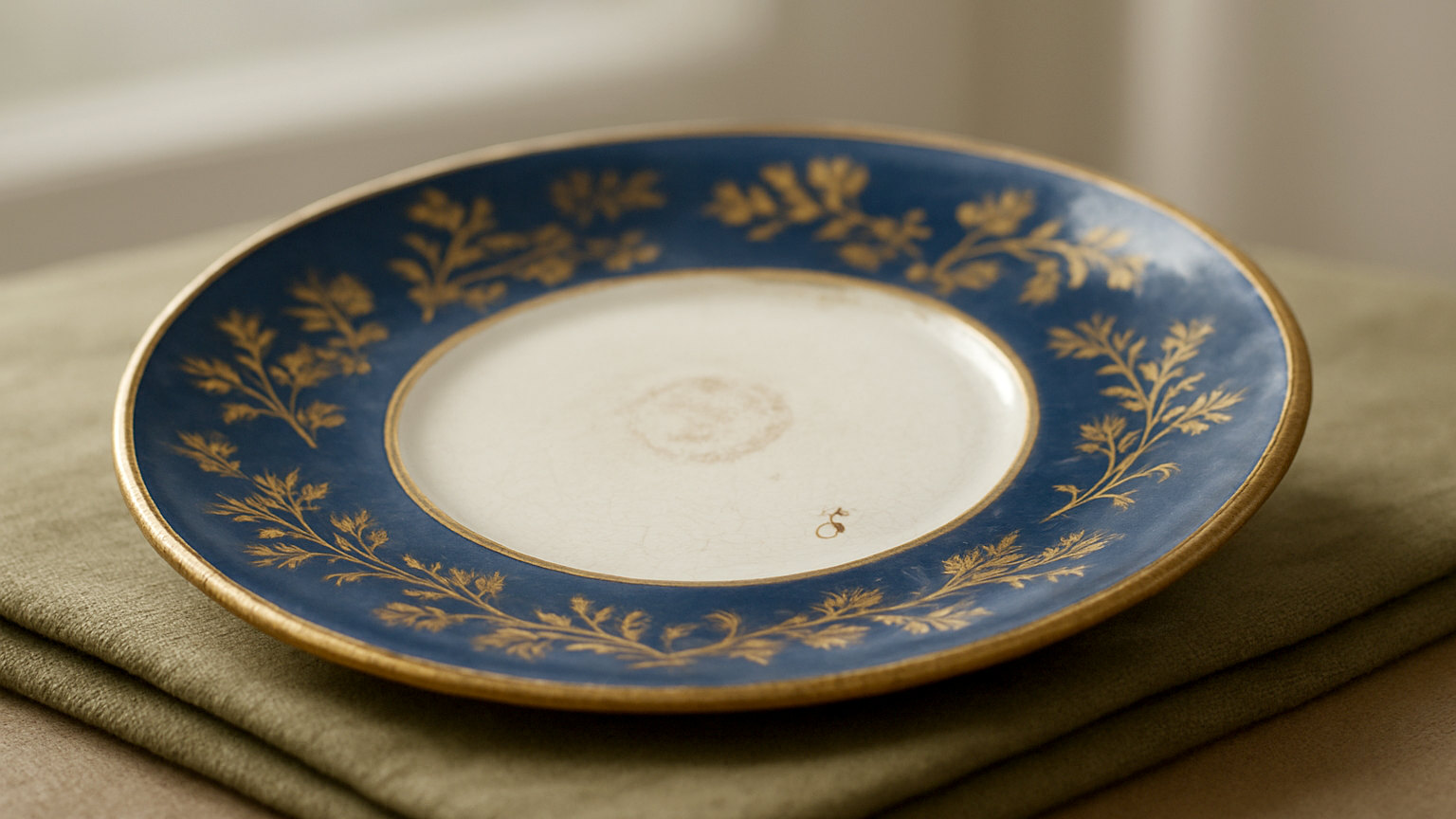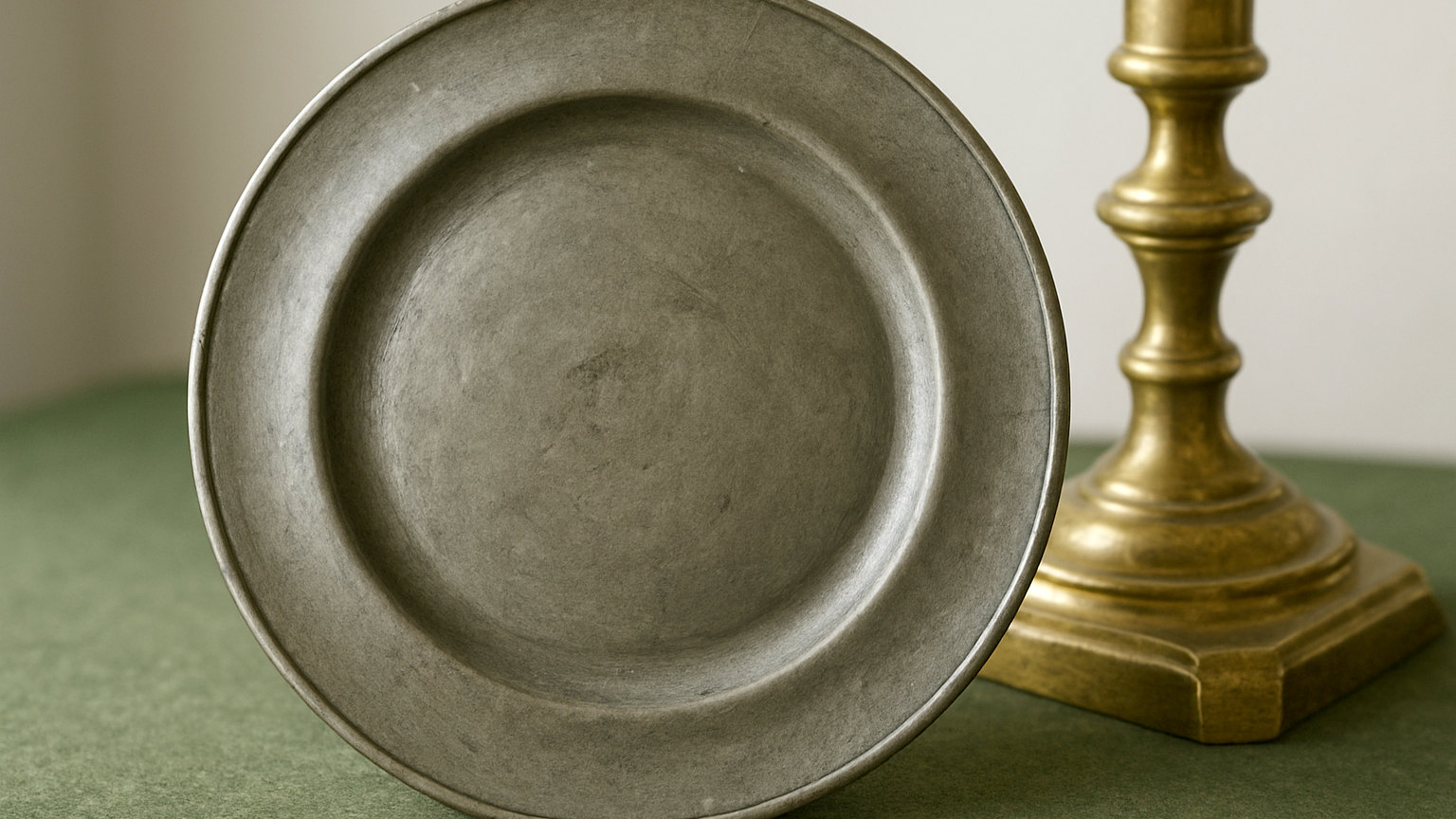
Two base metals sit side by side in most collections and could not be more different to research. Pewter was regulated by guilds and carries several kinds of mark. Brass and copper were regulated by nobody and carry almost none. Knowing which situation you are in saves a great deal of fruitless searching.
What is a pewter touchmark?
A pewterer personal mark, struck into the metal to identify who made the piece. Pewterers registered these by striking them onto communal touch plates held by their guild, which is where the term comes from.
Designs vary enormously, using initials, full names, and devices such as animals, birds, crowns and ships. Unlike a silver hallmark, a touchmark certifies nothing about metal purity and encodes no year, so it identifies a maker rather than dating a piece directly.
Where do you look on pewter?
Position varies by form. On plates and chargers, check the underside and also the upper surface of the rim, since marks were sometimes struck to be visible in use.
On tankards and measures, check the base, the inside of the base, the handle and the lid separately. Pewter is soft and marks wear quickly, so use raking light from a window and turn the piece slowly, photographing from several angles rather than reading directly.
What are verification marks?
Official marks applied to vessels used in trade to sell liquid by measure, confirming the capacity had been checked. They carry monarch initials and a local authority identifier.
These are genuinely useful for dating, because the monarch initials change with each reign. A measure carrying several verification marks was rechecked over many years, which is good evidence of a long working life. Look near the rim or on the body.
What other marks appear on pewter?
Quality marks resembling a crowned rose or similar devices, indicating a better grade of metal. Various words claiming quality also appear, and these were trade claims rather than certified standards.
Owner initials, frequently three arranged in a triangle, record a household rather than a maker. These are common on domestic pewter and should not be mistaken for a touchmark. Their position, usually on the rim or handle, is a clue in itself.
Why is brass so rarely marked?
Because there was no regulation requiring it and little commercial reason to bother. Brass was a working material for everyday objects, and the makers were small workshops selling locally.
The practical consequence is that identifying brass depends almost entirely on form, construction and quality rather than on any mark. An absent mark on brass or copper says nothing whatever about age or quality.
What marks do turn up on brass?
Occasionally a maker name or a registered design number on later manufactured goods, and sometimes a retailer name on better pieces. Weight or size numbers appear on some functional items.
Copper pans frequently carry more, including maker names, size numbers and institutional marks from large houses, hospitals or ships. Those institutional marks are genuinely interesting and add value, since they document where an object worked.
How do you research a touchmark?
Through published touchmark registers, which record the marks struck on the guild touch plates alongside the names of those who registered them. These are the primary source.
Record the mark exactly, including the shape of any surround and any date or lettering within it, then compare against the illustrated registers. Where a mark is partial, even a fragment of a distinctive device can narrow the field. Pewter collector societies hold detailed information.
What should you never do?
Polish either metal in an effort to make a mark clearer. On pewter the metal is soft enough to be abraded by almost anything, and polishing rounds the edges of an already shallow punch.
On brass, polishing removes the patina that collectors value and softens cast detail. Wash gently in warm soapy water, dry thoroughly, and use raking light rather than force. A mark that will not read under angled light will not read after polishing either.