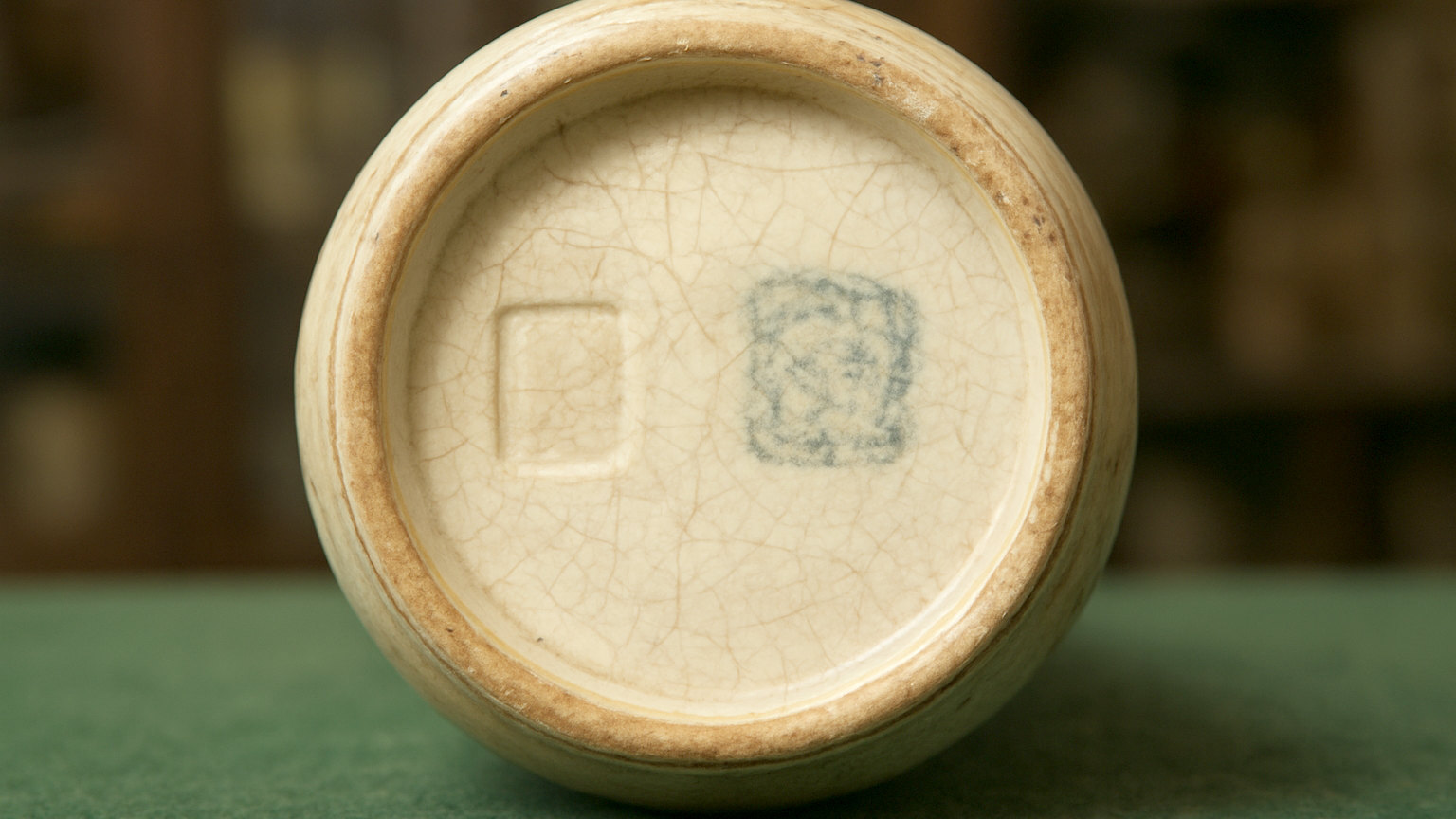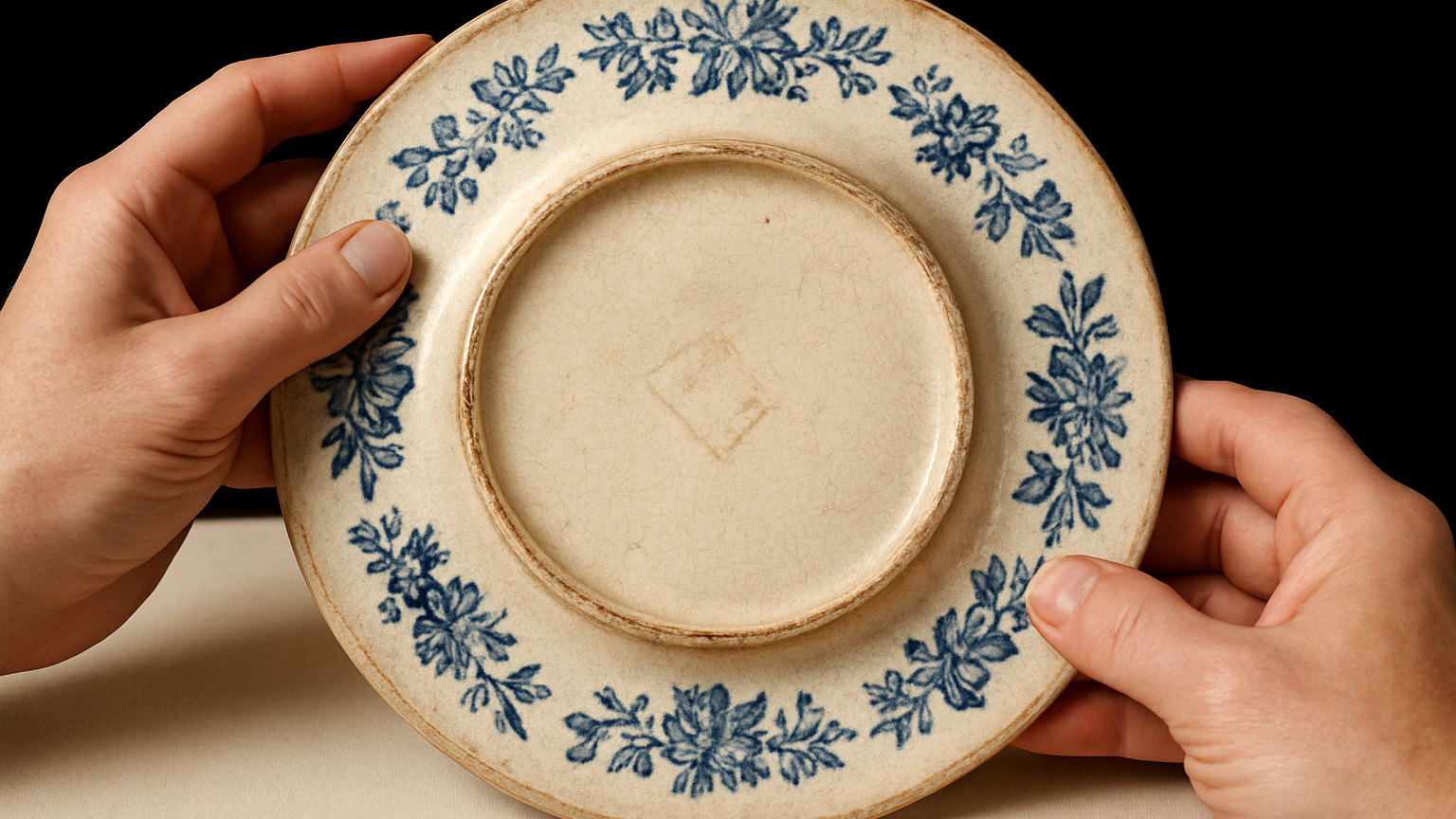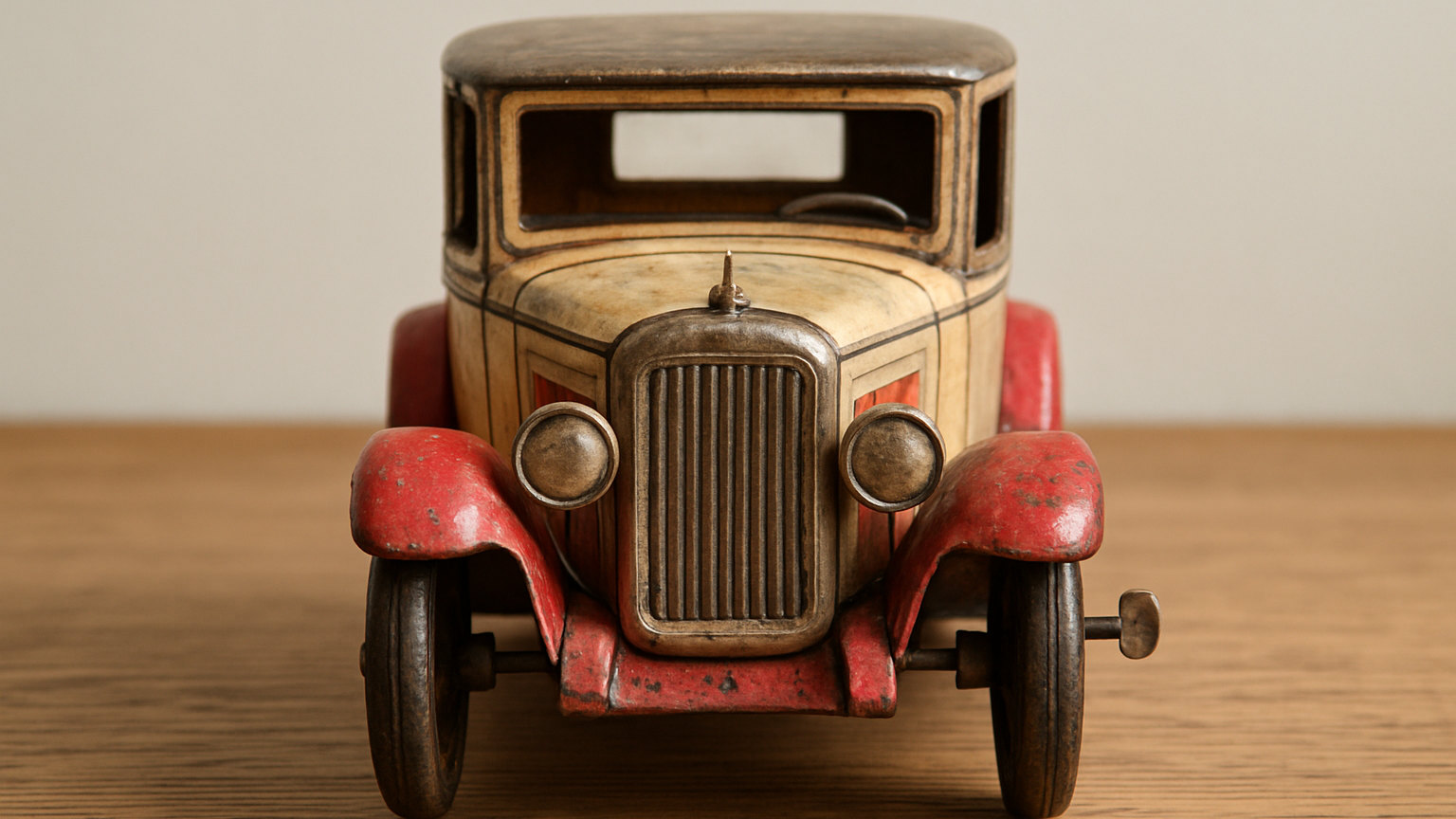
Toys carry marks more consistently than most people expect, because manufacturers were building brands and wanted the name visible. Where the mark sits depends on the material, since a lithographed tin toy, a cast die cast model and a stuffed bear each accept marking in completely different ways.
Where are marks on tinplate?
Printed as part of the lithography, usually small and on the base or an inconspicuous panel. Because the design was printed onto flat sheet before pressing, the mark is integral to the decoration.
Check the underside, the back and any area that would not show in play. Some makers used a trademark device rather than a name, so look for a small symbol as well as lettering. Marks stamped into the tin rather than printed also occur and need raking light to read.
Where are marks on die cast models?
Cast into the baseplate as part of the mould, usually with the maker name, the model name or number, and frequently a country of origin and a patent or copyright line.
The baseplate is the first place to look on any die cast vehicle. Note that the baseplate is a separate component riveted to the body, so a replaced baseplate is possible and the numbers on it should be consistent with the casting above.
What about soft toys?
A sewn label, a card swing tag or a metal fitting. The most celebrated example is a small metal button fixed into the ear, and its presence or the mark of its removal is worth checking on any old bear.
Look at both ears including for a small hole and surrounding fabric damage where a button has been pulled out. Check seams for sewn labels, which frequently survive tucked into a side seam or under an arm long after any swing tag has gone.
Where are marks on dolls?
Incised into the back of the head, low down near the neck opening, applied before firing. You will need to lift the wig carefully to see them.
The mark typically gives a maker name or initials, a mould number identifying the specific head design, and sometimes a size number. Record all of them, since the mould number is what identifies the doll in reference works.
What does country wording tell you?
A great deal about date. Import rules required goods entering certain markets to state their country of origin, so a country name generally indicates production after those requirements came in.
The bare country name came first and the fuller phrasing stating an item was made in that country came later, so the two forms are a useful dividing line. A toy with no country wording at all is likely to predate the requirement.
Does the box carry more information?
Frequently yes, and it is the reason packaging matters so much beyond scarcity. A box carries the maker name, the catalogue number, the model name and often a series or range.
That catalogue number identifies exactly which variant you have, which matters enormously where manufacturers changed colours and details during production while the number stayed the same. Where a box survives, photograph every printed surface including the end flaps.
What if a toy is unmarked?
Identify it by construction and by reference images instead. Base shapes, casting styles, wheel types, joint construction and painting conventions are all manufacturer specific and documented.
Collector societies and published references illustrate unmarked examples systematically, and experienced collectors identify by these features routinely. Absence of a mark is common on early toys and says nothing about quality.
How should you record a toy mark?
Photographed under appropriate light, with its position noted, and transcribed exactly including any numbers and punctuation. Cast marks need raking light; printed ones need flat even light.
Record the dimensions and the colours as well, since variants are distinguished by exactly these details. Never clean a toy to make a mark clearer, since washing lithographed tin or scrubbing a painted baseplate removes original finish that carries most of the value.