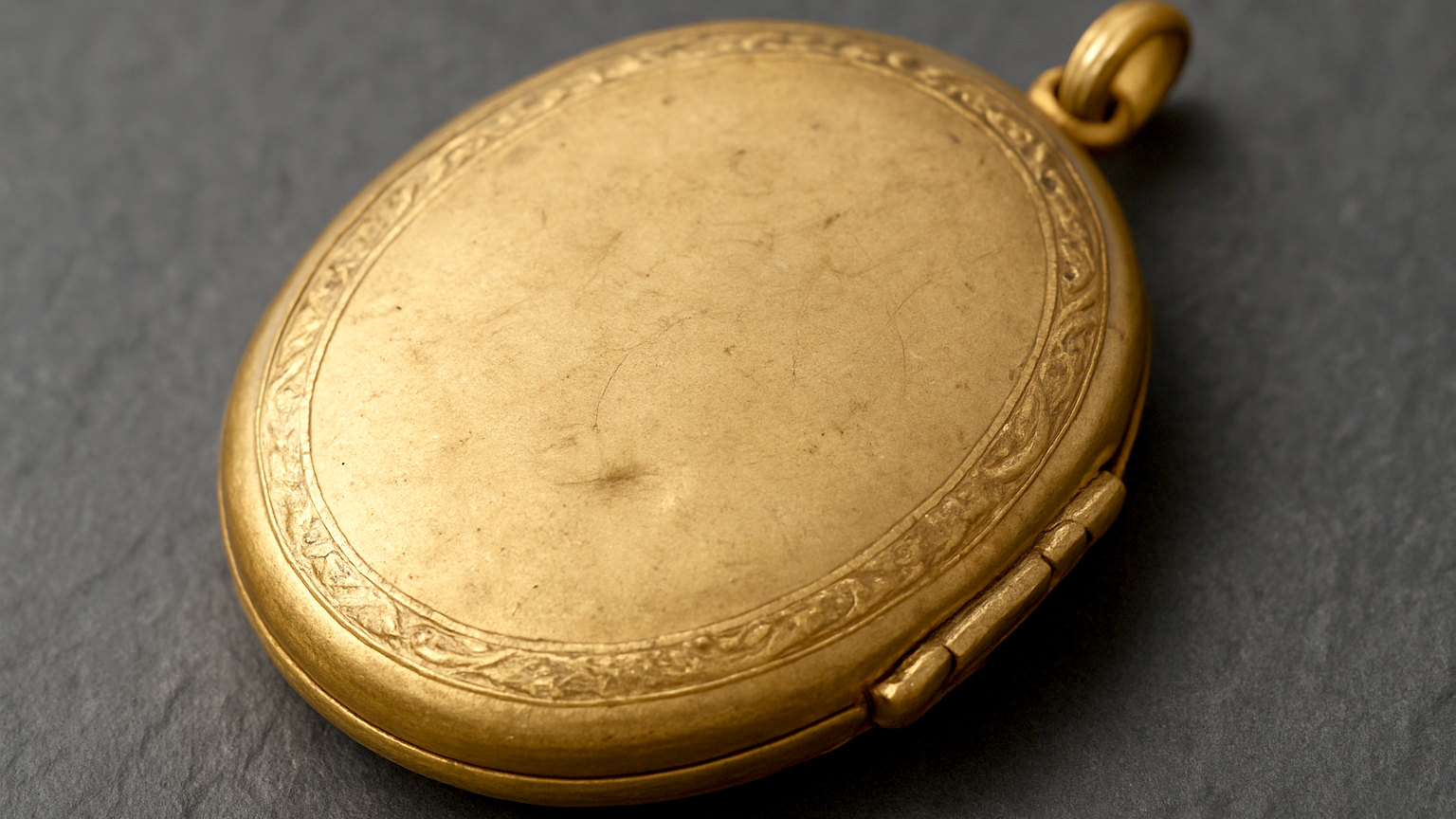
Jewellery is marked less consistently than any other precious metal object, which confuses people who expect the certainty that silver provides. Small and delicate items were exempt from marking requirements, many were struck so lightly that the mark has worn away, and a great deal of perfectly genuine antique gold has never carried one.
Where should you look?
On a ring, inside the shank at the back, opposite the setting. On a brooch, on the reverse of the body or on the pin catch. On a chain or bracelet, on the clasp or on a single link near it.
On earrings, check the fitting and the reverse of the body separately. Use magnification and raking light, since these marks are tiny and frequently worn nearly flat by decades of contact with skin and clothing.
What do the numbers mean?
The gold standard, expressed either as a carat figure or as parts per thousand. Higher numbers indicate more pure gold and a softer, deeper coloured metal.
Both systems frequently appear together, with a carat number and its decimal equivalent struck side by side. Continental jewellery generally uses the numeric system alone. A number by itself, without any accompanying assay mark, is a manufacturer claim rather than a certified standard.
Why is so much genuine jewellery unmarked?
Because of weight thresholds. Items below a defined weight were exempt from compulsory marking, and a great deal of jewellery falls below it, particularly chains, small brooches and delicate settings.
Striking a punch into thin or fragile work would also have damaged it, so exemption was practical as well as legal. An absent mark therefore proves nothing about the metal, which is why testing rather than mark hunting is the right approach.
How should you test unmarked jewellery?
Electronically, by a jeweller, which is quick and does no damage. This is the sensible route for anything you might keep or sell.
A magnet is a useful first check, since gold, silver and platinum are not magnetic, though many base alloys are not either so it rules things out rather than confirming them. Avoid acid testing kits, which work by damaging a small area permanently for information a specialist can obtain without marking the piece.
What is a convention mark?
An internationally recognised mark showing that a piece has been assayed to an agreed standard, allowing it to be traded across participating countries without retesting.
It appears as a device containing a numeric standard. Seeing one indicates a comparatively modern piece, since the system is recent, which makes it useful for excluding rather than confirming antiquity. Import marks work similarly and are entirely legitimate.
What other marks turn up?
Maker initials, which identify the workshop or sponsor rather than necessarily the craftsman. Design registration numbers, which convert to a year through published tables. Occasionally a retailer name on a fitted case rather than the piece.
Words describing a plating process indicate the piece is not solid precious metal. Words claiming quality without an assay mark are trade language. Numbers that are neither a standard nor a registration are usually stock or pattern references.
Does a mark date the piece?
Where a full hallmark is present, yes, exactly as on silver, because the date letter gives the assay year. That is uncommon on jewellery but extremely useful when it occurs.
Where only a standard number appears, it gives no date. In that case date the piece from its construction instead: the setting type, the stone cuts, the fastening and the metal colour all place it within a period more reliably than any number will.
What should you never do?
Polish a mark to make it clearer, since the punch is shallow and abrasion removes it permanently along with the dark residue that makes it legible.
Do not assume an unmarked piece is base metal and sell it by weight, and do not assume a marked one is necessarily old. Photograph any mark under raking light, record it exactly as it appears including the shield shape, and have the metal tested if the answer matters financially.