Clocks are unusually generous with names and unusually confusing about whose they are. A single clock may carry a name on the dial, a different one engraved on the movement, and scratched notes inside the case from people who serviced it over two centuries. Each tells you something, and they are frequently mistaken for one another.
What does the name on the dial mean?
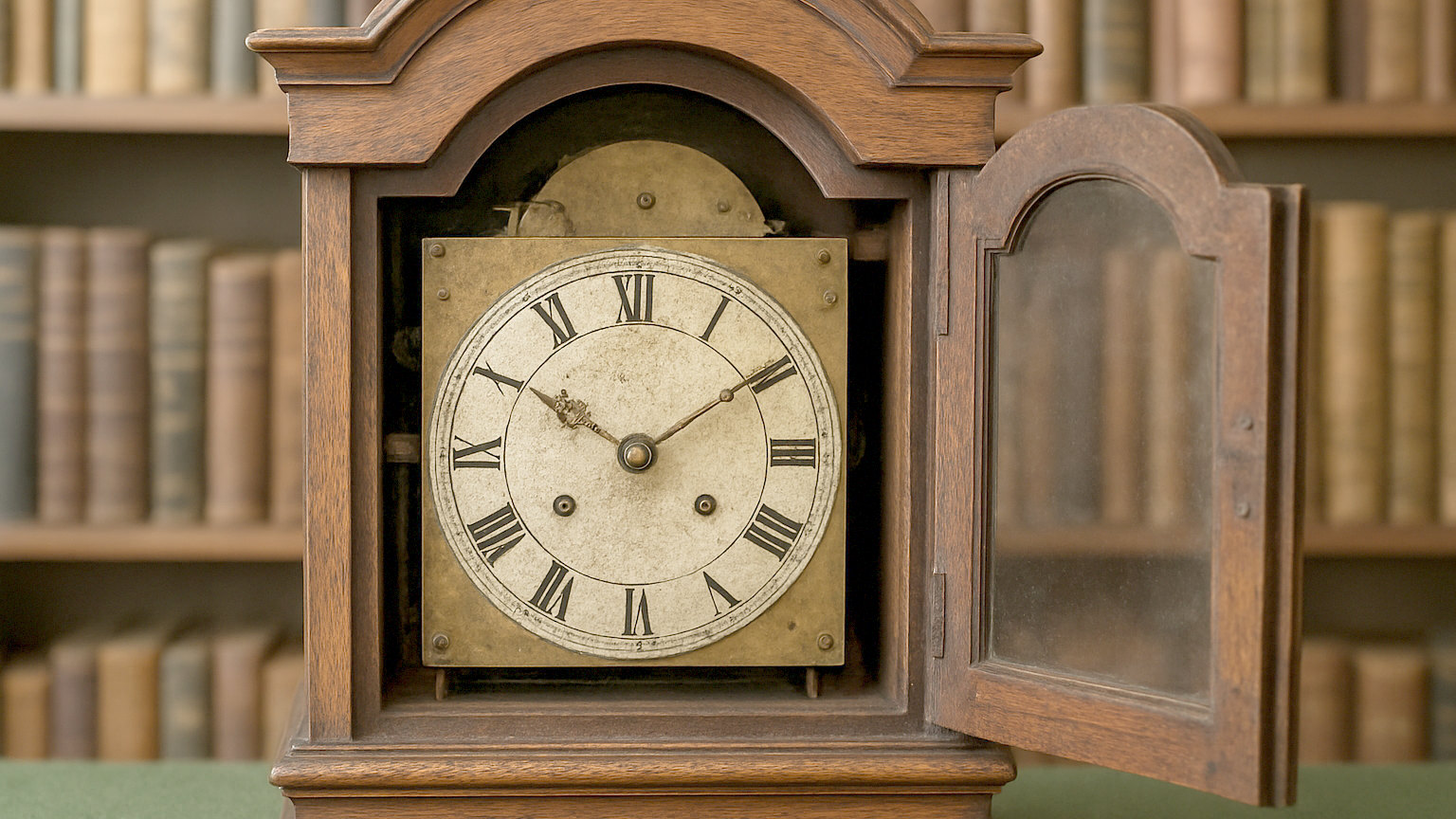
Usually the retailer, and only sometimes the maker. Clocks were commonly sold by shops that commissioned movements from specialist workshops and put their own name on the finished article.
That name is still useful, because it gives you a business and an address to research through trade directories, which brackets the clock within the years that firm traded there. Just do not assume it identifies the hand that made the movement.
What is on the backplate?
On better clocks, the actual maker name and frequently a serial number, engraved on the rear plate of the movement where it would be seen through a glazed back door.
Backplate engraving was a display of quality, so a well engraved plate indicates a workshop that expected its work to be admired. Later commercial movements were left plain. Open the back door and look before forming any view about a clock, since this is where the substantive information usually sits.
What are the scratched notes inside?
Repairer marks, left by workmen who serviced the clock, usually scratched or pencilled on the inside of the case or on the movement plates. They frequently include a name, a town and a date.
These are genuinely valuable evidence rather than graffiti. A run of dates across two centuries documents a clock working life and confirms it has been in use rather than assembled recently. Never clean them off, and photograph them before any restoration.
How do serial numbers help?
They date the movement precisely where production records survive. Established makers numbered movements sequentially, and published references convert those numbers to years.
Compare the movement number against any hallmark on the case, since a silver or gold watch case carries an exact assay year. A gap of a year or two between the two is normal; a gap of decades means the movement has been recased, which is common and reduces value.
What do marks on the dial itself indicate?
On painted dials, look for a dial maker name, since dials were a separate trade and specialist firms supplied them to clockmakers. That name dates the dial and therefore gives an earliest possible date for the clock.
On brass dials, the name is usually engraved on the chapter ring or on a separate applied plaque. Check whether it sits comfortably in the space provided, since a name that looks cramped or has been engraved over an erased area may have been added later to improve the clock.
What should make you suspicious?
Names that do not fit the object. A celebrated maker name on a movement whose quality does not support it, an engraving that is crisper than everything around it, or a name added over a polished patch.
Check whether the named maker is recorded as working in that town at that date, and whether they made clocks of that type at all. Marriages of good movements into later cases are common, so verify that the dial fills its aperture cleanly and the movement sits on its seatboard without packing.
How should you record what you find?
Photograph every name, number and scratched note under raking light, noting exactly where on the clock each appears. Position matters as much as content when you come to interpret them.
Keep the record with the clock. Research based on a name plus an address plus a movement number is far more convincing than any one alone, and documented attribution adds real value because it removes doubt for the next owner.
Does a famous name always add value?
Only when the rest of the clock supports it. Verify the quality of the movement matches the reputation before paying a premium for a name on a dial.