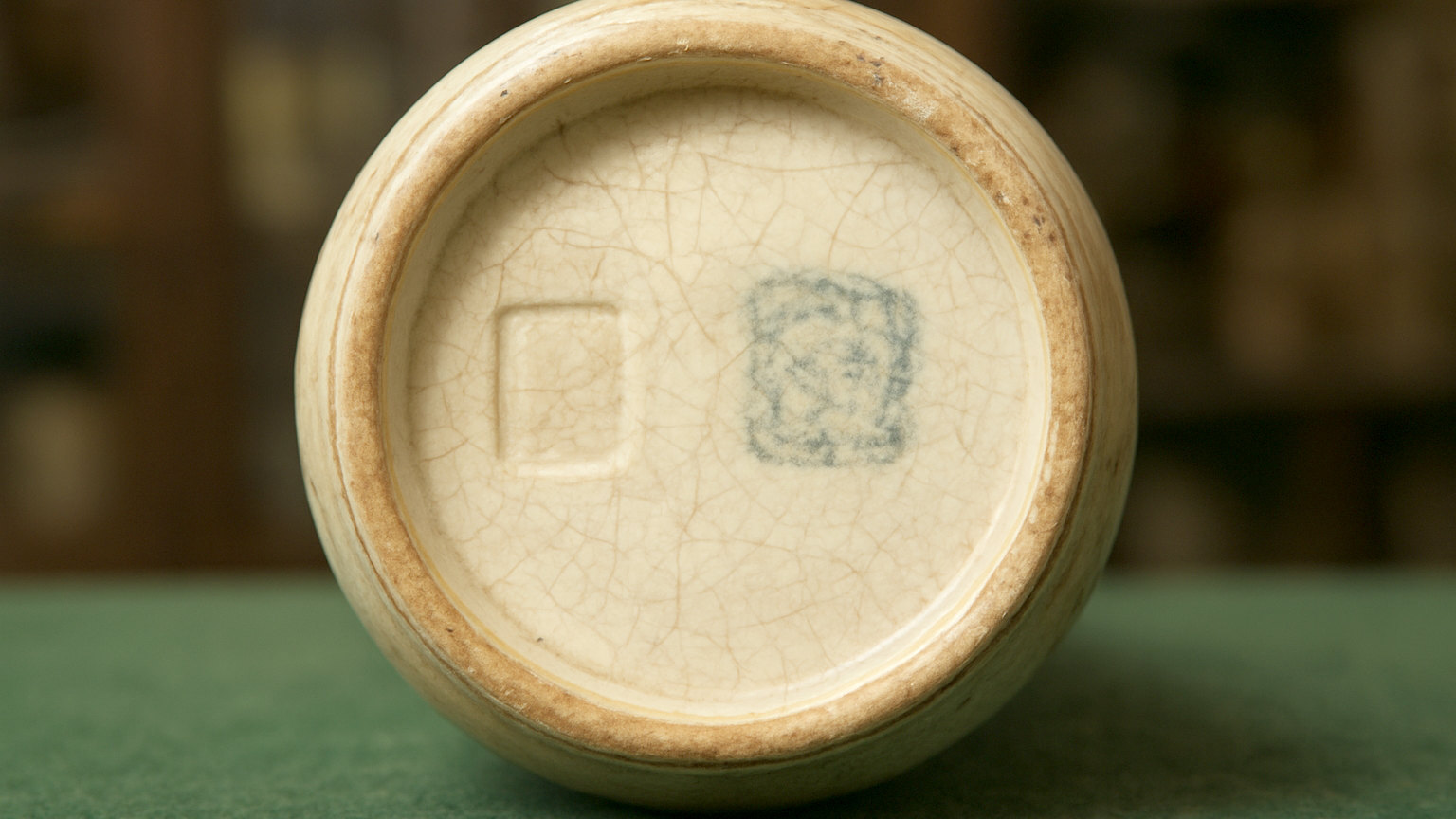
A mark that gives you a name and a town has handed you far more than an attribution. Trade directories were published regularly and listed businesses by trade and by address, which means a workshop that moved premises twice has given you three separate date brackets. This is frequently the most precise dating available on an otherwise ordinary piece.
What were trade directories?
Commercial publications listing the businesses in a town or region, arranged by name, by street and by trade. They were produced by several publishers, updated every few years, and sold to anyone who needed to find a supplier.
For research purposes they are close to ideal, because they record not just who existed but where they traded and under what description. A cabinetmaker listed at one address in one edition and at another in the next has dated everything he made in between.
How do you start a search?
With the exact wording of the mark. Write down the name precisely as it appears, including initials, abbreviations, punctuation and any address or trade description. Small details matter, because a business trading as one form of name and later another gives you a dividing line.
Then identify the town. If the mark gives one, start there. If it does not, the style of the object and any regional characteristics may suggest a region, and it is worth searching the nearest large town first since that is where most trades concentrated.
Where are directories held?
Local studies libraries and county record offices hold the fullest runs, usually for their own area, and staff there are generally expert at exactly this kind of search. Many directories have been digitised and are searchable online.
Coverage is patchy, so a business may appear in one publishers directory and not another for the same year. Search several publishers where they exist rather than concluding from one absence that a firm did not trade. Census records and rate books cover similar ground and are useful when directories fail.
What do you do with the results?
Build a timeline. Note every edition in which the business appears, the address given each time, and the trade description used. The first and last appearances bracket the working life of the firm.
Where the address changes, you have a much narrower bracket for anything carrying the earlier one. Where the trade description changes, for instance from one specialism to a broader one, that too may correspond to a change in what the workshop produced.
What other dating clues do directories give?
Street numbering changed in many towns at datable points, so a mark carrying an old number can be placed before the renumbering. Postal district codes were introduced at known dates and their presence in an address gives an earliest possible date.
Changes in the form of a business name are equally useful. A firm trading under one man name and later adding a partner, or becoming a limited company, marks each transition clearly, and marks carrying the earlier form predate it.
What are the common pitfalls?
Assuming the name is the maker. A great many marks name the retailer who commissioned and sold the piece rather than the workshop that made it, and directories will happily confirm a shopkeeper existed without telling you he made anything.
The other trap is the common surname. Several unrelated businesses with the same name frequently traded in one town, so match the trade and the address rather than the name alone. Where two candidates fit, say so rather than choosing the more flattering one.
How should the research be recorded?
Write down the source for every fact: the directory title, the year of publication, the page and the exact wording of the entry. A conclusion without a source is an opinion.
Keep that record with the object. Documented research adds real value at sale because it removes work and doubt for the next owner, and it lets someone else verify your reasoning rather than taking it on trust. Photographs of the directory entries are worth including.