Marks are the most attractive thing to copy on any antique, because they carry so much of the value and are so small. Fortunately the physical difference between a mark struck into metal and one reproduced by casting is genuinely visible, and the checks require nothing more than a loupe and good light.
How is a genuine mark made?
By driving a hardened steel punch into the surface with a hammer blow. The metal is displaced rather than removed, so the mark is a depression with sharp walls and a clean floor.
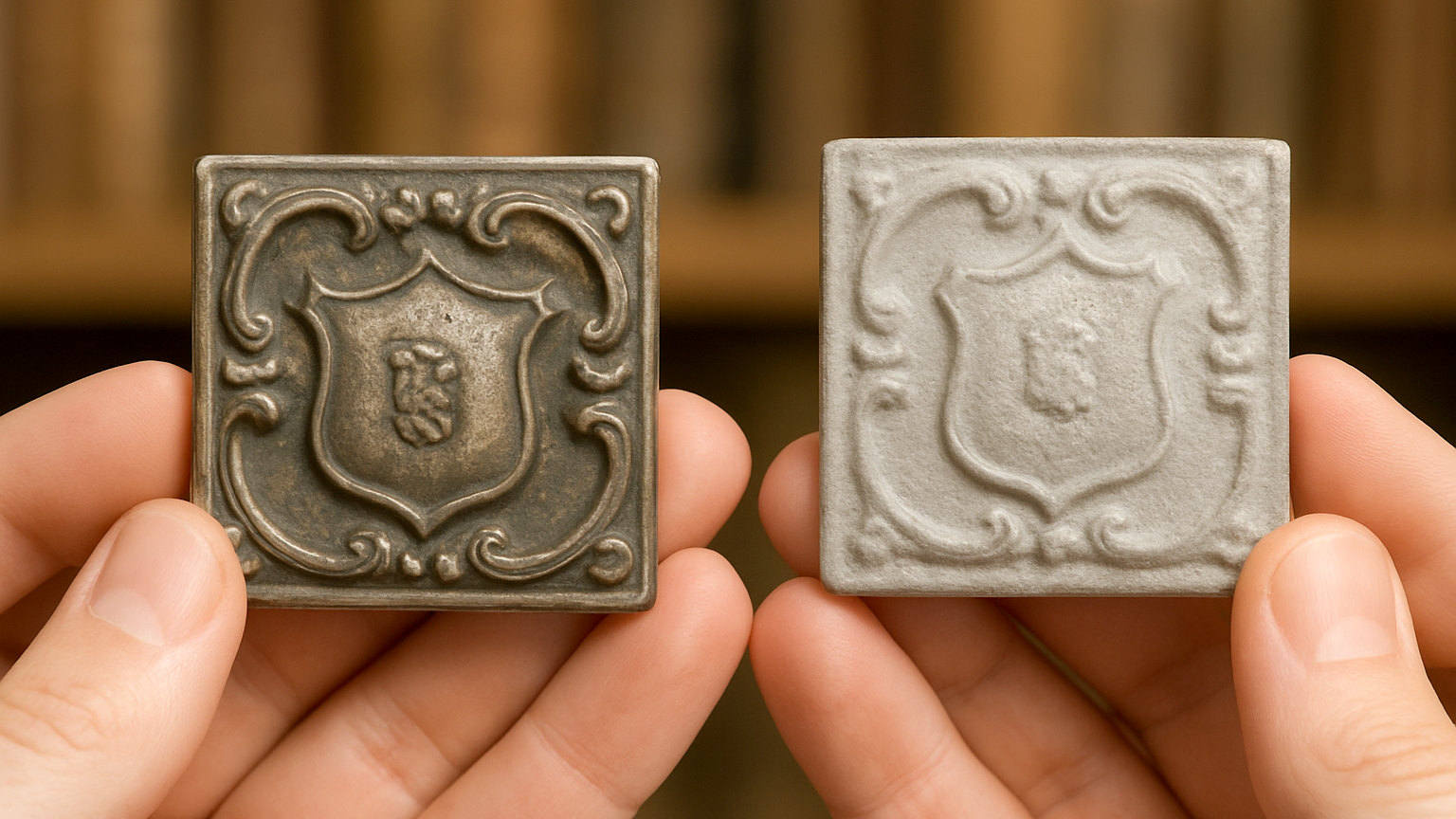
That process leaves specific characteristics: crisp vertical edges where the punch met the surface, a slight raised lip around the outside where displaced metal was pushed up, and lettering with defined corners. Under magnification the whole thing looks decisive.
What does a cast copy look like?
Soft. A cast mark is reproduced from a mould taken off an original, and casting cannot capture sharp edges, so the walls slope, the corners round off and the lettering blurs.
The surface within a cast mark frequently has a fine grainy texture from the mould, quite unlike the smooth floor of a struck punch. There may also be a slight depression or halo around the mark where the mould sat. Once you have compared the two, the difference is unmistakable.
Why does crispness alone prove nothing?
Because it works both ways. A very worn genuine mark can look soft, and a well executed modern strike can look crisp. Crispness has to be judged in context rather than in isolation.
The useful question is whether the mark has worn at the same rate as everything around it. A razor sharp mark on a base showing a century of scratching is inconsistent. So is a nearly illegible mark on an otherwise pristine surface. Look for agreement rather than for sharpness.
What does the surrounding metal tell you?
Whether the mark was struck into this object or added later. Striking displaces metal, so a genuine punch frequently distorts the surface very slightly on the reverse of thin material.
Run a fingertip over the back of the marked area on a thin piece and feel for the corresponding bump. Its absence on a thin object is worth noting. On a thicker piece look instead at whether the surface around the mark shows the same polish, wear and toning as the rest.
How do you spot an inserted mark panel?
By breathing on the area around the punches and watching the condensation clear. Solder and the surrounding metal behave differently, so a fine rectangular outline frequently appears around a let in panel.
Check the corresponding point inside the object for a solder line, a colour change or unevenly flowed metal. Run a fingernail across the area, since an inserted panel often sits very slightly proud or slightly sunken relative to the surface.
Does the mark suit the object?
This is the check that catches most problems and requires no magnification. A mark records a date and a maker, so ask whether the object could plausibly have been made then and by them.
Look at the form, the decoration and the construction. A shape belonging to one period carrying a mark from a much earlier one is a clear warning. Equally, check whether the named maker is recorded as working in that place at that time and as producing that kind of object.
What about marks on ceramics and glass?
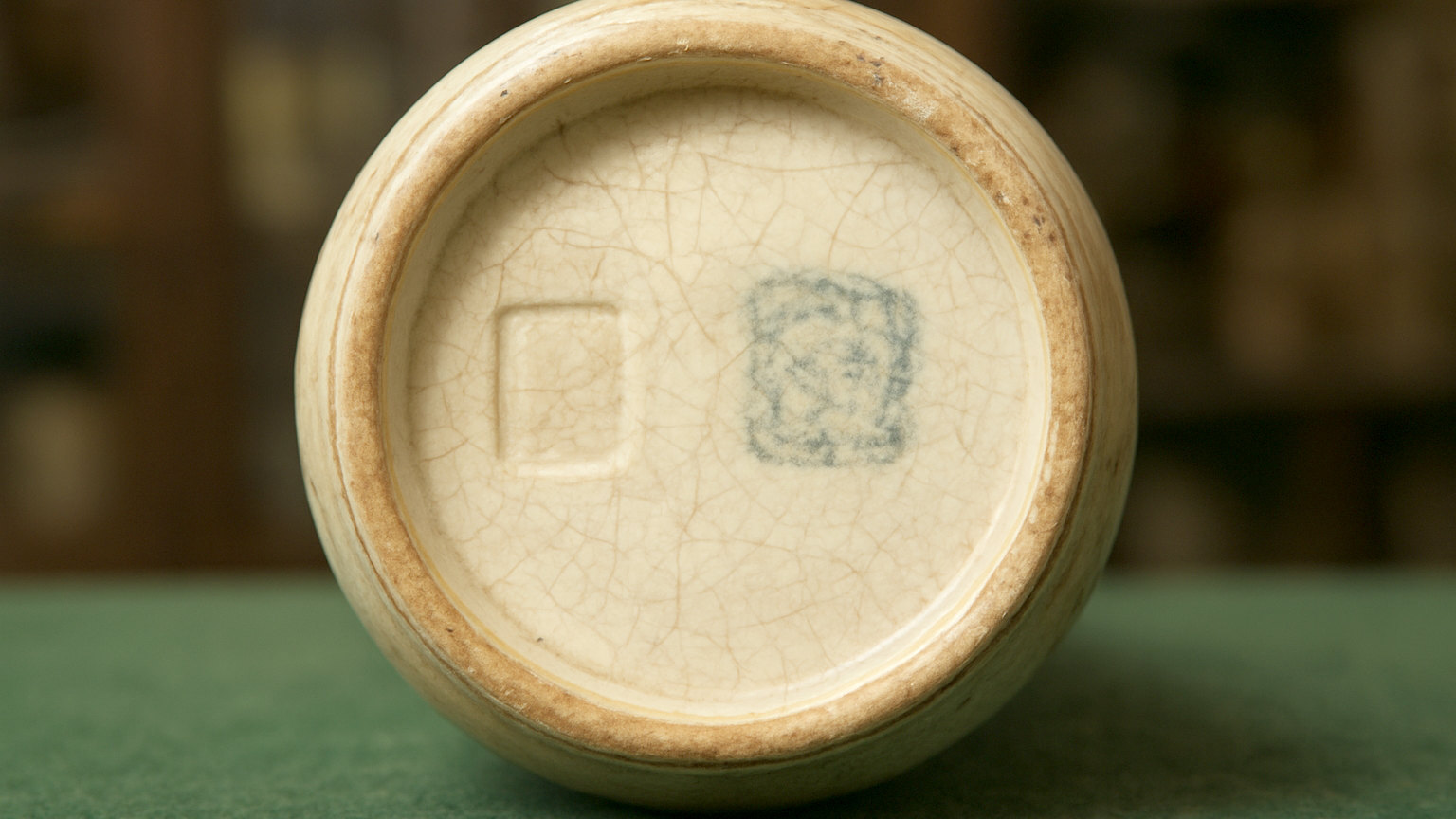
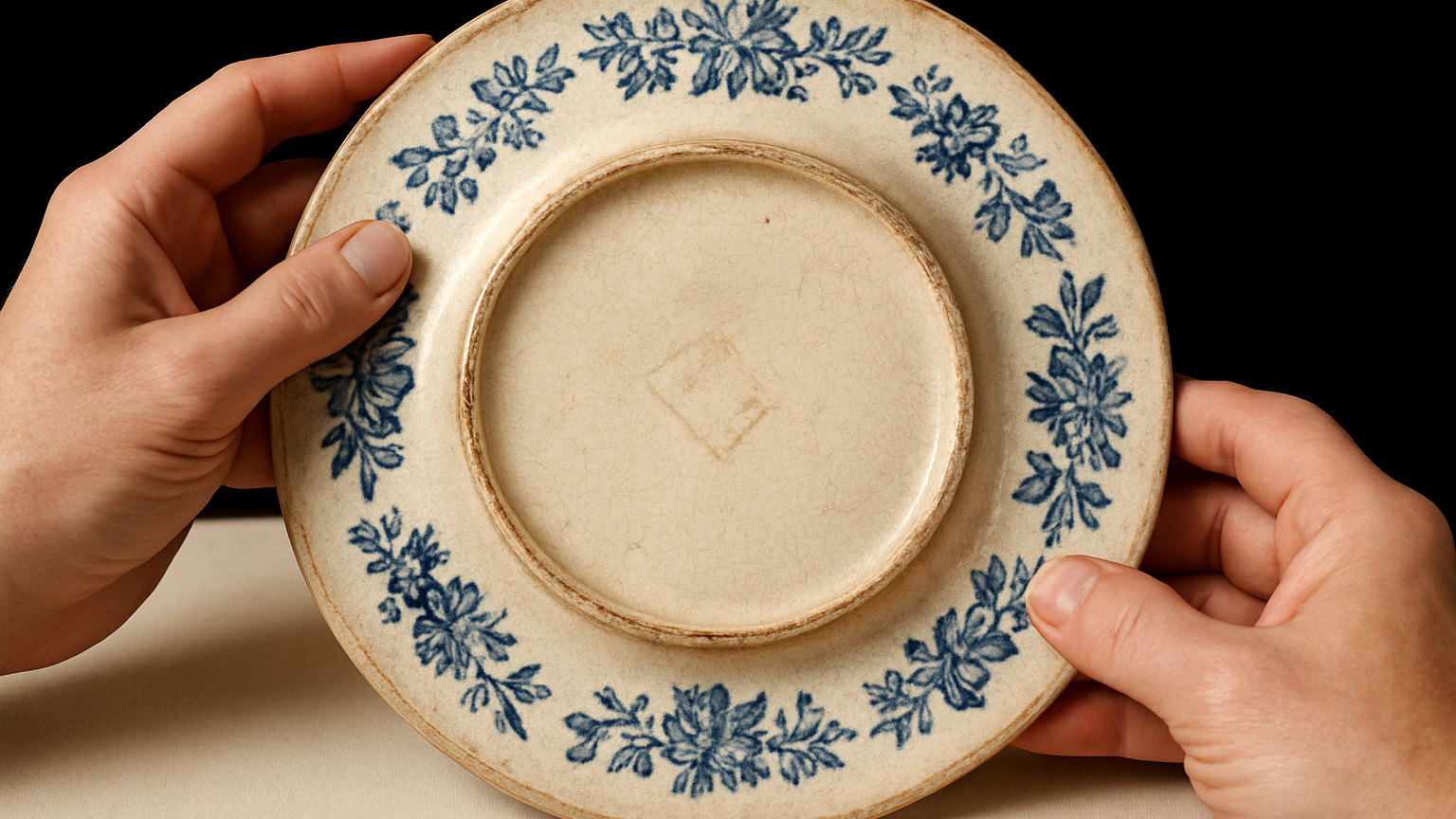
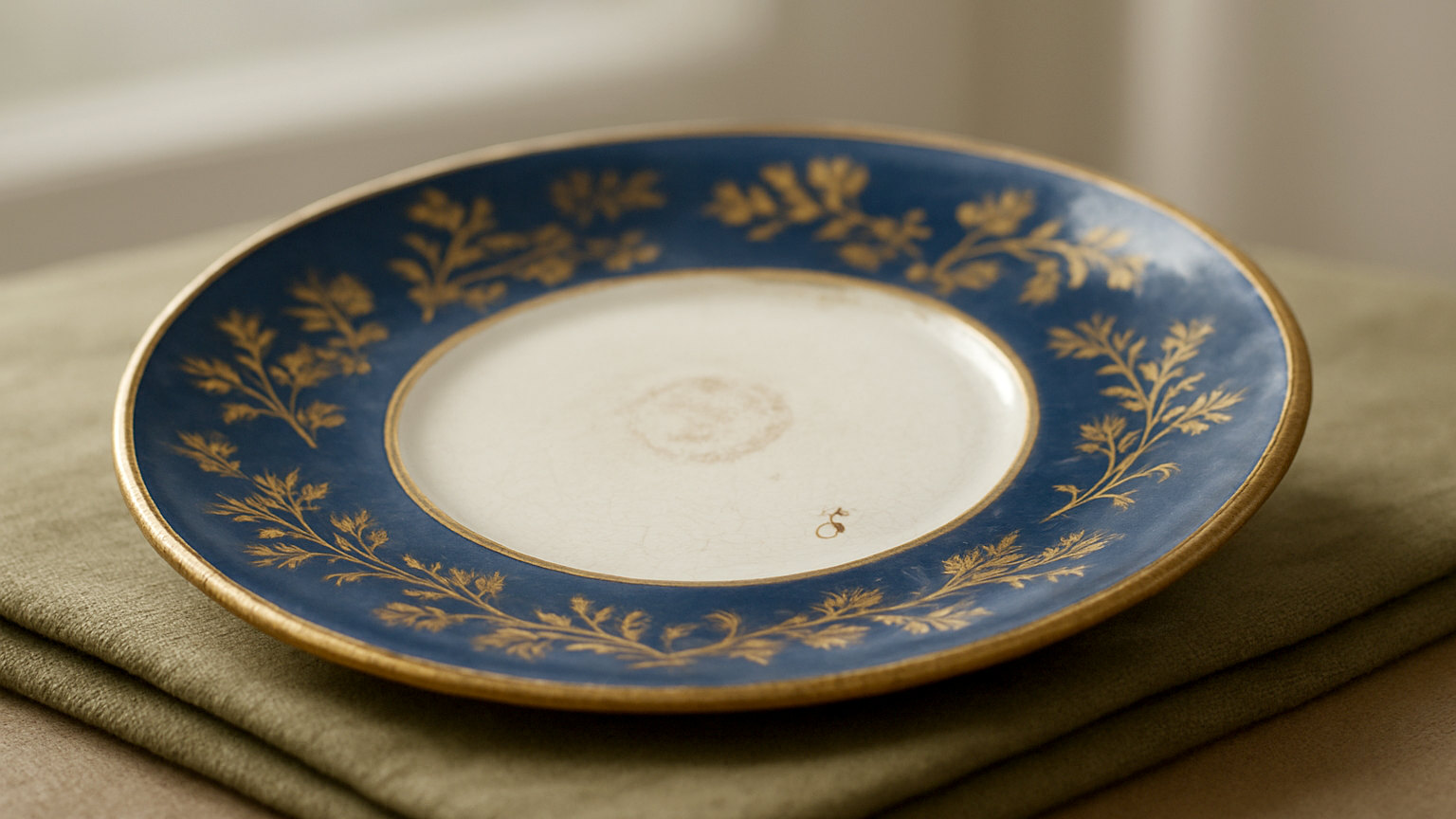
Different mechanics, same principle. On ceramics, an added mark painted over a fired glaze sits on the surface and can be felt, whereas a factory mark applied beneath the glaze is perfectly smooth.
On glass, an acid stamped mark is a shallow surface texture that only reads under raking light, while an engraved signature shows the fine irregular lines of a wheel. In both cases, check the method matches what that maker actually used.
When should you get an opinion?
Whenever the mark substantially changes what the object is worth, and whenever anything about it feels inconsistent with the piece carrying it.
Assay offices examine silver marks and advise, specialist dealers read marks constantly, and museum staff will often comment on a ceramic device. Do not clean the piece first, since polishing softens punch edges and removes the residue that makes a worn mark legible in the first place.