Textiles are the least marked category in antiques, for the straightforward reason that fabric will not take an impressed punch and any applied label eventually falls off. What marking does exist has to be part of the fabric itself, which makes it both rarer and more interesting when found.
What is a woven signature?
A name, initials or device incorporated into the weave itself, usually within the border or in one corner. On rugs this is called a cartouche and it may name a weaver, a workshop or a patron.
Look in the border rather than the field, and at the ends rather than the sides. Woven inscriptions are frequently in a script unfamiliar to the reader, so photograph rather than attempting to transcribe, and record which way up the rug was woven.
Where do you look on a rug?
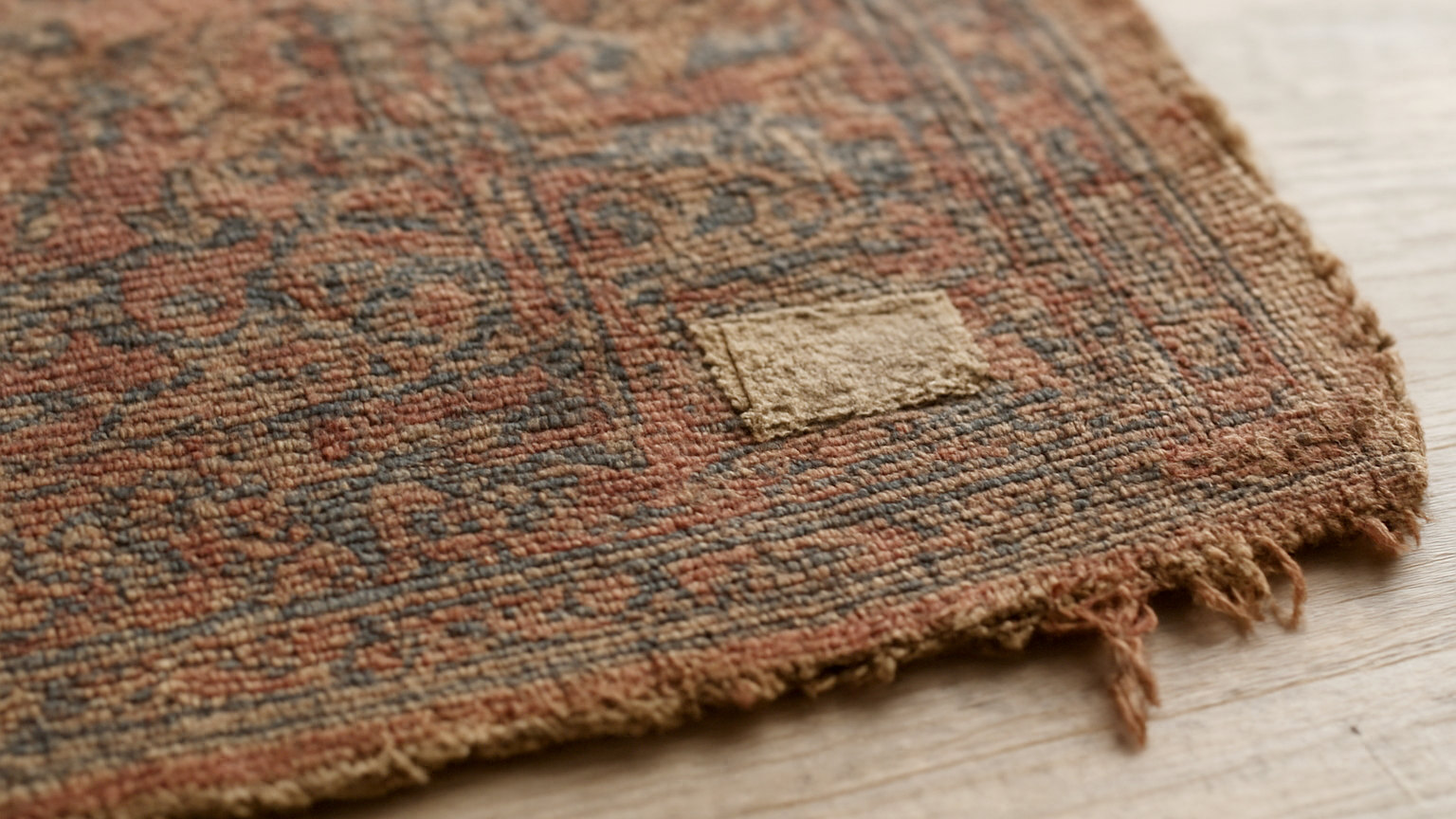
The border corners, the ends near the fringe, and occasionally within the field design where a small panel breaks the pattern. Turn the rug over as well, since some inscriptions read more clearly from the back.
A dated cartouche is genuinely valuable, since it anchors the piece precisely, though dates in unfamiliar calendars need converting. Any inscription should be photographed and shown to a specialist rather than guessed at.
What do selvedges and finishes tell you?
More than any mark, in practice. The way the sides are wrapped and the ends finished varies by weaving tradition and is one of the main identification tools.
Examine both long sides and both ends. Note the material used for wrapping, the number of warps bound together, and how the end finish is constructed. Combined with knot type and dye palette, this places a rug regionally far more reliably than any signature.
Are printed textiles marked?
Sometimes, along the selvedge. Printed furnishing fabrics frequently carry a manufacturer name, a pattern name or number, and occasionally a designer name printed in the narrow uncut edge.
That edge is usually trimmed away when fabric is made up, so it survives mainly on unused lengths and on the reverse of curtains where a hem preserves it. Check inside hems and behind linings, which is where selvedge marking most often survives.
What about sewn labels?
Common on later manufactured textiles and on made up items such as quilts, coverlets and clothing. Look at seams, hems, waistbands and the inside of any lining.
Labels frequently carry a maker, a retailer and sometimes a size or a care instruction, all of which help with dating. Never remove a label however tatty, since it is frequently the only attribution the piece has, and photograph it in place.
How do samplers differ?
They mark themselves. Most samplers carry the maker name, her age and a date stitched into the work, which makes them among the very few textiles that date themselves precisely.
Read the inscription carefully under magnification, since stitched lettering wears and fades. Record it exactly including spellings, since that inscription is both the dating evidence and the main source of value.
What can dyes tell you?
Roughly when a textile was made, which is a form of evidence in itself. Natural dyes mellow unevenly and show banding where dye lots changed; early synthetic dyes fade flatly and can run.
Part the pile on a rug and compare colour at the tip against the root. A dramatic difference indicates an unstable dye rather than natural colouring. Testing colourfastness with a damp white cloth is worth doing before any cleaning is contemplated.
How should you record what you find?
Photograph any inscription, label or woven device in place under even light, note its exact position, and record the dimensions and the structure alongside it.
Because textiles are identified largely by construction rather than by marks, photograph the reverse, the selvedges and the end finishes as well. A specialist can frequently place a piece from those images alone, without any mark at all.