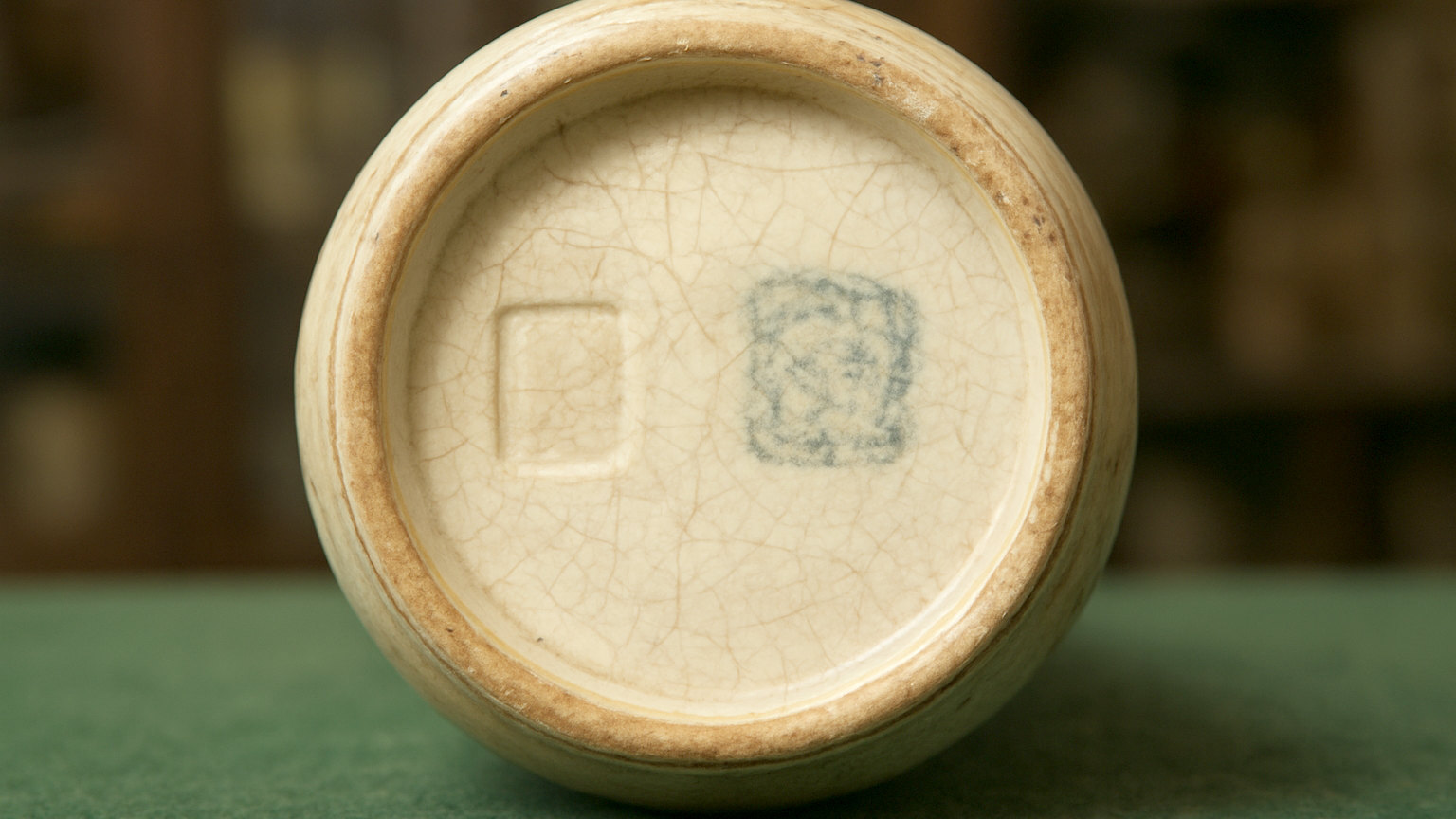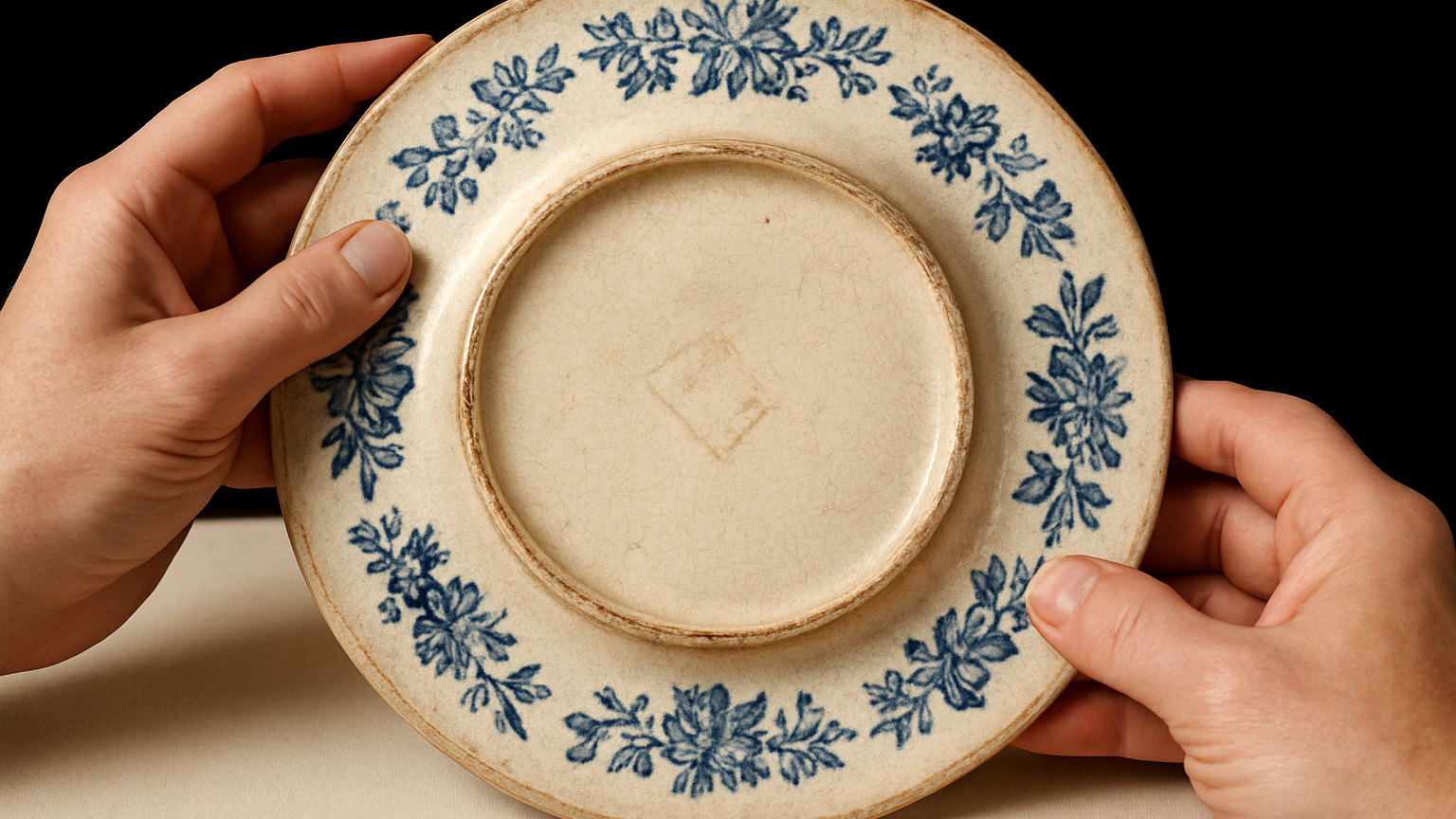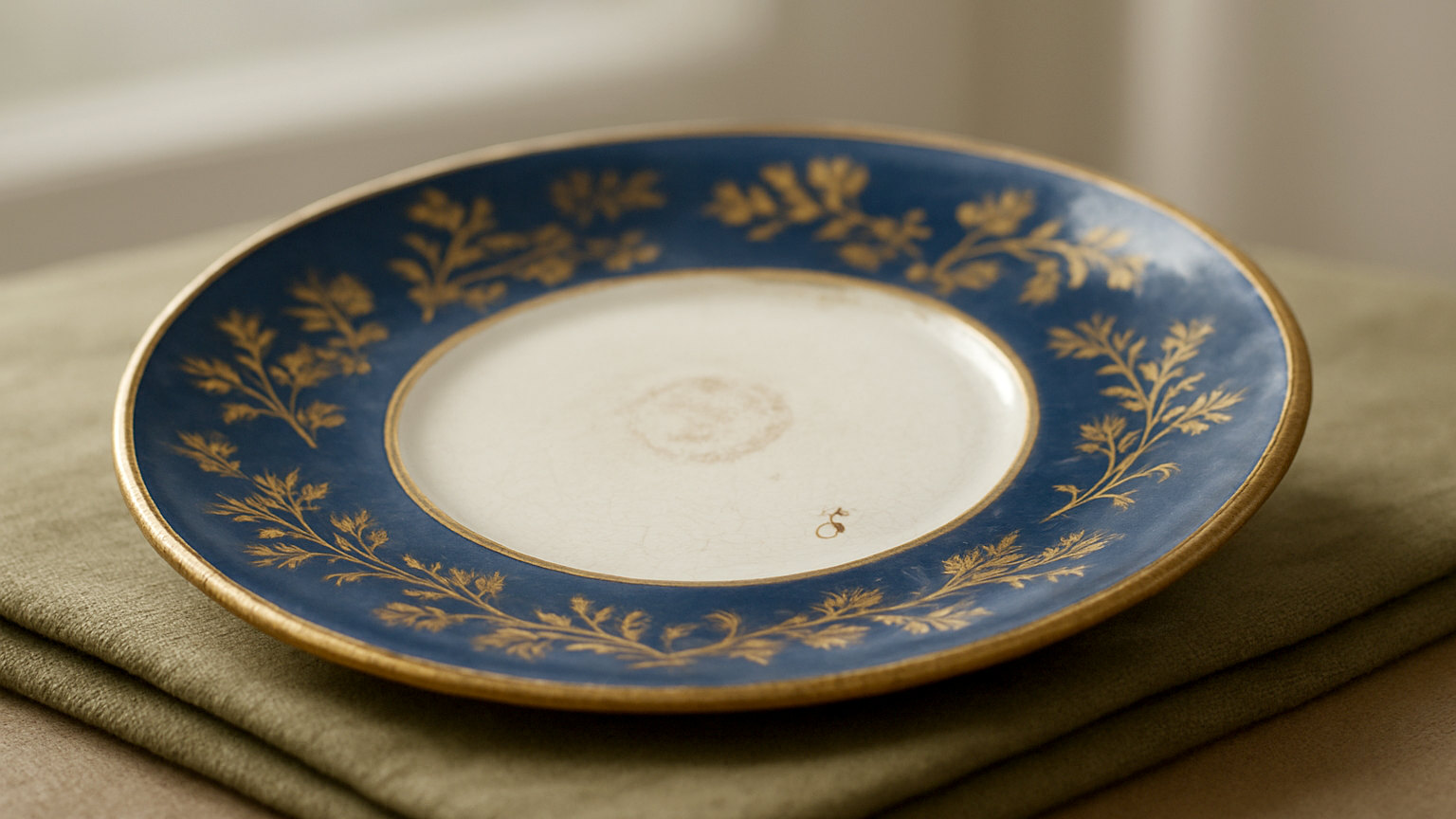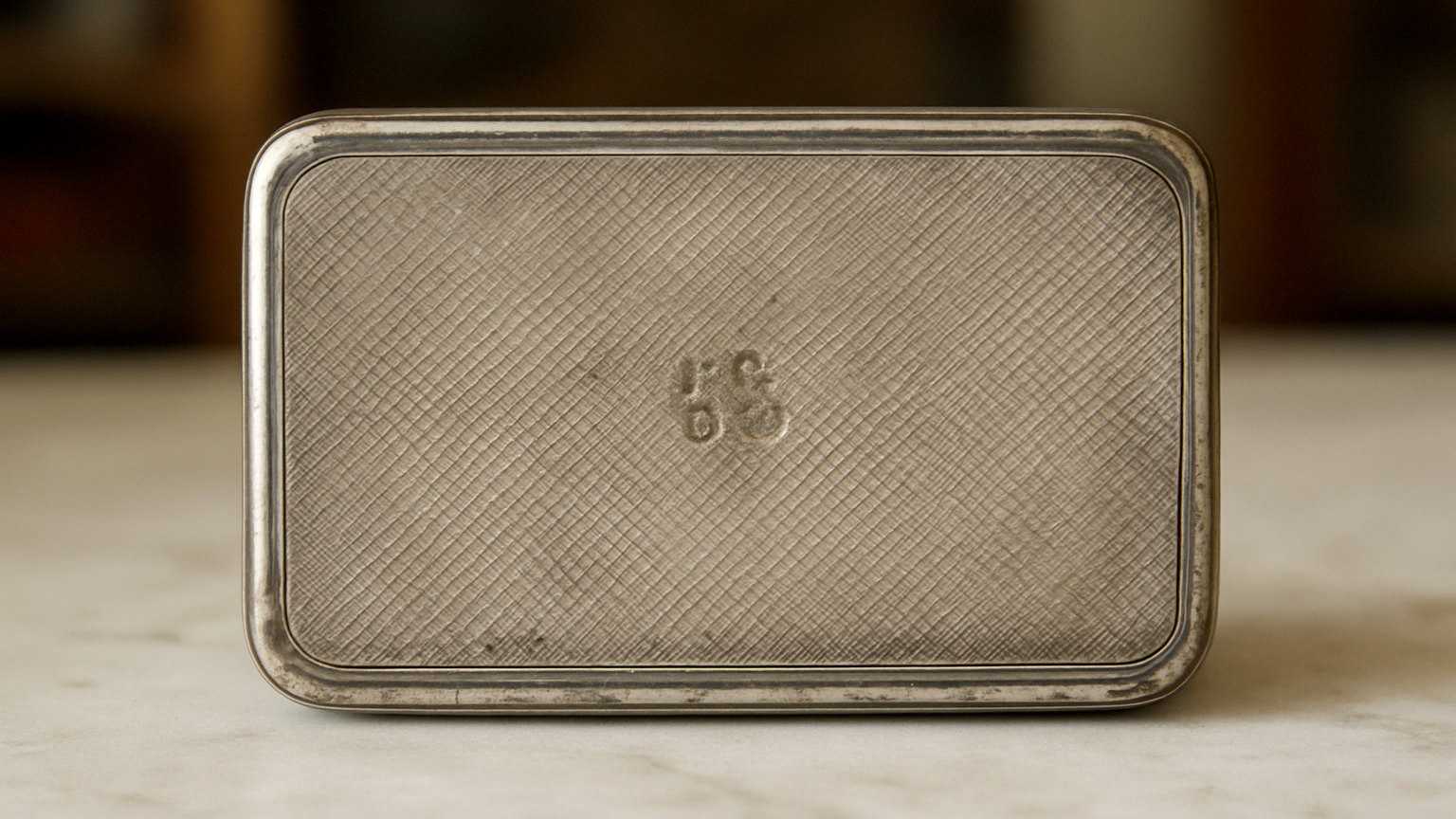
Most requests for help identifying an antique fail at the same point: the photograph of the mark is unreadable. Marks are shallow depressions in metal, clay or wood, and a camera flash fills those depressions with light and erases them completely. Getting a usable image is a technique rather than a matter of equipment, and a phone is entirely sufficient.
Why does raking light work?
Because a struck or impressed mark is three dimensional. It sits below the surrounding surface, so when light arrives at a shallow angle each recess casts a small shadow and the design becomes visible as contrast rather than as colour.
Light arriving straight on removes those shadows entirely, which is why a flash is the worst possible choice. The mark is still there; you have simply flattened it. Turn the flash off before you do anything else.
How should you set up the light?
Place the object near a window with daylight coming from one side, or use a desk lamp positioned low and to one side rather than overhead. Aim for light skimming across the surface at roughly the angle of late afternoon sun.
Then rotate the object slowly while watching the mark. At most angles it will be invisible; at one or two it will suddenly read. That is the position to photograph from, and it is different for every mark because the wear is never even.
What should you do with the camera?
Get close, but not so close that the lens cannot focus. Most phones have a minimum focus distance of a few centimetres, and pushing past it produces a blurred image that no amount of editing will fix. Back off slightly and crop afterwards instead.
Tap the screen on the mark itself to set focus and exposure there rather than on the bright surround. Steady the phone against something solid, since even slight movement destroys fine detail at close range. Take several frames at slightly different angles rather than one.
What about marks that are still too faint?
Take multiple exposures from several directions and view them together, because different strokes of a worn mark catch the light at different angles and no single image may show all of it. Reading three photographs against each other often reconstructs a mark none of them shows completely.
Increasing contrast in a basic photo editor helps considerably and is legitimate, since you are making existing detail visible rather than inventing it. Converting to black and white removes distracting colour and frequently makes a shallow mark jump out.
What should you never do to improve a mark?
Anything physical. Do not polish, scrub, scrape, pick at the mark with a pin, or apply chemicals. The darkened residue sitting inside a struck mark is precisely what makes it readable, and removing it makes the problem worse permanently.
Rubbing a mark with a pencil onto paper, or pressing modelling material into it, are both sometimes suggested and both risk leaving deposits in the recesses. On silver in particular, polishing softens the edges of punches and can reduce a legible hallmark to an illegible smear in a single session.
What else should you photograph?
The whole object, from the front and from an angle, plus the base or underside in full. Anyone helping you identify a mark needs to know what it is attached to, because the same initials mean different things on a chair and on a teapot.
Include something for scale, such as a coin or a ruler laid beside the piece, since size is impossible to judge from a close photograph. Record the measurements separately as well, and note the material if you know it.
How should you describe a mark you cannot read?
Say what you can see rather than what you think it says. Note how many separate punches there are, whether they sit in a line or a group, the shape of any shield or surround, and any letters you are confident about.
Guessing at a name and searching for it sends you down the wrong path quickly. Describing the shapes accurately lets someone familiar with the field recognise a mark you have never seen, which is usually how these questions actually get answered.