Anyone selling antiques online eventually posts something breakable, and the first breakage teaches a lesson that costs money. Parcels get dropped, stacked under heavier items and thrown into cages. The question is not whether a parcel will take an impact but whether the object inside will notice, and that is entirely a matter of how it was packed.
What is the basic principle?
The object should never touch the outer box, and nothing inside should be able to move. Every hard surface transmits shock, so the item needs to float in the middle of a cushion of material with a substantial margin on all six sides.
Shake the finished parcel gently before sealing. If you can hear or feel anything shift, it is not packed. Movement inside a box during transit is what turns a survivable knock into a broken object.
What is double boxing?
Packing the item into a small box, then packing that box inside a larger one with cushioning between the two. The inner box holds the object, the outer box takes the impact, and the gap absorbs what gets through.
This is the standard for anything genuinely fragile and it is not optional on ceramics or glass. Allow a generous margin between the two boxes, filled with crumpled paper or foam, and make sure the inner box cannot slide to one side.
Which materials work best?
Bubble wrap with the bubbles facing inward against the object, several layers thick, secured with tape that never touches the item itself. Foam sheeting is gentler still for delicate surfaces.
Crumpled paper is excellent as void fill and better than loose polystyrene chips, which migrate during transit and let the object settle to one side. Avoid newspaper directly against silver or anything with a finish, since the ink transfers and the paper contains sulphur.
How should awkward shapes be handled?
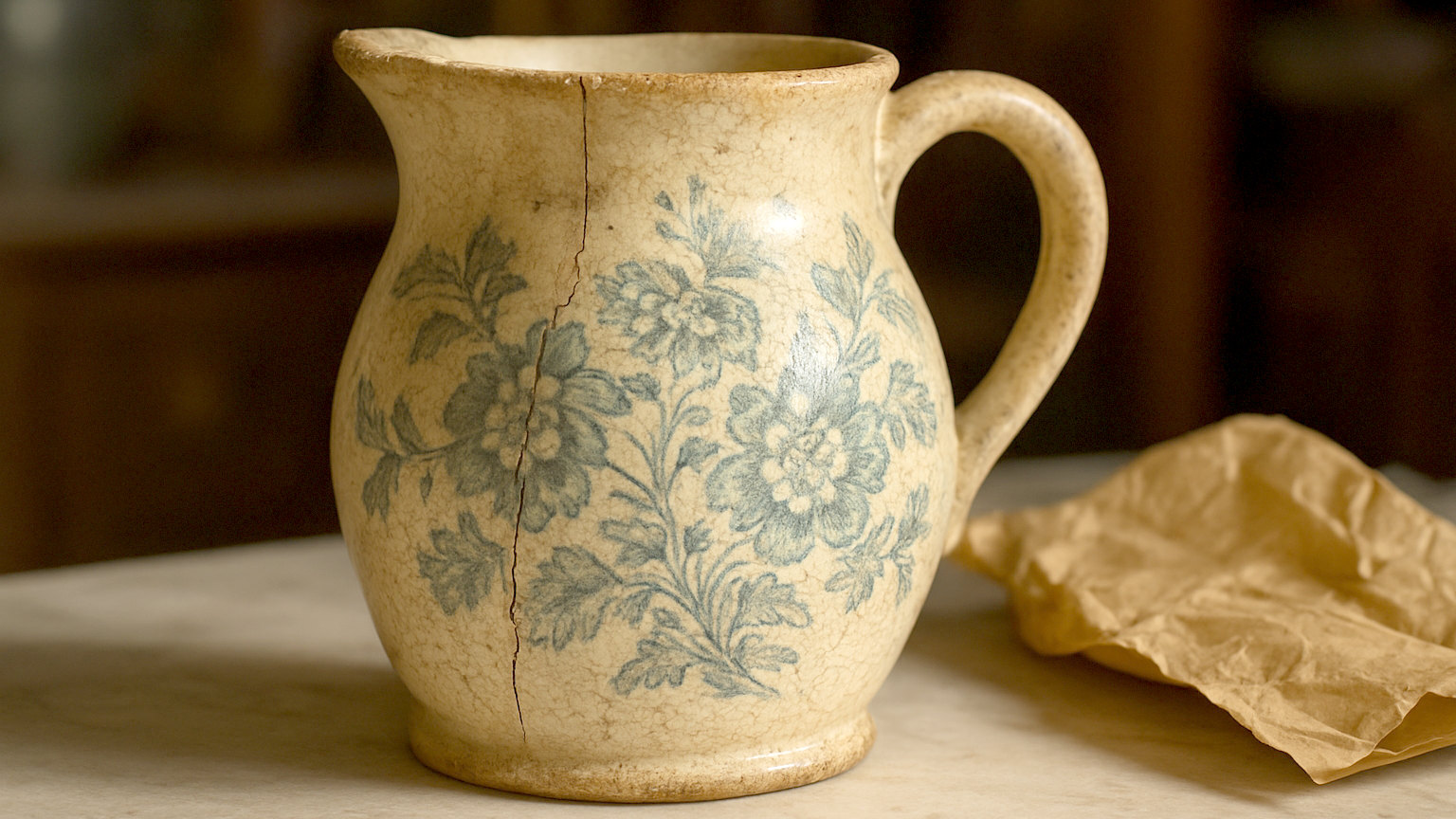
Protect projections separately before wrapping the whole. Handles, spouts, finials and feet are what break, because they concentrate any impact into a small area.
Wrap each projection individually with its own padding, then wrap the body, then wrap the whole again. Remove anything detachable and pack it separately in the same parcel: lids, liners, keys, pendulums and glass shades should never travel attached. A teapot lid left in place will chip the pot at the first knock.
What about paper items and pictures?
Flat items need rigidity rather than cushioning. Sandwich prints, maps and documents between two sheets of stiff board, larger than the item, taped together at the edges so the contents cannot slide.
Never roll something that has been stored flat, and never fold anything. For framed pictures, tape the glass in a cross pattern so that if it breaks the shards are held rather than travelling into the surface, then corner protect and double box. Better still, remove the glass entirely and post it separately or not at all.
What should go on the outside?
A clear address, a return address, and honest labelling. Marking a parcel as fragile helps a little and should never be relied on as protection.
Consider whether to describe the contents on a customs declaration or label at all, since advertising that a parcel contains something valuable is not always wise. Take a photograph of the packed item at each stage before sealing, which is the evidence you will need if a damage claim follows.
How does insurance actually work?
Most carriers cap compensation at a low default and charge extra for higher cover, and many exclude certain categories entirely, including glass, ceramics and antiques. Read the exclusions before assuming an item is covered.
Claims are frequently refused on the grounds of inadequate packing, which is why the photographs matter. Keep proof of posting, proof of value and the packing images together. For anything of real value, consider whether the item should be posted at all, or whether collection in person is the better answer.