Collectors paying premiums for mistakes strikes most people as perverse until the mechanism is clear. A factory producing thousands of correct items also produced a handful of wrong ones, and quality control destroyed almost all of them. The few that escaped are genuinely scarce, and scarcity meeting a collector base is what creates value anywhere.
Which errors are collected?
Those that are clearly a production mistake rather than damage. In stamps, missing colours, inverted centres, missing perforations and printing on the wrong paper. In coins, off centre strikes, double strikes and wrong metal blanks.
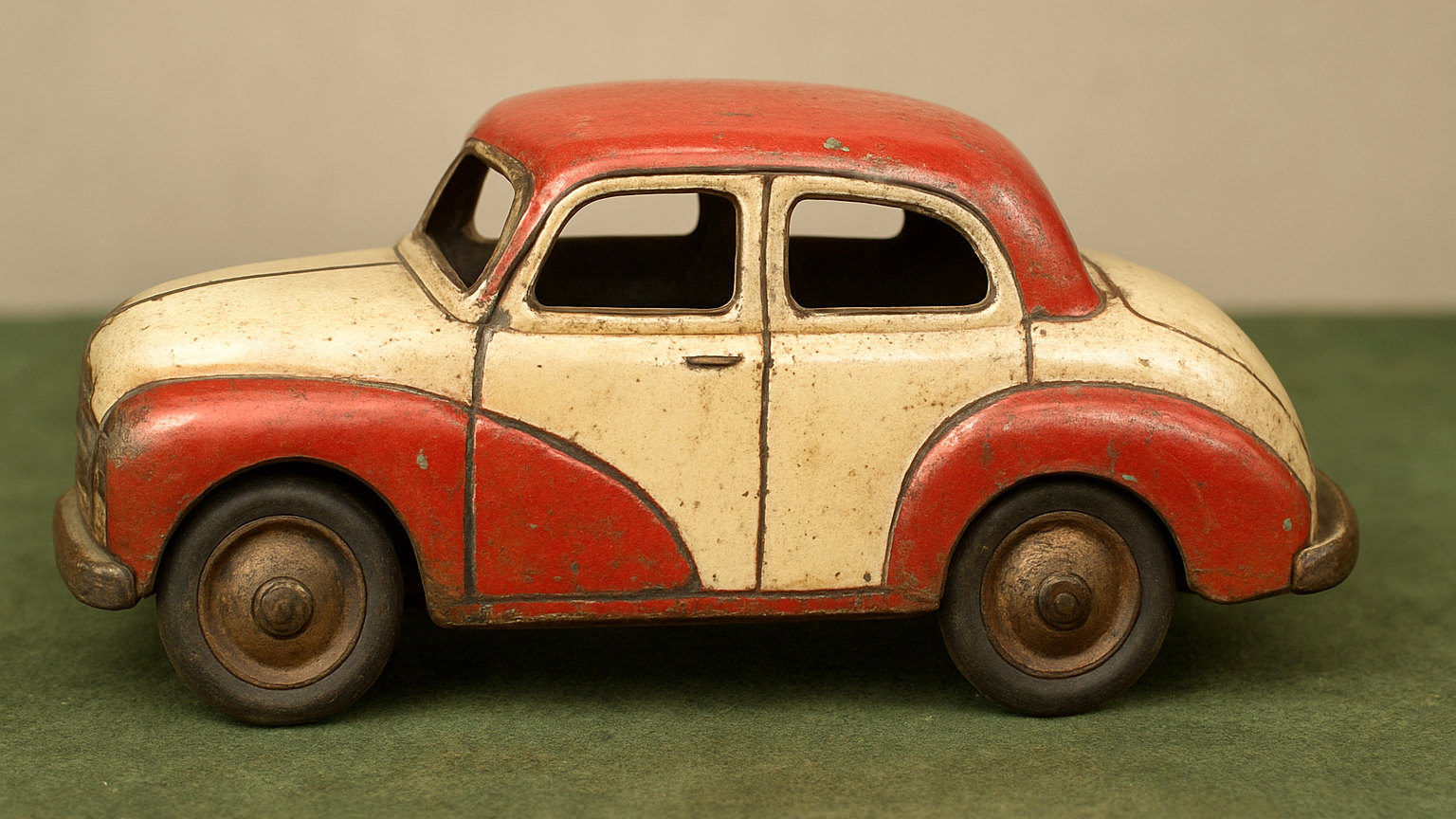
In ceramics, misapplied transfers, wrong colourways and misspelled backstamps. In die cast toys, wrong wheels, wrong baseplates and colours never officially issued. The common thread is that the fault happened during manufacture and left the factory that way.
Why are they so scarce?
Because quality control worked. A factory checking output caught the overwhelming majority of faults and destroyed them, so only the ones that slipped through survive.
That makes the survival rate for a given error extremely low, sometimes a handful of examples from a production run of millions. Where the item is widely collected, that scarcity translates directly into price, since a great many collectors are competing for very few pieces.
What is the difference between an error and a variety?
An error is a mistake. A variety is a deliberate difference, such as a design change made partway through a run, a new die, or a colour introduced and then withdrawn.
Varieties are usually more numerous than errors and correspondingly cheaper, though scarce varieties can still command large premiums. Both are catalogued separately from the standard item, and knowing which you have determines which price applies.
How do you tell an error from damage?
By whether the fault could have occurred after the item left the factory. Missing colour on a stamp is an error; a colour that has faded in sunlight is damage.
An off centre coin strike is an error; a coin that has been filed is damage. Look at whether the fault is integrated into the manufacture, with the surrounding material behaving as though the fault was always there, or whether something has been removed or altered afterwards. This is the distinction that separates a premium from a discount.
What about seconds and factory rejects?
These are different again, and generally worth less rather than more. Items sold as seconds carry a cancelled or scored mark indicating the factory knew they were flawed and released them anyway.
A cancelled backstamp under elaborate decoration is a useful signal in its own right, since it usually means the piece left the factory undecorated. Seconds are honest objects but they are not errors, and the marking tells buyers exactly what they are.
How do you verify an error?
By checking a catalogue for that field, since recognised errors are documented and priced. An error nobody has recorded is much harder to sell, because buyers cannot verify it.
For anything significant, professional authentication is worth the cost, particularly in stamps and coins where fakes of known errors exist. Manufactured errors are a genuine problem: removing a colour chemically or altering a coin can imitate a valuable fault, and only examination will distinguish them.
Should you look for them?
Casually rather than obsessively. Check inherited collections against a catalogue before selling, since an error can sit unnoticed in an ordinary album for decades.
Do not buy purely on the hope of finding one, and be sceptical of anything offered as an unlisted error at a high price. The value is in verified scarcity, and unverified scarcity is just an unusual looking item.
Which fields have the strongest error markets?
Stamps and coins above all, because both have large organised collector bases, published catalogues that list errors individually, and established authentication services.
Banknotes follow, then die cast toys and modern collectables. In fields without catalogues an error is simply an oddity, however genuinely scarce it may be, because there is no accepted framework for pricing it.
How should an error be described when selling?
Precisely and with the catalogue reference where one exists. Say exactly what the fault is, how it occurred if that is known, and what authentication accompanies it.
Photograph the fault clearly alongside a normal example for comparison, since the difference is frequently subtle and buyers need to see it rather than take it on trust.