One of the few reliable rules in this market is that completeness pays. A pair is worth more than double a single, a set of six is worth far more than six singles, and a complete service is worth a multiple of the same pieces sold individually. Splitting any of them is irreversible, and it is done constantly by people who do not realise what it costs.
Why does a set command a premium?
Because buyers need a specific quantity and cannot easily assemble one. Somebody furnishing a dining room needs six chairs, not four, and the number is dictated by their table rather than by preference.
Supply works against them, since sets have been broken up steadily over generations. Complete sets are therefore genuinely scarce while singles are abundant, and that gap is what produces the premium. Scarcity meeting a definite need is the strongest price mechanism there is.
Where is the effect strongest?
Seating above all. Dining chairs step up sharply in value at the numbers people actually use, so the move from four to six matters and from six to eight matters more, because far fewer sets of eight survive.
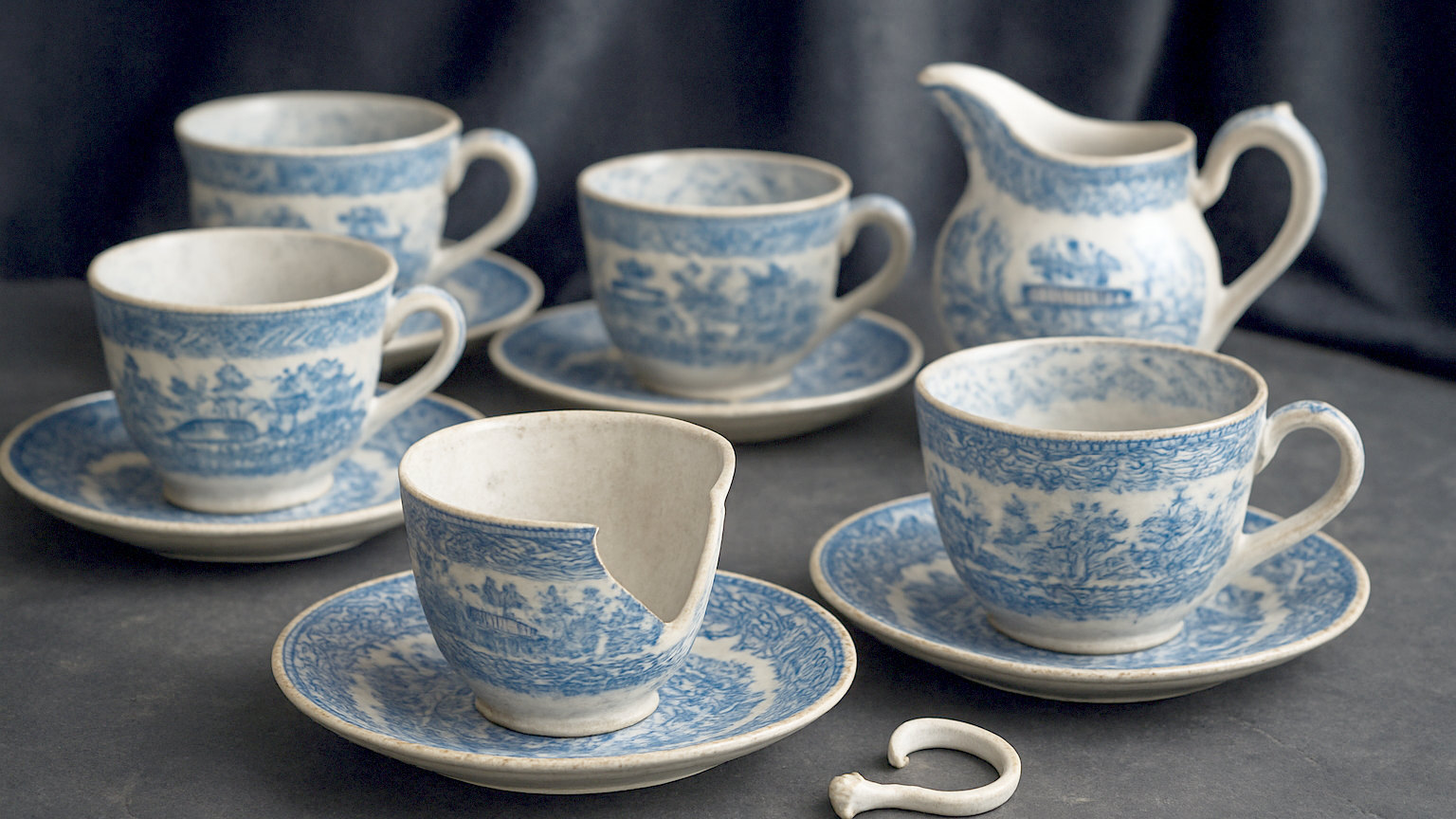
Dinner and tea services behave the same way, as do pairs of candlesticks, vases, lamps, portraits and anything designed to sit either side of something else. Canteens of cutlery, garnitures of vases and suites of furniture all carry the same premium.
What counts as a genuine set?
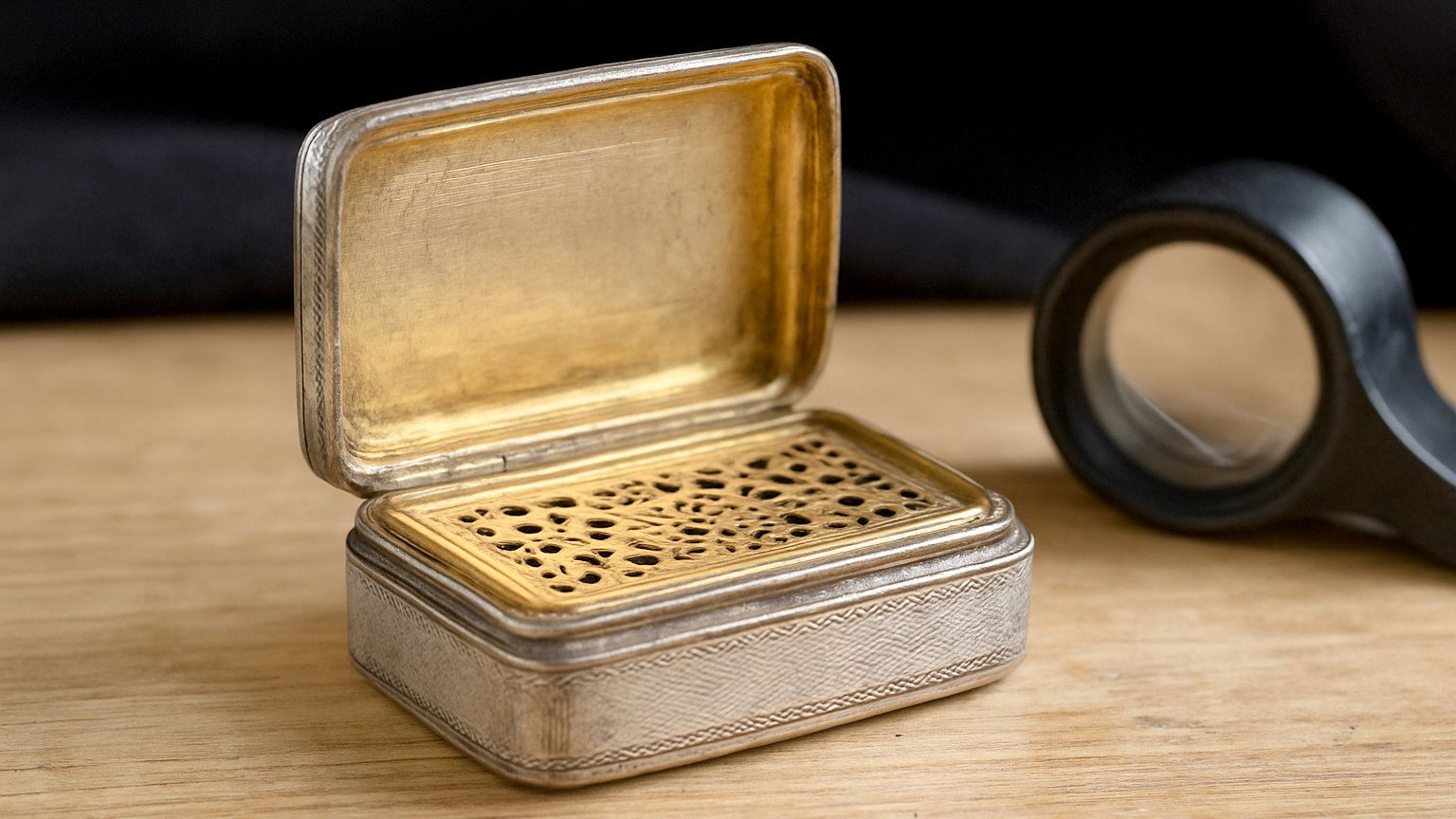
Pieces made together as one commission, which is more demanding than pieces that merely look alike. On silver that means shared maker and assay marks with identical or very close date letters.
On furniture it means matching timber, identical dimensions and consistent construction, frequently with sequential workshop numbers. Compare like with like by lining pieces up and looking down the row, since small differences show clearly when aligned and are invisible when apart.
What is a harlequin set?
A group that is similar but not identical, assembled from more than one source. The term is legitimate and descriptive, and honest dealers use it openly rather than hiding it.
Harlequin sets are worth considerably less than matched ones and rather more than the same pieces sold singly, so they sit sensibly in the middle. The problem arises only when a made up set is presented as original, which is why checking before paying set prices matters.
Why do people split sets anyway?
Usually to divide an inheritance evenly between beneficiaries, or because a single item sells faster than a group. Both reasons are understandable and both destroy value.
Dividing a pair of candlesticks between two siblings turns a valuable pair into two much less valuable singles, and the loss frequently exceeds what either party gains. Where an estate must be divided, sell the set complete and divide the proceeds instead.
Can a broken set be reassembled?
Occasionally, and it is worth investigating before assuming not. Replacement specialists hold stock of discontinued china patterns, and matching chairs and silver flatware do surface.
Do the arithmetic first. If the missing pieces cost more than the increase in value, stop. Where you are one or two short of a usable number, completion frequently pays for itself, because the step up to a full set is where most of the premium sits.
What should you do before selling?
Count and check what you have before deciding anything. Establish whether the group is genuinely matched, whether serving pieces and carvers are present, and whether anything is missing.
Then sell it as a unit through a venue that can reach buyers for the whole. A specialist sale will find someone who wants eight chairs; a general saleroom may split them into two lots and lose the premium entirely. Say explicitly in writing that the set is not to be divided.
What about fitted cases and boxes?
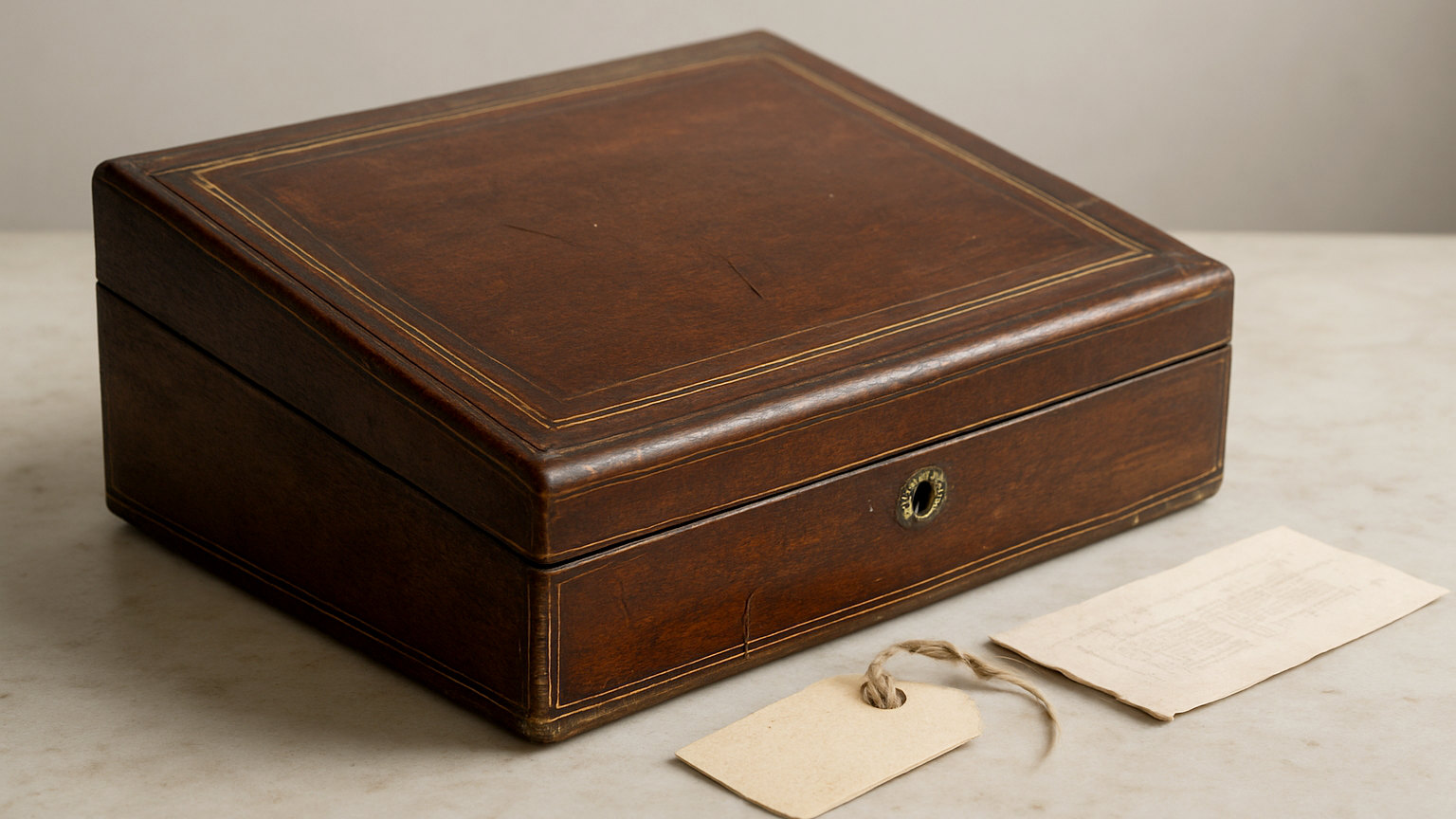
They count as part of completeness and add substantially. A canteen of cutlery in its original fitted case, or a pair of candlesticks in their box, outperforms the same items loose by a wide margin.
Check that any case is genuinely original by looking at whether the fitted recesses actually match the objects, since married cases are common. Keep cases even when damaged, because replacing one is usually impossible and a worn original beats nothing at all.