Two apparently identical objects can sell for very different sums because one comes with a paper trail and the other does not. This looks like snobbery and is actually risk pricing. Authenticity is the single largest uncertainty in any antique purchase, and documented history is the only thing that genuinely reduces it.
What counts as provenance?
Any documentary evidence of where an object has been and who owned it. Receipts, old valuations, insurance schedules, inventories, wills, letters mentioning the piece, exhibition labels, auction catalogue entries and photographs showing it in a known interior.
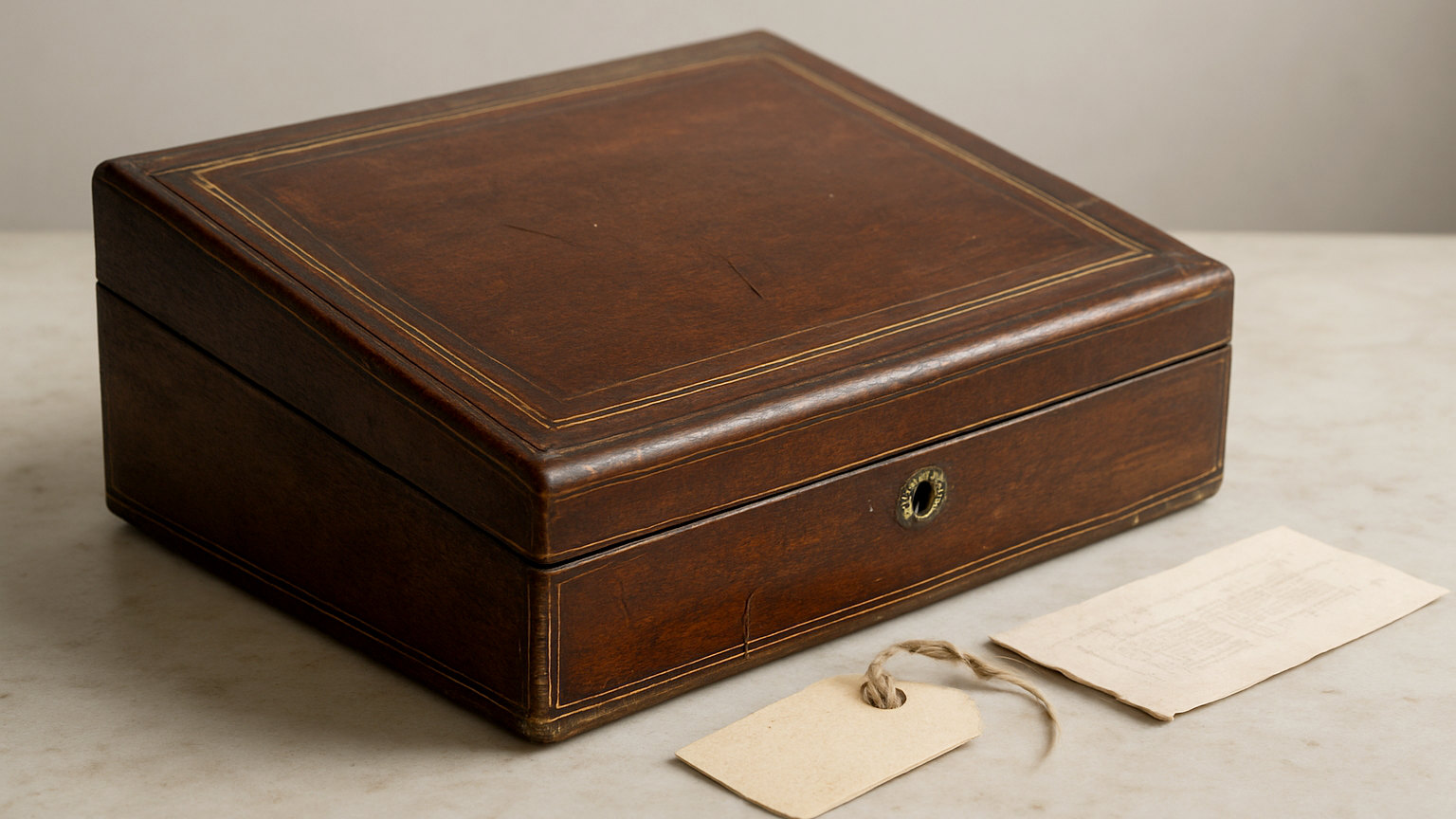
Labels on the reverse of paintings and furniture are provenance, however tattered. So are old auction stencils and framers stickers. Collection stamps, bookplates and inventory numbers from a large house all contribute to the same picture.
Why does it add so much value?
Because it answers the question every buyer is silently asking. Where an object can be traced back through documented ownership, the possibility that it is a later copy or an assembled piece falls away.
That certainty is worth real money, particularly in categories where fakes are common or where attribution drives the price. In paintings especially, the difference between a work with documented history and one without can be enormous even where the picture is identical.
Is family history provenance?
Not on its own, and this disappoints people regularly. A story passed down that a piece came from a particular house or belonged to a particular person carries no weight at auction without documentation, however sincerely it is held and however likely it is to be true.
Family stories drift over generations, and details get attached to the wrong objects. Where you have such a story, treat it as a research lead rather than a fact: look for wills, photographs, letters or receipts that might support it, since converting a story into evidence is exactly what adds the value.
What should you never do?
Remove a label. Old labels on the backs of pictures, inside cases and on the undersides of furniture are frequently the only surviving link to an object history, and they are lost during reframing and restoration constantly.
Do not clean, wet or peel them however scruffy they look. Photograph the whole reverse of anything before it goes to a framer or restorer, and tell them explicitly to preserve any labels. A fragment carrying part of an address can often be traced.
How do you build provenance for something you own?
Start with what is physically on the object and work outwards. Record every label, stamp, inscription and inventory number exactly, then research the names and addresses through trade directories, archives and auction records.
Keep your own paperwork too. The receipt from when you bought it, correspondence with dealers, any valuation, and photographs of the piece in your own house all become provenance for the next owner. Store it with the object rather than separately.
Does provenance ever reduce value?
Occasionally, where documentation reveals a piece is later than assumed, has been substantially restored, or has an ownership history that is unwelcome. That is not a reason to suppress it.
Concealing known information about an object is a serious matter when selling, and it tends to emerge anyway. Accurate documentation that lowers a price is far better than a dispute after the sale, and dealers value honesty about it.
How should it be presented when selling?
Organised and legible. Provide copies rather than originals until the sale completes, arranged chronologically with a short written summary explaining what each document shows and how it connects to the object.
Photograph any labels in place before the piece is packed. Auction houses will use good provenance prominently in a catalogue entry, and that entry is what attracts the buyers who pay the most, so presenting it clearly is worth the hour it takes to assemble. A specialist who can see the documentation will write a fuller description, and a fuller description sells.