Tables are altered more than any other kind of furniture, because they are large, they wear on the surface everyone sees, and they rarely fit modern rooms. Tops get replaced, leaves are lost, pedestals are shortened and dining tables are cut down. Every one of those changes reduces the value substantially, and every one leaves evidence if you look underneath.
Why is the underside the place to look?
Because nobody finished it and nobody polished it. The top surface has been cleaned, waxed and possibly refinished many times, so it tells you little. The underside preserves original tool marks, original colour and the fixing holes from every arrangement the table has ever had.
Get underneath with a torch. Look at the colour first: the underside should be noticeably paler than the top but still oxidised and dusty in a way that has developed slowly, with darker areas where air circulated less.
How do you tell whether the top is original?
Match the top to the base. The timber should be the same species with a compatible figure, and the colour of the unpolished underside should be consistent with the unpolished parts of the frame.
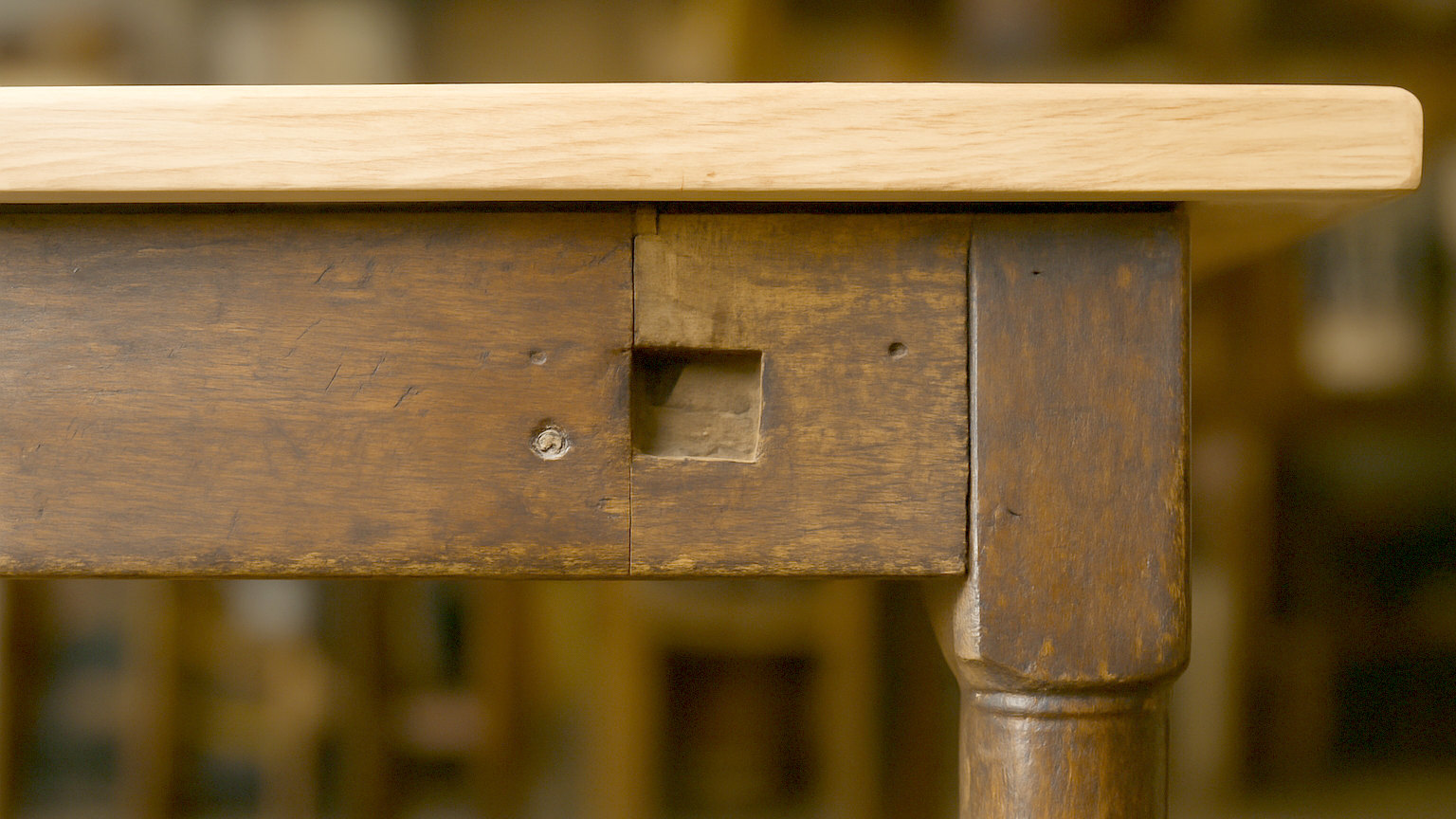
Then look at the fixings. A top attached with modern screws into fresh unweathered holes is a warning. Old blocks, pockets or buttons that no longer align with anything indicate the top has moved or changed. Multiple sets of holes mean multiple arrangements, and only one of them was original.
What does shrinkage tell you?
Timber shrinks across the grain and almost not at all along it, so a solid circular top slowly becomes slightly oval over a long life. Measure across the grain and then along it. A genuinely old circular top will normally differ by a small but measurable amount.
A perfectly circular top on a piece presented as very old deserves a second look, since it may be a later replacement or made from a modern stable board. The same logic applies to square tops, which develop slightly unequal sides.
Which alterations matter most to value?
A replaced top is the most serious, because it is the largest and most visible component. Reduction in size comes next: many large dining tables have been shortened to fit smaller rooms, and this is usually detectable from the frame joints and from leaves that no longer match.
A cut down height, common where a tall table has been lowered, shows at the foot of the legs where the taper or turning ends abruptly. Missing leaves are simply missing value, since an incomplete extending table is worth far less than a complete one.
What should you check on a drop leaf table?
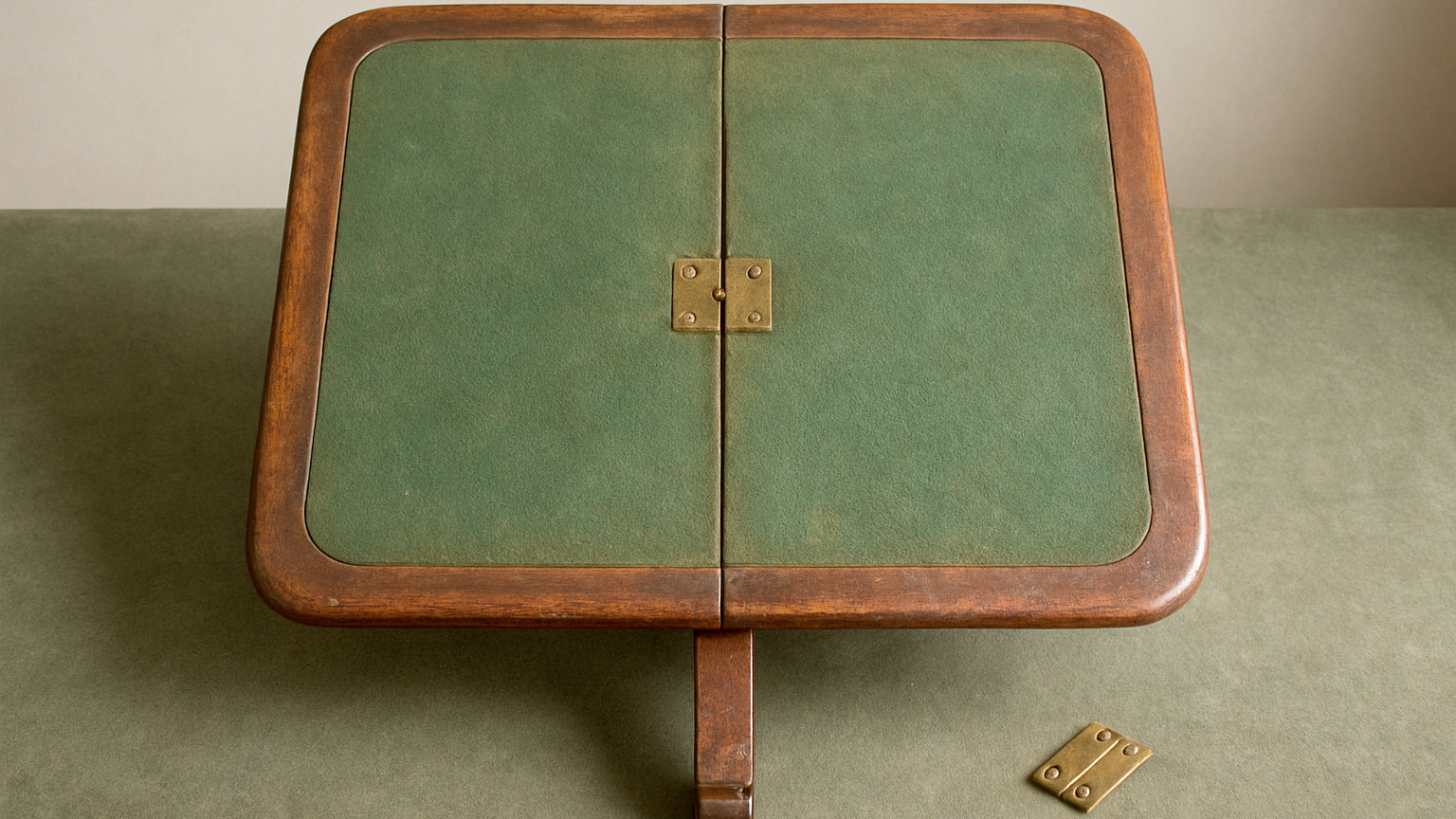
The hinges and the rule joint where the leaf meets the top. That joint should close cleanly with a consistent gap along its whole length, and the leaf should sit level with the main top when raised.
Look at the supports that swing out to hold the leaves. These see heavy use and are often repaired or replaced, which is acceptable, but the pivot area should show wear consistent with the rest. A leaf that is a different colour or figure from the main top has been replaced.
What matters on antique desks?
The writing surface and the interior. Leather tops are consumable and are frequently replaced, which is normal and does not greatly affect value provided the work was done sympathetically.
Check the fitted interior of a bureau carefully, since small drawers, pigeonholes and any concealed compartments are often incomplete. Count the drawers and see whether they all match each other in construction and colour. Locks and escutcheons should show wear consistent with the rest of the piece.
Is an altered table still worth buying?
Frequently, provided the price reflects it. A table with a replaced top is still a usable table, often a handsome one, and a great deal cheaper than an untouched example.
The problem is only ever paying an original price for an altered piece. Look underneath before you commit, ask directly what has been done, and expect the answer to be reflected in the figure rather than in the description alone.