Two small drop leaf tables turn up constantly and are regularly confused with one another. Both have hinged leaves, both are elegant, and both were made in large numbers. The difference lies in proportion and in which edges the leaves hang from, and since one is generally worth more than the other, it is worth being able to tell them apart.
What is a Pembroke table?
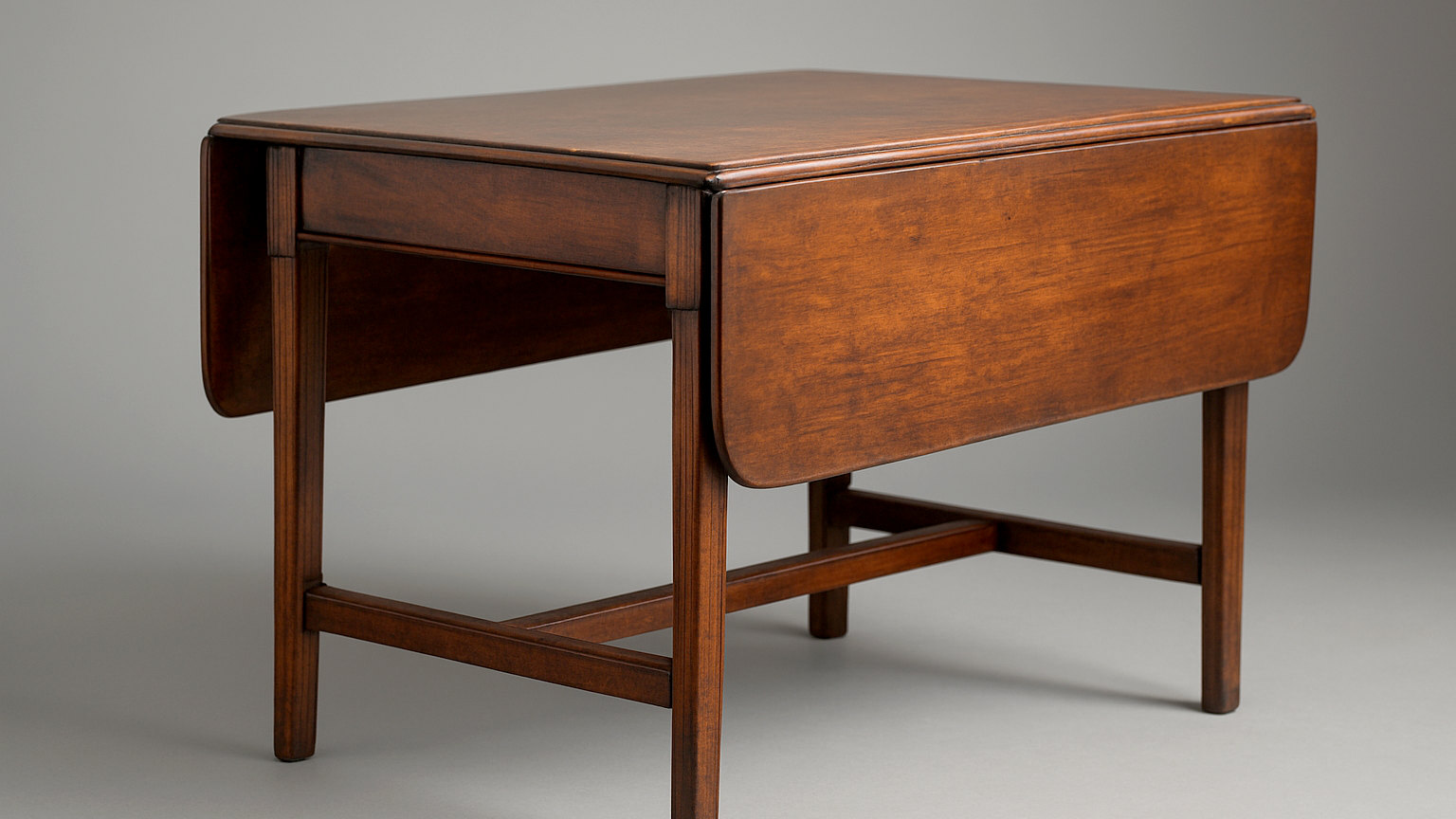
A small occasional table with two hinged leaves that fall from the long sides, so raising them makes the top wider rather than longer. The base is usually a simple frame on four legs with a drawer in one end.
The proportions are compact, designed to stand against a wall with the leaves down and be brought out for use. Look for a shallow drawer at one end and frequently a false drawer front at the other for symmetry, which is a good identifying feature.
How is a sofa table different?
Longer and narrower, with the leaves falling from the short ends rather than the sides. Raising them extends the table lengthways, and the result is a long narrow surface designed to stand behind or beside a sofa.
The base is usually quite different too. Sofa tables commonly stand on end supports joined by a stretcher, or on a central pedestal with splayed feet, rather than on four corner legs. Two drawers in the long side are typical, often with matching false fronts on the reverse.
Why does the distinction matter to value?
Because sofa tables are generally the more desirable form and tend to make more money, particularly good examples with well figured timber and elegant end supports.
Both were also copied extensively in later periods, so establishing which form you have is only the first step. The construction evidence then tells you whether the piece belongs to the period the style suggests or to a revival made much later in the same manner.
What should you check on the leaves?
The rule joint where each leaf meets the top. It should close cleanly with a consistent gap along its whole length, and the leaf should sit exactly level with the main top when raised.
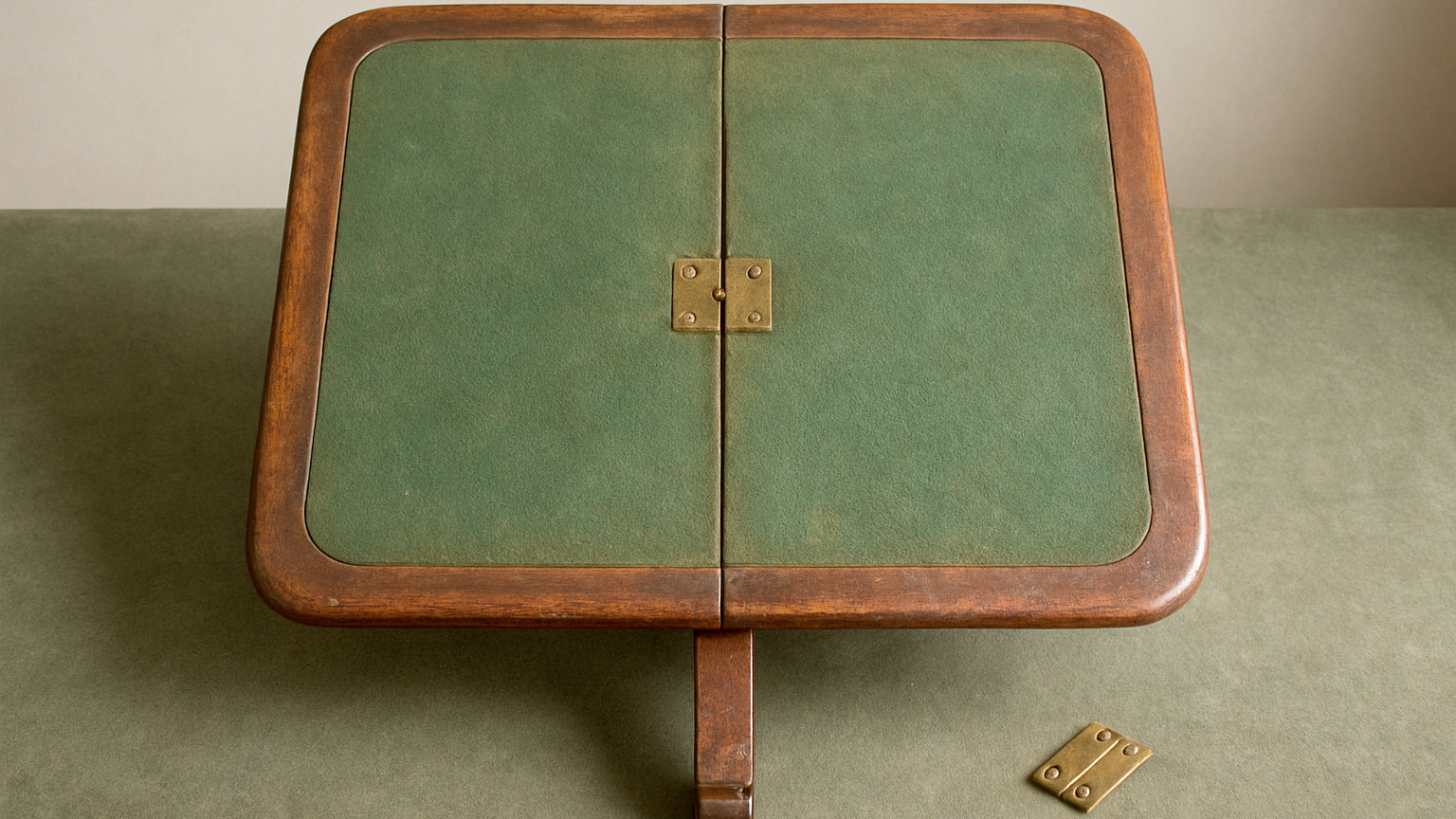
Check the leaf timber matches the top in colour and figure, since replaced leaves are common and significantly reduce value. Look at the hinges: original hinges are set into the timber neatly and show consistent age, while replacements often sit in enlarged or additional recesses.
How do the leaf supports work?
On a Pembroke, small brackets hinged to the frame swing out to support each leaf. On a sofa table the arrangement is similar but longer, and both take constant use.
Check that each support swings smoothly and locks in place, and look at the pivot area for wear consistent with the rest of the piece. Repairs and replacements here are common and acceptable, but the wear should broadly match. A support that is noticeably fresher than everything around it has been renewed.
What are the common alterations?
Cut down height, replaced tops, and conversions between forms. Some sofa tables have lost their original end supports and been fitted to a later base, which is a marriage and worth substantially less.
Look underneath for filled holes, fresh timber and fixings that do not match the rest. Check the proportions against the form: a table that looks squat may have lost height, and one where the base seems visually wrong for the top usually is.
Are they worth buying now?
Both remain useful, which is more than can be said for a great deal of period furniture. They are small enough for modern rooms, they fold down against a wall, and they cost far less than they did a generation ago.
Buy on condition, originality and quality of timber rather than on the label attached to the form. A well figured original example with sound leaves and untouched surface will always be a better purchase than a larger piece that has been altered.