A table top is the most exposed surface in any house: hot dishes, wet glasses, spilled wine, sunlight and daily wiping all land on it. Antique tops survive that remarkably well if protected, and recover from it very poorly once damaged, so prevention matters far more here than restoration.
What causes the most damage?
Heat and moisture, in that order. A hot dish placed directly on a polished top produces a white bloom in the finish, and a wet glass left standing produces a ring that penetrates into the surface.
Both are cumulative and both are avoidable entirely with mats and coasters. Sunlight is the third, fading the timber unevenly so that anything left standing on the top leaves a permanent lighter patch beneath it.
Can water marks be removed?
Sometimes, depending on how deep they go. A white mark sitting in the surface film may respond to gentle treatment with a good wax and patient buffing, which redistributes the finish.
A dark mark means moisture has reached the timber itself and that is considerably harder, frequently requiring a restorer. Do not attempt aggressive remedies found online, since most involve heat or abrasives and produce worse damage than the mark.
How should a polished top be maintained?
Dusted regularly with a soft dry cloth, and waxed occasionally rather than frequently. A good quality wax applied thinly and buffed well feeds the surface and builds protection.
Twice a year is ample for a table in use. Over waxing produces a sticky build up that attracts dirt. Avoid silicone based spray polishes entirely, since they build up, interfere with any future restoration and give a hard artificial shine.
What about leather tops?
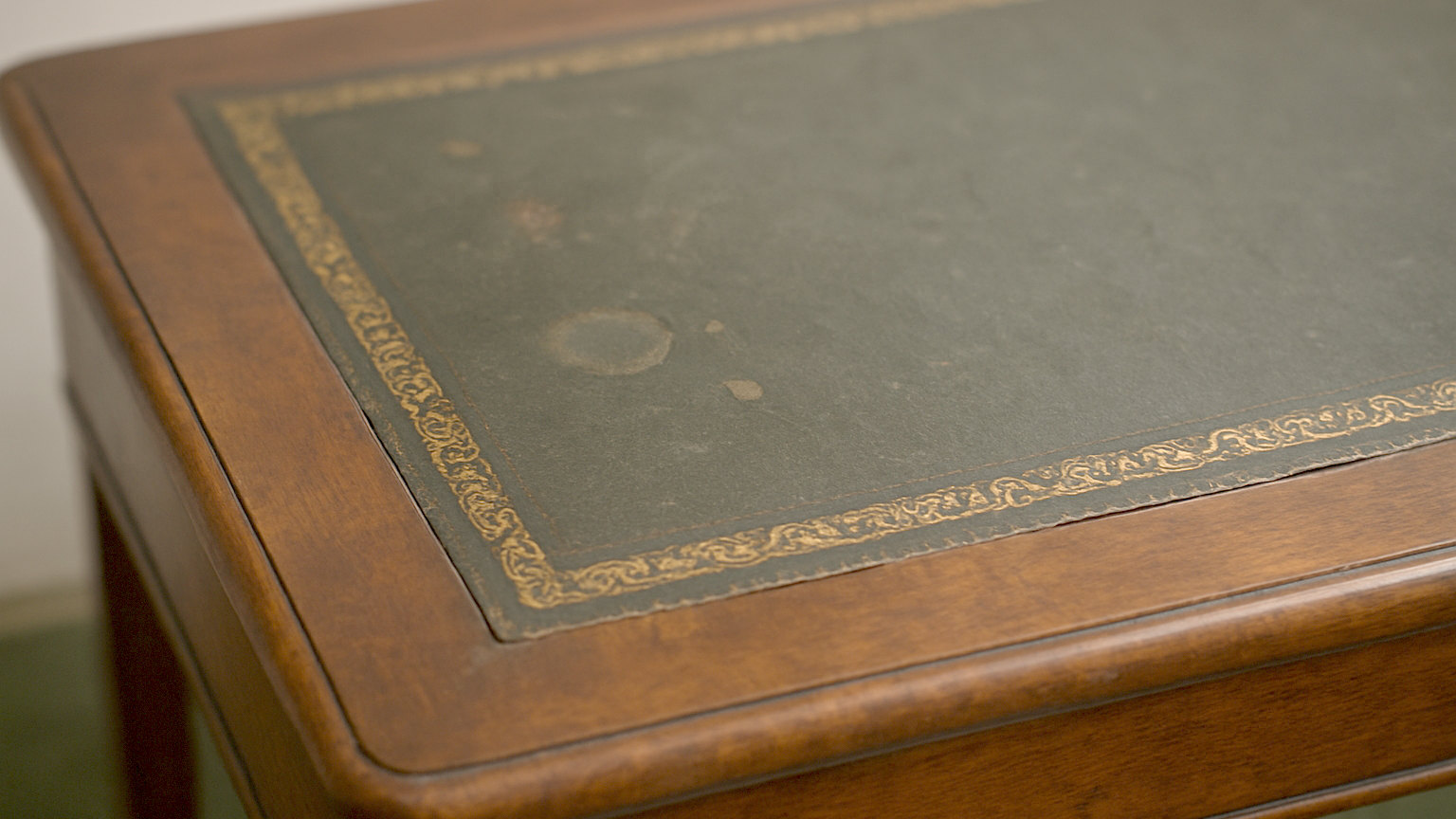
Original leather on a desk is usually dry and worn at the front edge, and that is expected rather than a fault. Feed it occasionally with a leather dressing formulated for the purpose.
Test any product on a hidden area first, since some darken leather considerably. Do not use furniture wax on leather or leather dressing on timber. Keep leather out of direct sunlight, which is what dries and cracks it.
Should worn leather be replaced?
Only when it is genuinely beyond use. Recovering is straightforward and not especially expensive, and it does not materially affect value provided the work is sympathetic.
Choose a colour and finish appropriate to the period rather than a modern uniform hide, and specify tooling if the original had it. Check the recess beneath is sound before commissioning, since a damaged timber base needs attention first.
How do you look after marble?
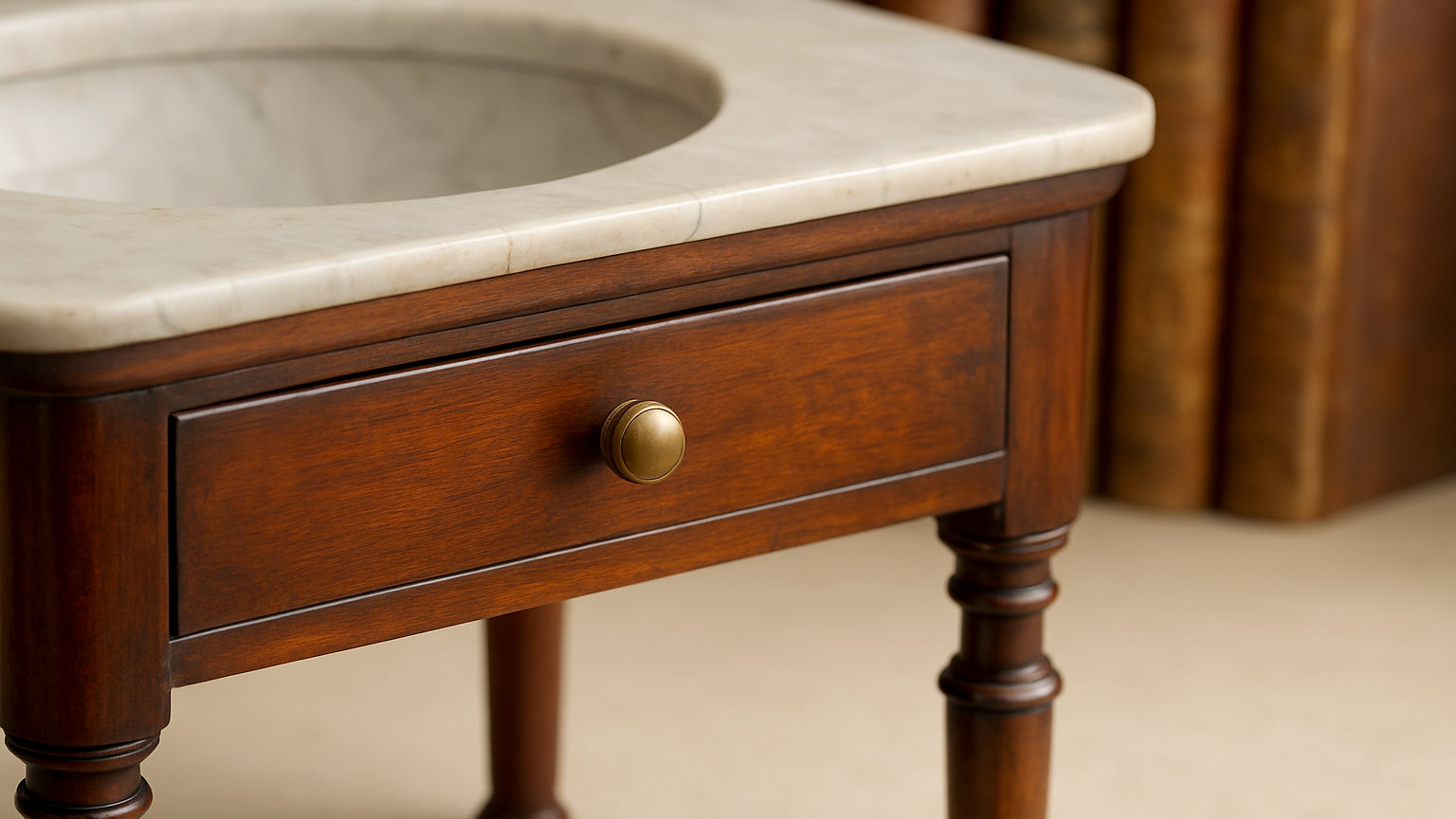
By treating it as porous, because it is. Marble absorbs wine, oil, citrus and coffee readily and the resulting stains are frequently permanent.
Use coasters and mats as you would on timber. Clean with warm water and a soft cloth only, since acidic cleaners etch the polished surface and leave a dull patch that cannot be buffed out. Specialist marble sealants exist and are worth considering on a table in regular use.
What about scratches?
Minor surface scratches in the polish frequently disappear under wax. Deeper scratches into the timber are a restorer job, and attempting to sand them out yourself removes patina permanently.
A scratch on an antique top is part of its history, and a table with honest marks is worth more than one sanded and repolished to look new. Judge whether the mark genuinely spoils the piece before doing anything at all.
How should a top be protected in use?
With mats, coasters and a cloth for anything hot. For a dining table in daily use, a felt underlay beneath a tablecloth protects completely while still allowing the table to be seen when uncovered.
Lift objects rather than sliding them, since grit dragged across a polished surface scratches it. Keep the table out of direct sunlight where possible, and move any object left standing on it periodically so fading remains even.
When should a top be refinished?
Rarely, and reluctantly. Stripping and repolishing removes patina that took two centuries to develop, and a refinished antique is worth noticeably less than one with an honest original surface.
Where a top is genuinely beyond revival, consult a restorer who works sympathetically rather than a firm offering to dip and repolish. Ask specifically what will be removed, and remember that doing nothing is always reversible.