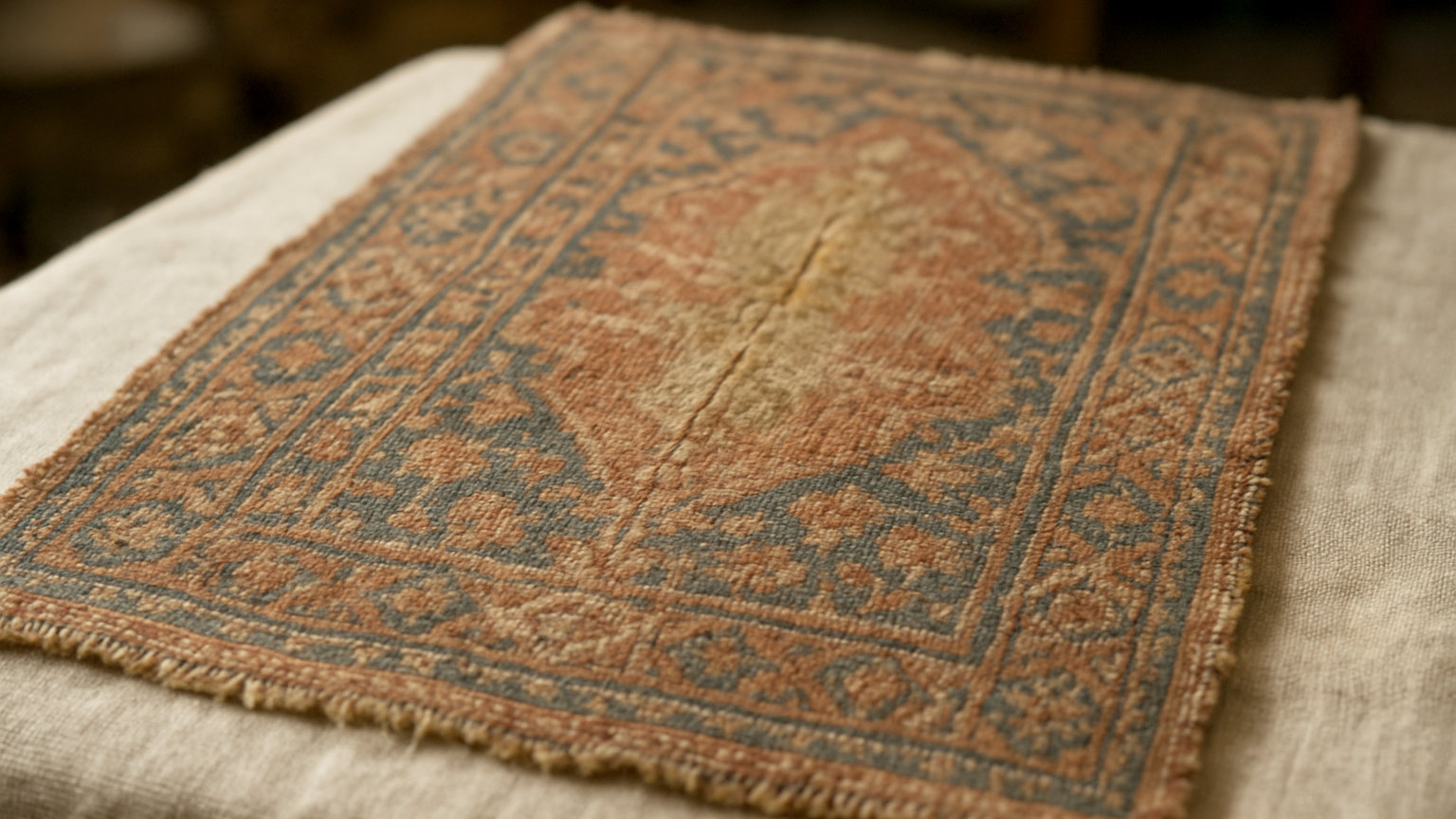
Rugs are unusual in that the most valuable ones are frequently the most worn, because age and use go together and collectors accept honest wear on something genuinely old. What they do not accept is structural failure, and the difference between acceptable wear and a rug that is falling apart is where valuation actually happens.
How do you assess pile wear?
By looking at the depth of the pile relative to the knot. Part the pile with your fingers in several places and see how much yarn stands above the foundation.
Even low pile across the whole rug is honest wear and largely acceptable. What matters more is whether the wear is even. A rug worn through in a traffic path while remaining deep at the edges has an obvious weak line that will fail first, and that unevenness reduces value more than a uniformly low pile does.
Why do the ends and sides matter most?
Because they are structural. The selvedges along the long sides and the finishes at each end hold the whole weave together, and once they fail the rug begins to unravel progressively.
Check the selvedges along their whole length for missing wrapping and exposed warp. Check the ends for loss of the original finish and for rows of knots coming free. Damage here is urgent rather than cosmetic, and a rug with failing edges should be repaired promptly regardless of what you paid.
How do you find moth damage?
By looking underneath furniture and along edges against a wall, which is where larvae feed undisturbed. Moth eat wool, and they prefer dark, still places.
Look for bare patches where the pile has gone down to the foundation, fine sandy debris, silky tubes and small pale larvae. Hold the rug up to a light: thin areas glow through and reveal damage invisible from above. Active infestation needs immediate treatment, since it spreads to everything woollen nearby.
What do repairs do to value?
It depends entirely on quality. Sympathetic reweaving using correct materials and matching colours is accepted and can preserve a rug indefinitely, and on an important piece it barely affects the price.
Crude repairs are another matter. Look for patches sewn in, areas rewoven in the wrong colour or at the wrong knot density, and machine stitching. Painting is the worst: worn pile is sometimes coloured with dye or ink to disguise it, which shows as colour sitting on the surface rather than in the fibre.
What should you check on the back?
Everything the front conceals. Turn the rug over and look for repairs, which are usually far more visible from behind, and for any backing material glued on, which is a serious problem.
Glued backing was sometimes applied to hold a deteriorating rug together, and it prevents proper conservation while trapping moisture. It substantially reduces value and removal is difficult and expensive. Check the whole reverse rather than a corner.
Does a stain matter?
Less than structural damage, and it depends what caused it. Old stains that have oxidised into the fibre are usually permanent, and attempting to remove them frequently causes dye bleeding that is worse than the stain.
Test colourfastness before anyone cleans anything: press a damp white cloth against a strong colour and see whether it transfers. Red bleeding into an ivory ground is the commonest irreversible damage in the category and it is almost always caused by well meant cleaning.
How should condition affect what you pay?
Judge the cost of making the rug sound and deduct it. Selvedge and end repairs are skilled work charged by the metre, and a large rug needing both ends and both sides restored can cost a substantial sum.
Get a quote from a specialist restorer before buying a damaged rug rather than after. A worn but structurally sound rug at a low price is frequently an excellent buy, while a rug needing extensive restoration rarely is unless it is genuinely important.