The single most common way people reduce the value of an antique mirror is by improving it. Replacing tired original plate with bright modern glass makes the mirror more useful and considerably less valuable, and the change cannot be undone. Understanding what the old glass actually is explains why.
What makes early mirror glass different?
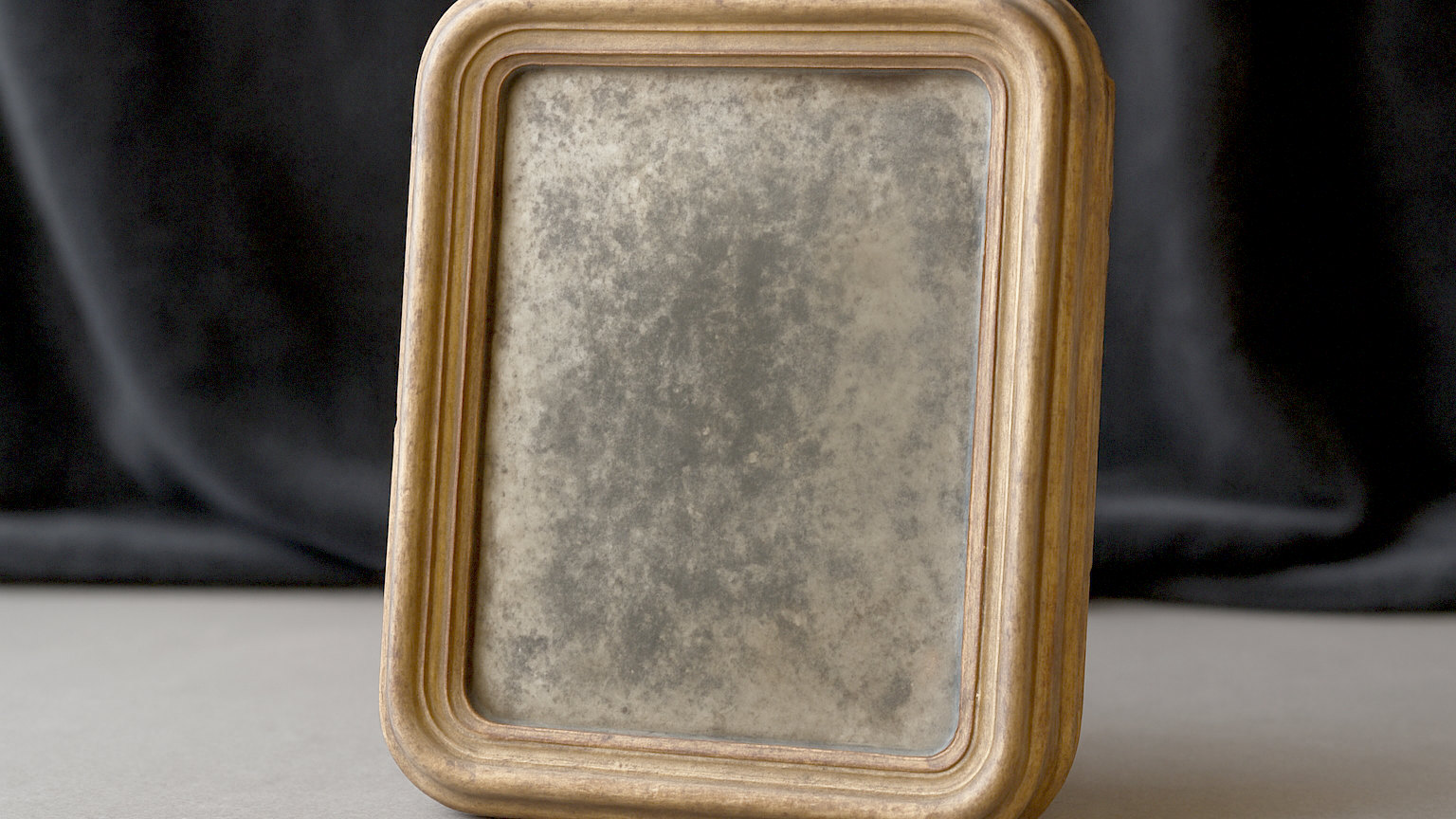
Early plate was made by very different methods, and the results are visible. It is usually thinner than modern glass, it carries a slight grey or blue grey tone rather than being colourless, and the reflection is softer and slightly dimmer.
Look at the edge if you can see it, and at the reflection quality across the whole surface. Early glass often shows faint waviness or subtle distortion, because the surface was never perfectly flat. Modern float glass is optically flawless, which is exactly what gives it away.
What is foxing and should it be removed?
Foxing is the speckled black and grey deterioration of the reflective backing, appearing as spots, patches and cloudy areas, usually worst around the edges where moisture reached the backing first.
It should not be removed, because it cannot be without replacing the plate entirely. Collectors read foxing as evidence of age and originality, and a period mirror with its original foxed plate is worth more than the same frame with a perfect new mirror in it. The deterioration is the proof.
How can you tell whether the plate is original?
Check the fit. Original plate was cut for that frame, so it should sit comfortably with the rebate and any backing boards made to suit it. A plate that has been packed out with strips of wood or card, or that leaves visible gaps, has probably been replaced.
Look at the back. Original backing boards are usually old timber with hand cut nails or small tacks, showing consistent age and dirt. Fresh boards, modern panel pins, plywood or hardboard indicate later work, though be aware that backing is sometimes replaced for conservation reasons while the plate remains original.
What should you know about the frame?
Most decorative mirror frames are not solid carved timber. They are usually a timber carcass with a layer of gesso, which is a chalk and glue mixture, moulded or carved and then gilded on top.
Gesso is brittle and chips easily, so losses are extremely common and entirely expected. Small losses are normal wear. Extensive replacement of moulded ornament, or a frame that has been recoated so thickly that the detail is soft and blurred, reduces value considerably.
How do you tell water gilding from other finishes?
Water gilding is the traditional method, in which gold leaf is laid over a coloured clay layer called bole, usually a warm red. Where the gilding has worn on high points, that red should show through underneath, and the surface can be burnished to a mirror brightness.
Oil gilding cannot be burnished and has a flatter appearance. Modern gold coloured paint has no leaf at all, sits evenly across the surface including in recesses where leaf would never reach, and often looks slightly brassy. Worn original gilding with red bole showing is far more desirable than a uniform regilded surface.
Which mirror forms hold their value?
Well proportioned wall mirrors of usable size do best, because they suit modern rooms. Overmantel mirrors designed to sit above a fireplace remain popular where the proportions work.
Very large and very heavy pieces are harder to sell simply because fewer houses can take them. Cheval mirrors, which stand on the floor in their own frame, and pier glasses made for the space between windows are both attractive but limited by size and by the tall narrow format.
What if the glass is genuinely unusable?
Keep it. If a mirror must be made functional, have the original plate removed carefully and stored flat, wrapped and labelled, with the new glass fitted in a way that can be reversed.
That way the mirror serves its purpose now and the original plate is available to any future owner who values it. Discarding the old plate is the irreversible step, and it is the one that costs money.