An antique mirror combines thick glass, a timber carcass and a layer of gesso, and the result weighs considerably more than its appearance suggests. Add fixings that may be a century old and a wall of unknown construction, and you have the conditions for a genuinely dangerous failure. Hanging one properly is not complicated, but nothing about it should be improvised.
How heavy is it actually?
Weigh it rather than guessing. Stand on bathroom scales holding the mirror, then subtract your own weight. People routinely underestimate by a wide margin, and the fixing you choose depends entirely on the answer.
Overmantel mirrors and large pier glasses can be extremely heavy, and the weight is concentrated in a frame that offers few good places to attach anything. If you cannot lift it comfortably alone, do not attempt to hang it alone either.
Should you reuse the existing fixings?
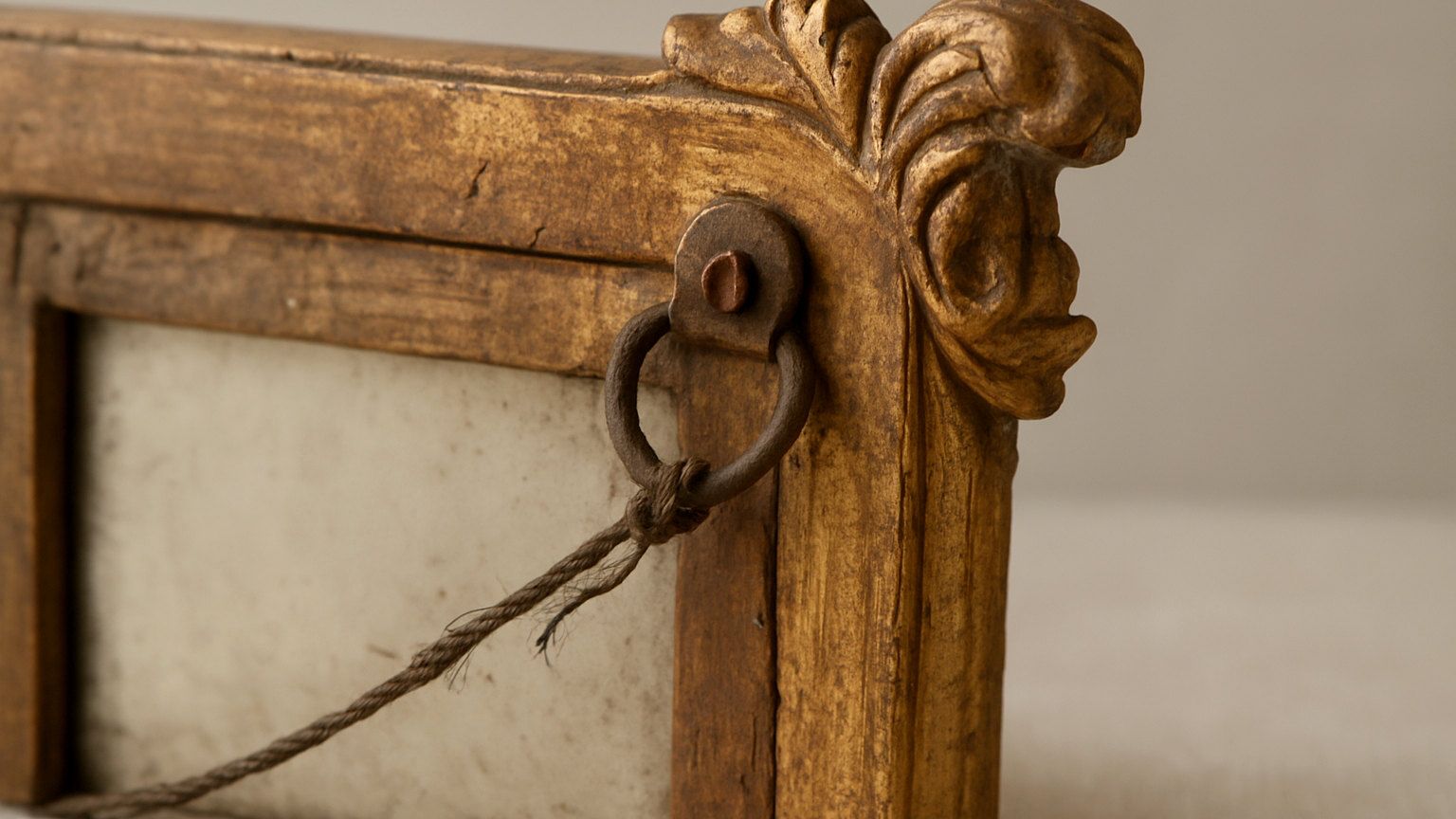
No. Whatever is on the back of an antique mirror should be treated as decorative history rather than as working hardware. Old cord and wire perish invisibly, screws corrode in their holes, and the timber around them may have softened.
Remove old cord entirely rather than adding to it. Where original brass rings or plates are present and sound, they can sometimes be reused, but check the screws holding them by removing one and looking at its condition and the timber it came out of.
What fixings should be used instead?
Mirror plates screwed to the frame and then to the wall are the strongest arrangement, because they transfer the load directly rather than through cord. Flat plates that sit against the wall on either side of the frame spread the weight and prevent the mirror tipping forward.
Where the mirror must hang on a cord or wire, use a rated hanging wire rather than string, attach it to D rings screwed into the frame sides rather than the back panel, and use two hooks spaced well apart rather than one in the middle. Two hooks halve the load on each and stop the mirror swinging.
What kind of wall are you fixing into?
This matters more than anything else. A solid masonry wall will take a properly installed plug and screw and hold almost anything. A stud partition will not, unless you fix into the timber studs themselves.
Find the studs with a detector and fix into them, not into the plasterboard between. Plasterboard anchors are rated for modest weights and antique mirrors frequently exceed them. Lath and plaster in older houses is weaker still and needs fixing into the timber behind. If you are unsure what the wall is made of, get someone who knows to look.
Where should the screws go into the frame?
Into solid timber, never into gesso. The decorative surface is a chalk and glue mixture over a timber carcass, and it has no structural strength whatsoever. A screw driven into gesso will pull straight out under load.
Locate the timber by tapping and by examining the back, then fix into the substantial parts of the frame rather than into thin mouldings. Drill pilot holes rather than forcing screws in, since old dry timber splits readily and a split frame member is a serious repair.
What about the glass itself?
Handle it as the fragile part it is. Carry a mirror vertically rather than flat, with one person at each side, and never let the glass take any weight or pressure.
Old mirror plate is thinner than modern glass and more brittle. Keep the mirror upright when resting it, standing on a soft surface with the back supported against something solid, and never lean it face inward against a wall where a knock could crack it.
Where should it not be hung?
Above a heat source, in a bathroom, on an exterior wall prone to condensation, or anywhere subject to significant temperature swings. Damp accelerates the deterioration of the reflective backing and causes the foxing that already affects most old plate.
Avoid direct sunlight, which fades gilding and dries out gesso until it flakes. If a mirror must go above a fireplace, check what temperature that wall actually reaches when a fire is lit, since heat and dry air are as damaging to a gilded frame as damp is to the glass.