The Windsor is the great country chair, made in enormous numbers over a very long period and still being produced. What defines it is not a style but a method of construction, and understanding that method explains why these chairs survive so well, why they are so comfortable, and what to check before buying one.
What makes a chair a Windsor?
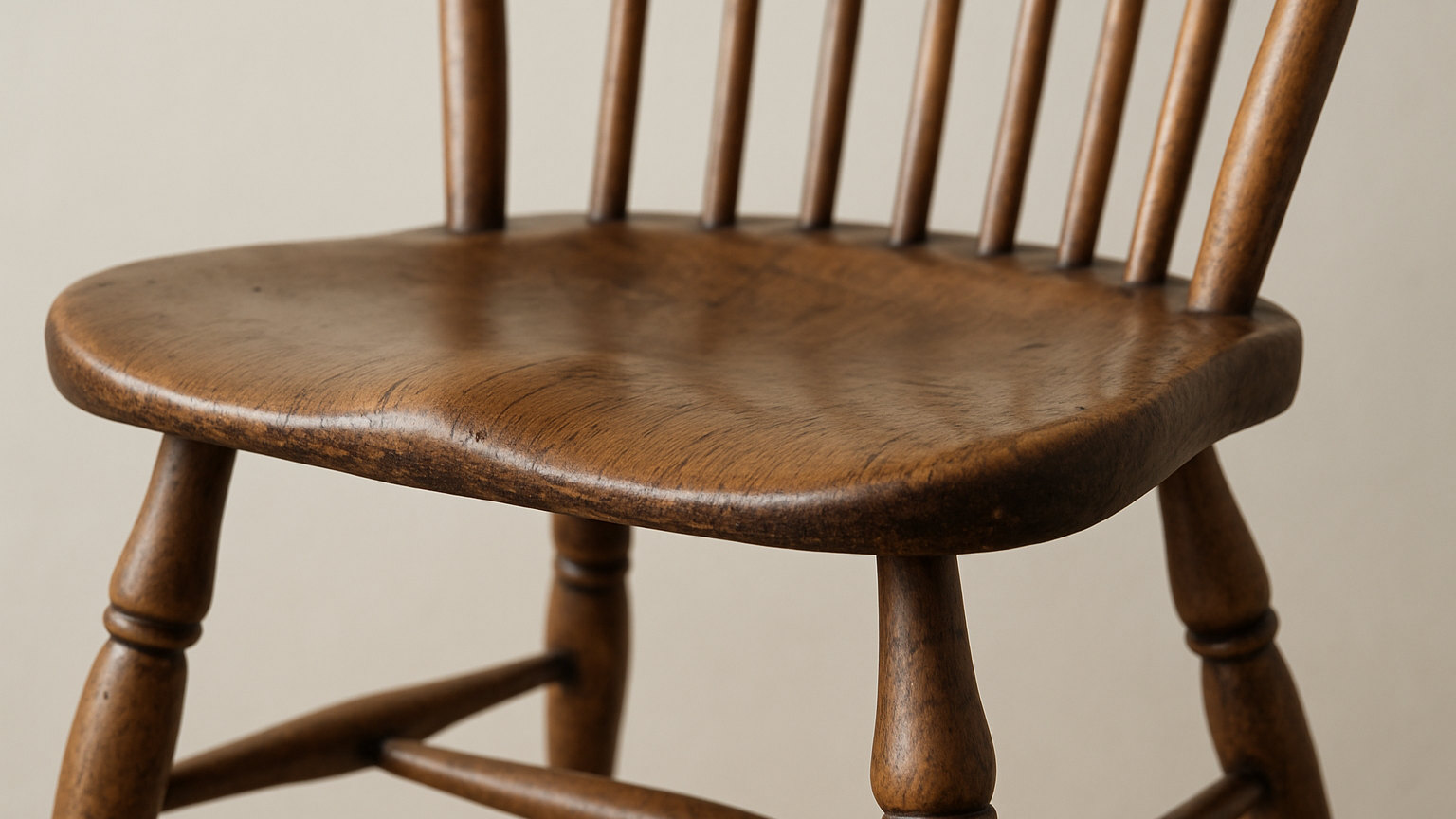
The seat. In a Windsor, a thick solid plank is shaped and hollowed, and every other component, legs below and back above, is socketed directly into holes bored in it. There is no frame.
Framed chairs work quite differently, with legs joined to rails that support a separate seat. The Windsor approach means the seat is the structural heart of the chair, which is why these are so robust and why damage to the seat is far more serious than damage anywhere else.
Which timbers were used?
Different woods for different jobs, chosen for their properties rather than their appearance, which is why most Windsors show mixed timbers.
Elm was the usual choice for seats because its interlocked grain resists splitting when bored with many holes close together. Ash or yew was used for bent components, since both steam bend well. Beech was common for turned legs and stretchers because it turns cleanly. A chair showing three different timbers is entirely normal and correct.
What are the main back types?
Comb backs have a horizontal top rail carried on vertical sticks, giving a shape suggesting a comb. Hoop or bow backs have a continuous bent hoop forming the outline, with sticks running up into it.
Within these, the treatment of the centre varies. Some have plain sticks throughout, others a wide flat central splat which may be pierced with decorative patterns. Wheel back designs, with a pierced circular motif in the splat, are among the most familiar. The back arrangement is the main stylistic variable.
How can you judge quality?
By the seat and the turnings. A well made Windsor has a deeply and generously hollowed seat, shaped to the body rather than merely dished, and that saddling is what makes these chairs comfortable for long periods.
Look at the turned legs and stretchers for crisp definition in the beads and swellings. Better chairs have more pronounced and confident turning. Yew wood examples command a premium over beech and elm. Count the sticks too, since more sticks generally indicates a better chair.
What should you check for damage?
Splits in the seat radiating from the leg sockets, which is the most serious fault a Windsor can have. Turn the chair over and look at where each leg enters, checking for cracks running with the grain.
Then check the sticks. Broken or replaced sticks are common, and a replacement usually differs in colour or in the exact taper. Look at where the sticks enter the seat and the bow for loose sockets. Wedges driven into the tops of leg tenons are original construction, not a repair, and should be present.
How do you date one?
With caution, because the form barely changed for two centuries and country workshops carried on making them long after fashions moved. Construction and wear are more reliable than style.
Look at the underside of the seat for tool marks from an adze or a plane, at the wear on the feet, and at the colour of unpolished surfaces. Genuine wear appears on the front edge of the seat, on the top of the back where hands gripped, and on the stretchers where feet rested. A chair with even wear everywhere has usually been helped.
Are they good value?
Some of the best available. Ordinary elm and beech Windsors sell for very modest sums, they are extremely strong, and they were made to be repaired rather than replaced.
Matched sets command a premium well above the sum of the parts, so a set of six is worth considerably more than six singles. Yew examples, unusual regional forms and chairs stamped by known makers all sell for substantially more, and stamped Windsors are worth looking for since the maker name is sometimes struck under the seat.