Chaise longues, day beds and long sofas are handsome, well made and frequently very cheap, for one straightforward reason: they are long. A piece that needs three metres of clear wall competes for a small pool of buyers, and that constraint has pushed prices well below what the workmanship deserves.
What is the difference between the forms?
A chaise longue has a back and one raised end, designed for reclining with the legs supported. A day bed has a raised end at each side, or a low back, and is closer to a couch in the original sense.
Various related forms exist with scrolled ends and asymmetric backs. The distinctions matter less commercially than the dimensions do, since what determines the buying audience is length and whether the piece will physically fit somewhere.
Why are they so affordable?
Because of size. Modern rooms are smaller, wall space is at a premium and open plan layouts leave fewer long uninterrupted walls than a Victorian drawing room did.
Recovering cost compounds this. A long piece takes a great deal of fabric and many hours of skilled labour, so a buyer must add a substantial sum to whatever they pay. That deters people, which suppresses prices further, which is precisely what makes them good value for anyone with the space.
How do you assess the frame?
By handling rather than looking, since almost everything is under fabric. Grip each end and try to rack the piece gently, then press down firmly along the seat listening for creaking.
Movement or noise indicates joints that have opened, which is ordinary on a piece of this age and repairable. What matters more is whether any rail has split. Check the legs where they meet the frame, since that is where leverage concentrates and where failures start.
What can you learn from the show wood?
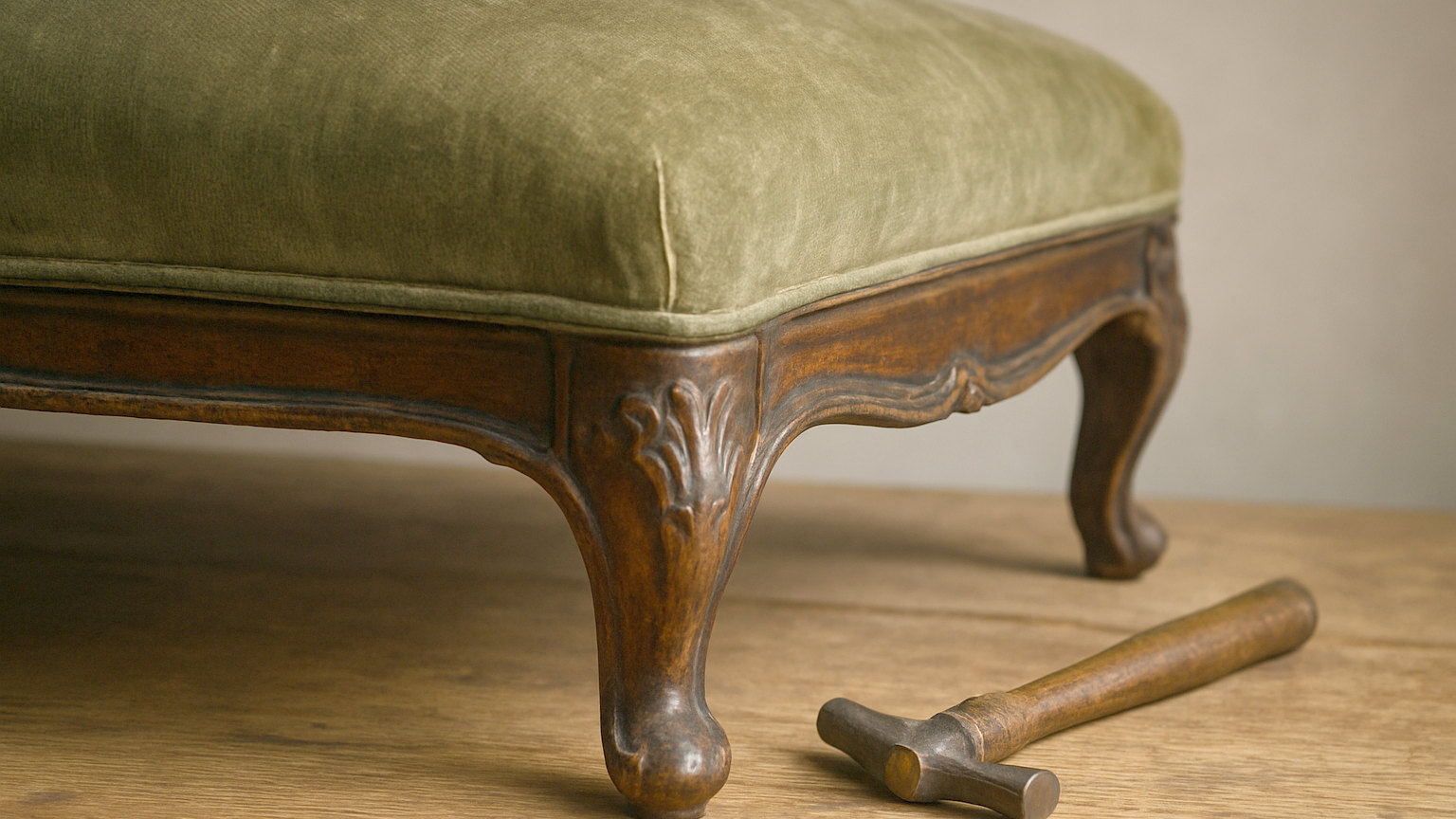
Almost all the dating evidence, since it is the only original surface visible. Look at the legs, any exposed frame along the back or arms, and any carved detail.
Assess the timber, the profile of any turning, and the crispness of carving. Compare front and back legs, which frequently differ with the front decorated and the back plain. Check the colour of unpolished surfaces underneath against the polished show wood.
What does the underside reveal?
Turn it over or lift one end and look. Count the layers of tack holes along the rails, since every reupholstery leaves a row, and a rail perforated by several generations of tacks indicates real age.
Rows of modern staples indicate recent work. Look at the webbing and springs: traditional jute webbing supporting hand tied coil springs is correct for a period piece, while rubber webbing or foam indicates a modern rebuild that reduces value.
What will recovering cost?
More than most people expect, and it should be established before buying rather than after. Traditional upholstery on a long piece is many hours of skilled work plus a substantial quantity of fabric.
Get a quote from an upholsterer with the dimensions before committing, and ask specifically whether the frame will need attention once stripped. A sound frame in tired fabric is a far better purchase than a freshly covered piece concealing a failing one, but only if you have costed the work.
Are they worth buying?
If you have the wall, they are among the best value in the market. The frames are solid timber, jointed and pegged, and were built to be repaired repeatedly rather than replaced.
Measure carefully first, including the route into the room, since long rigid furniture frequently will not turn a stair or pass a doorway. Lie on it before buying, since period proportions differ from modern expectations and some are considerably less comfortable than they look.
Where do they sell best?
Locally, almost always, because transport cost and difficulty deter distant buyers. That makes online marketplaces with collection in person the practical route rather than national auction.
A general saleroom will take one, though large upholstered furniture frequently makes very little there and may not sell at all. If you own one and have the space, the sensible conclusion is usually to keep and use it, since the recovering cost you would spend is money the market will not return to you.