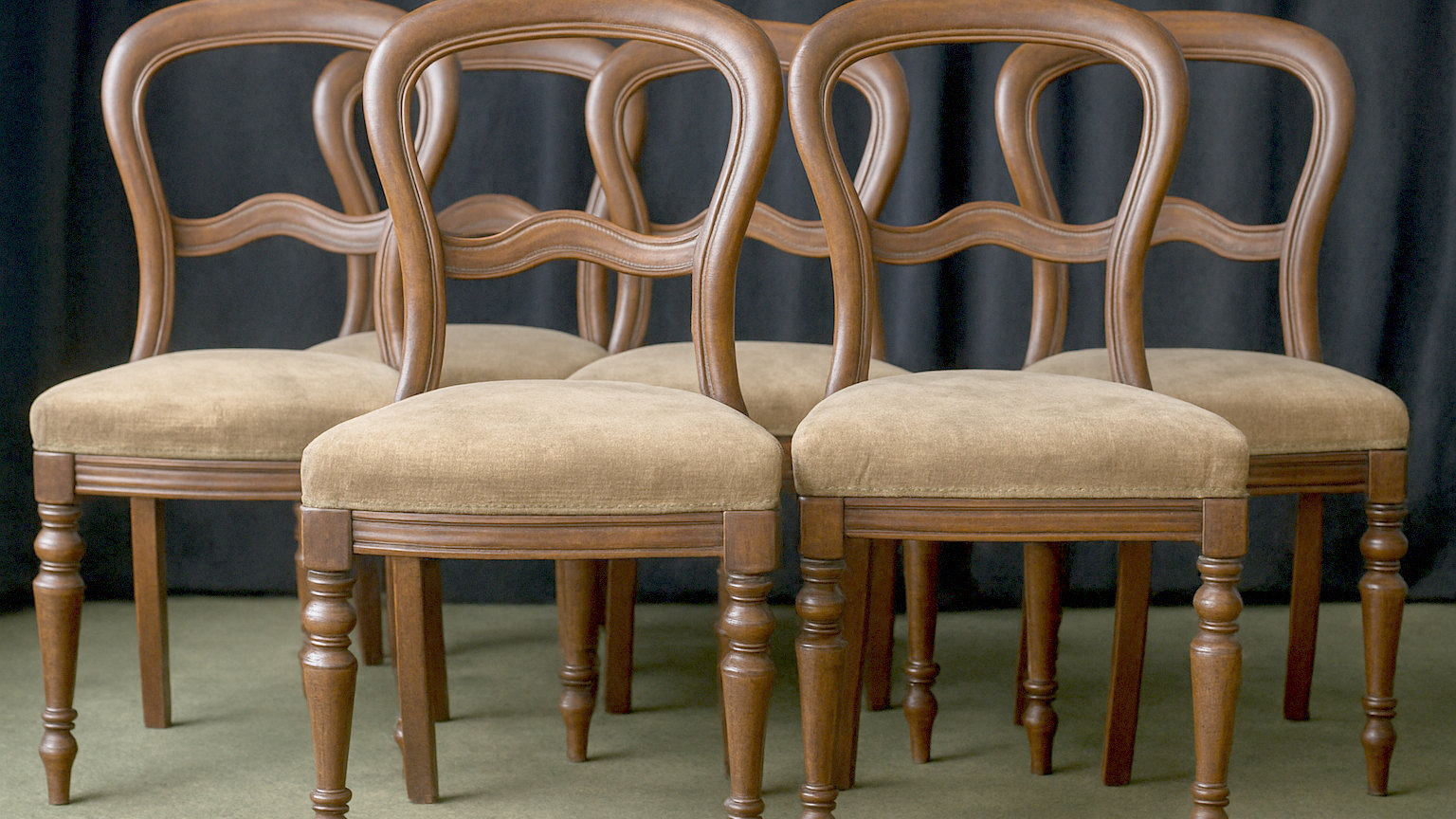
Nowhere in furniture does completeness matter as much as in seating. A single antique dining chair is worth very little, a pair is worth more than double, and a set of eight can be worth many multiples of eight singles. Understanding how that curve works is essential before buying or selling any group of chairs.
Why are sets worth disproportionately more?
Because buyers need chairs for a table, and the number required is dictated by the table rather than by taste. Somebody furnishing a dining room needs six or eight, and four will not do.
Supply works against them, because sets have been broken up steadily over generations as households split and individual chairs were damaged. Complete original sets are therefore genuinely scarce while singles are abundant, and the price reflects that gap.
How does the value step up?
Unevenly, with the biggest jumps at the numbers people actually need. The move from four to six is significant, and from six to eight larger still, because eight suits a bigger table and far fewer sets of eight survive.
Odd numbers sit awkwardly. A set of five is usually valued close to a set of four, since the fifth chair adds little until it becomes a sixth. If you have five and can find a matching sixth, the increase frequently exceeds what the extra chair costs.
What are carvers and why do they matter?
Carvers are the chairs with arms, traditionally placed at the head and foot of the table, and the term is used regardless of whether they carry any carving. A set described as six plus two means six side chairs and two carvers.
Carvers add a premium because they are scarcer, since only two were made for every six or ten side chairs. A set including its original carvers is worth noticeably more than the same number of side chairs alone, and matching carvers to an existing set later is difficult and expensive.
How do you check a set is genuinely matched?
Line the chairs up and look down the row from one end. Differences in height, in the profile of a turning or in the depth of carving show immediately when the chairs are aligned, and are almost invisible when they are apart.
Measure seat heights and overall heights, since chairs from different sets rarely match to the millimetre. Compare timber colour and figure. Then turn them over: chairs from an original set frequently carry workshop numbers stamped or scratched on the seat rail, and those should run in sequence.
What is a harlequin set?
A group of chairs that are similar but not identical, assembled from more than one source. The term is legitimate and descriptive rather than pejorative, and honest dealers use it openly.
Harlequin sets are worth considerably less than matched ones and considerably more than the same chairs sold singly, so they occupy a sensible middle position. The problem is only ever a made up set sold as an original one, which is why checking before paying set prices matters.
Do repairs and reupholstery affect the price?
Reupholstery barely, since fabric is consumable and almost no original covering survives. What matters is the state of the frame underneath, so lift out any drop in seats and check the rails for splits radiating from tack holes.
Structural repairs matter more. Replaced legs, replaced back rails and heavily rebuilt frames all reduce value, and a set where two chairs have been substantially repaired is worth less than one where all are sound. Loose joints are ordinary and easily corrected.
Is now a good time to buy?
Unusually good. Ordinary period dining chairs have fallen a long way with the rest of brown furniture, and a set of six solid timber chairs with hand cut joints frequently costs less than new ones of far poorer construction.
Sit in them before buying, since seat heights were sometimes lower than modern tables assume. Check the set against your own table for knee clearance, and buy the largest matched set you can, because breaking one up later loses most of the premium you paid.