Chairs are the most useful furniture form for learning to date by eye, because the back was the decorative element and fashions in back design changed quickly and visibly. They are also where sets matter enormously: six matching period chairs are worth a great deal more than six times the value of one, which makes checking whether a set is genuinely matched the most valuable thing you can do.
Why does the back tell you the most?
The back was what people saw and what the maker used to signal style. Legs and seats changed more slowly and were often plainer, because they were structural. A back with a solid central splat, a back with pierced decoration, a back with horizontal rails and a back with a curved waisted outline each belong to recognisable periods.
Learn to read the outline shape first, then the decoration within it. The silhouette of a chair back is usually enough to place it within a few decades before you look at any other feature.
What are the main chair forms to know?
Windsor chairs have a solid shaped seat with legs and back socketed directly into it rather than joined to a frame, and were made in country workshops over a long period. Ladderback chairs have horizontal rails across the back and are equally rural in character.
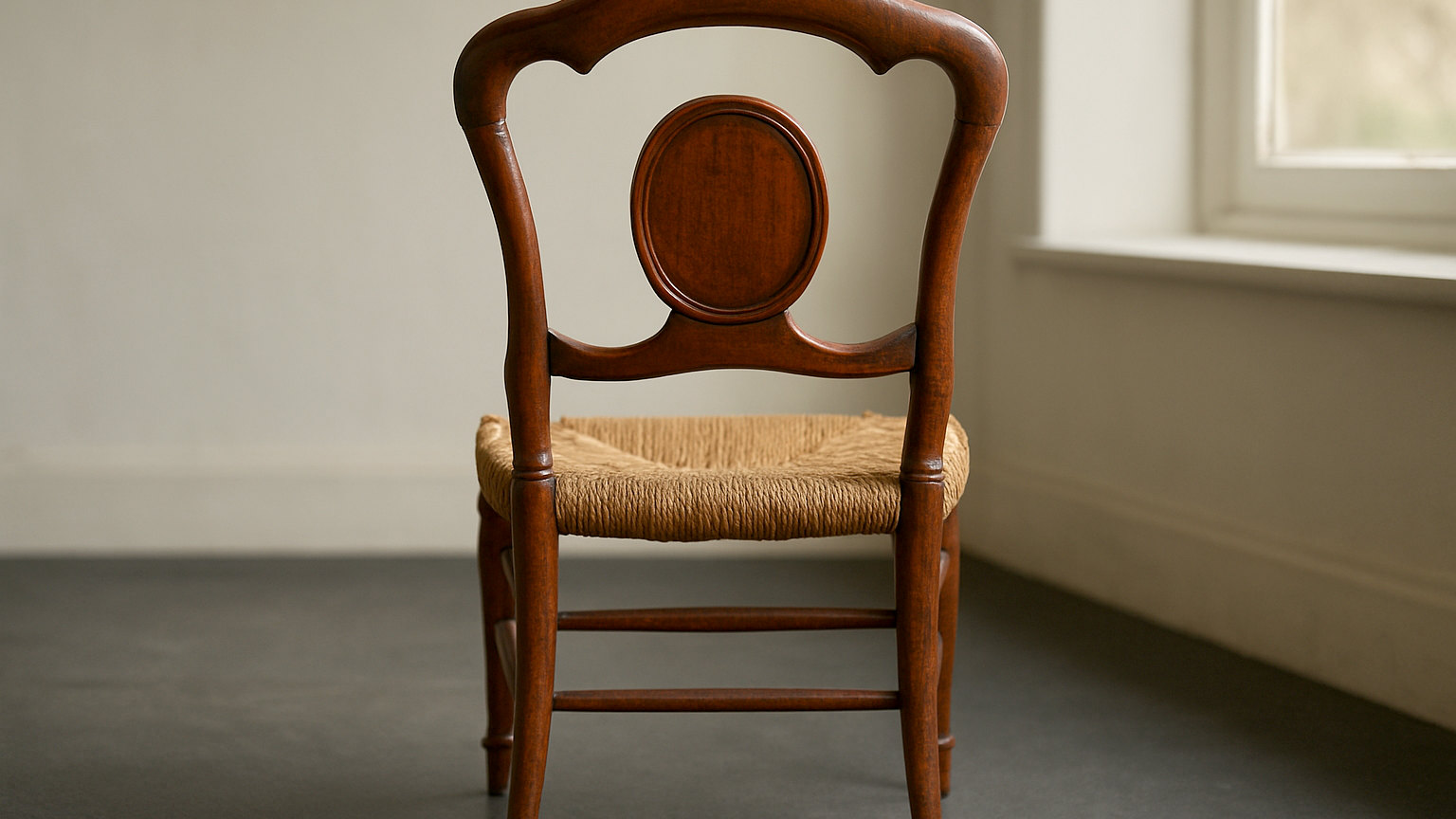
Formal dining chairs run through a sequence of splat designs, from broad solid splats through elaborately pierced patterns to lighter shield and oval shapes. The balloon back, with its rounded waisted outline, belongs to a later and very productive era and survives in very large numbers, which keeps prices modest.
How do you tell whether a set is genuinely matched?
Take the chairs apart visually and compare like with like. Measure the seat height and the overall height of each one, since chairs from different sets are rarely identical to the millimetre. Compare the timber colour and figure, the depth of carving, and the exact profile of any turning.
Then turn them over. Chairs from an original set often carry matching workshop numbers stamped or scratched on the seat rail, and those numbers should run in sequence. Look at wear patterns as well, because chairs used together in one room wear at broadly similar rates.
Why are made up sets so common?
Because the financial incentive is obvious. A set of four is worth much less than a set of six, and a set of six much less than eight, so combining two partial sets into one larger one is a long standing trade practice rather than a modern trick.
Some of these marriages are honestly described as a harlequin set, meaning similar but not identical. That is entirely legitimate when disclosed. The problem arises when a made up set is offered as an original one, so check before you pay set prices.
What does reupholstery do to value?
Reupholstery in itself is normal and expected. Fabric wears out, and almost no seat covering survives from the original period, so fresh upholstery is not a defect.
What matters is what was done to the frame underneath. Modern staples driven into rails leave rows of small holes, and repeated reupholstery over a long life can leave a show wood rail so perforated that it is structurally weakened. Drop in seats that can be lifted out are the least damaging arrangement. Check the frame rails for splits radiating from tack holes before buying.
Which repairs should concern you most?
Replaced legs and replaced back rails matter most, because they affect both structure and originality. Look for differences in colour, in patina and in the crispness of any carving, and check whether the timber grain and figure match the rest of the chair.
Loose joints are ordinary and repairable. A chair that racks noticeably when you press the back sideways needs the joints knocked apart and reglued, which a restorer does routinely. That is a maintenance issue rather than a reason to walk away.
When is a chair actually worth buying?
When it is comfortable, structurally sound and honestly described. Ordinary period dining chairs are among the best value in the whole antiques market, because they survive in quantity, they are usually stronger than modern equivalents, and demand has softened considerably.
Sit in it before deciding. Seat heights were lower in some periods than modern tables assume, and a chair that looks right at a fair can prove uncomfortable under a table at home.