Upholstered seating is the hardest furniture to assess, because the fabric conceals the frame, the frame is what dates the chair, and nobody wants to strip a chair to find out. That leaves the legs, the underside and the proportions to carry the evidence, and fortunately they carry more than you might expect.
What is a wing chair?
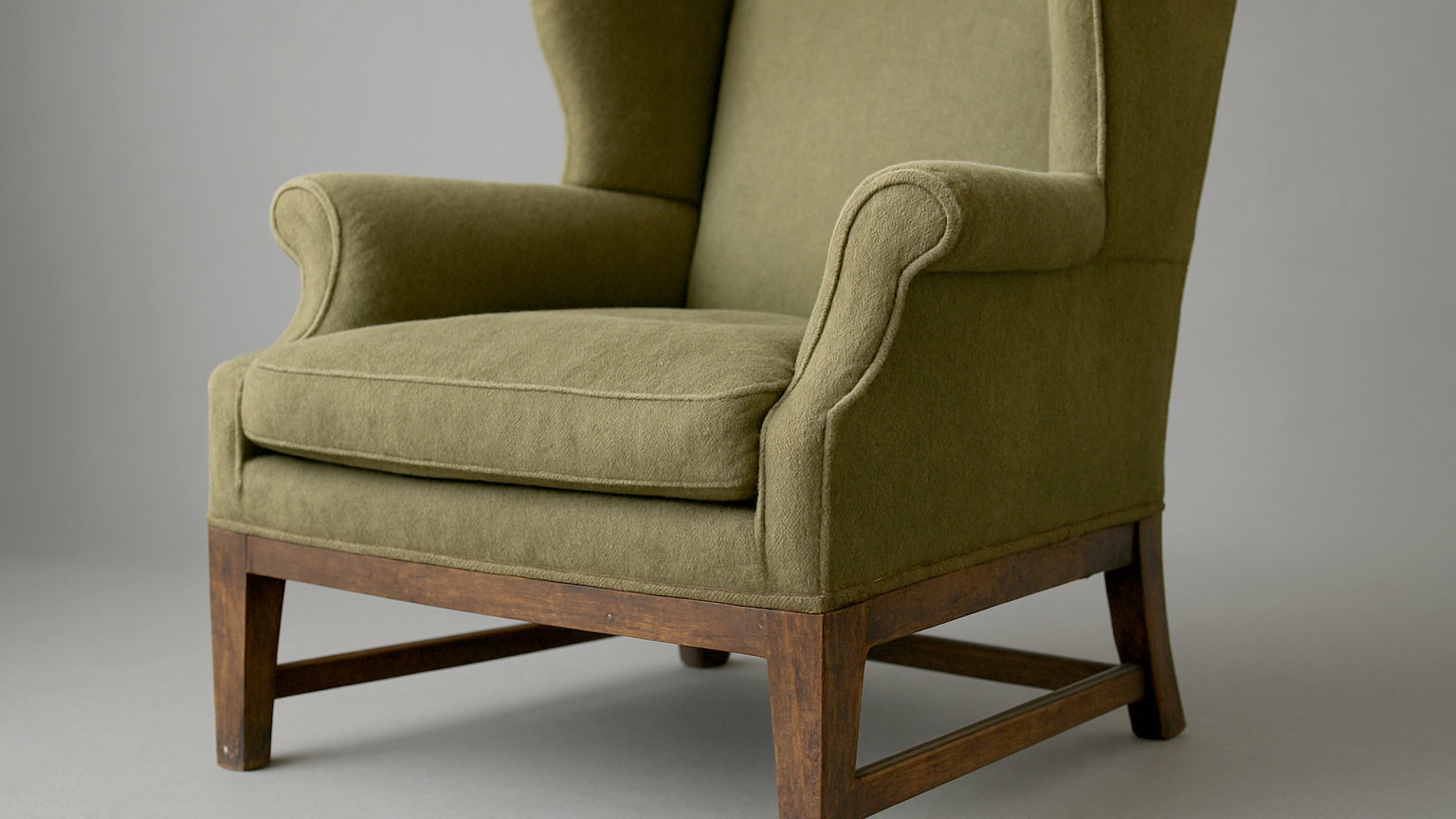
A tall upholstered armchair with projecting side panels running from the back down to the arms, originally intended to shield the sitter from draughts and to trap the heat of a fire.
The form has been made continuously for a very long time and revived repeatedly, so the shape alone tells you nothing about date. What varies is the profile of the wings, the height of the back, the shape of the arm and above all the legs, which were the only part left visible.
Why do the legs matter most?
Because they are the only original show wood on the piece and the only part that follows period fashion visibly. Everything else is under fabric.
Look at the leg profile, the timber, and any carving or turning. Front and back legs frequently differ, with the front decorated and the back plain, which is correct rather than suspicious. Check whether the legs are joined by stretchers, since that arrangement belongs to particular periods and was dropped later.
What does the underside tell you?
Turn the chair over, which is the single most useful thing you can do. Look at the timber of the frame rails where they are visible, the colour of unpolished surfaces, and the fixings.
Count the layers of tack holes. Every reupholstery leaves a row of holes, so a rail perforated by four or five generations of tacks has genuinely been recovered that many times, which indicates real age. Rows of modern staples indicate recent work. A rail so riddled with holes that it has split is a structural problem.
What is under the seat?
Webbing, springs and stuffing, and their type is informative. Traditional upholstery uses jute webbing supporting coil springs, hand tied with twine, with horsehair stuffing above.
Later work uses rubber webbing, serpentine springs or foam. Press the seat and listen: traditional springing gives a distinctive soft resilience quite unlike foam. Where the bottom is covered by a dust cloth, look for the outline of springs through it rather than cutting anything.
How can you check the frame is sound?
Grip the arms and try to rack the chair gently sideways, then press down firmly on the seat and listen for creaking. Any noticeable movement indicates joints that have opened.
Check where the legs meet the seat rails, which is where the leverage concentrates and where failures start. Look for metal brackets or plates screwed across joints, which is a crude repair, and for modern screws in a frame that should be jointed and pegged.
Does reupholstery reduce value?
Not in itself, because fabric is consumable and almost no original covering survives. A chair reupholstered sympathetically using traditional methods is perfectly acceptable and often desirable.
What matters is what was done to the frame. Modern staples, replaced rails, cut down legs and structural repairs all count against. Foam replacing traditional stuffing reduces value on a period chair and changes how it sits. Ask what was used and when, and expect a good upholsterer to have kept a record.
What should you consider before buying?
The cost of recovering it, which is substantial and frequently exceeds the price of the chair. Traditional upholstery is skilled labour and takes many hours, and fabric for a wing chair is a serious quantity.
Sit in it first, since period proportions differ from modern expectations and some wing chairs are considerably more upright than they look. Check the height against your own furniture. A sound frame with tired fabric is a better buy than a freshly covered chair hiding a failing one.