The stool predates the chair as everyday seating and survives from a genuinely early period, which makes good examples desirable. It is also simple enough to reproduce convincingly, and reproductions have been made continuously for well over a century. Construction and wear settle the question rather than appearance.
What is a joint stool?
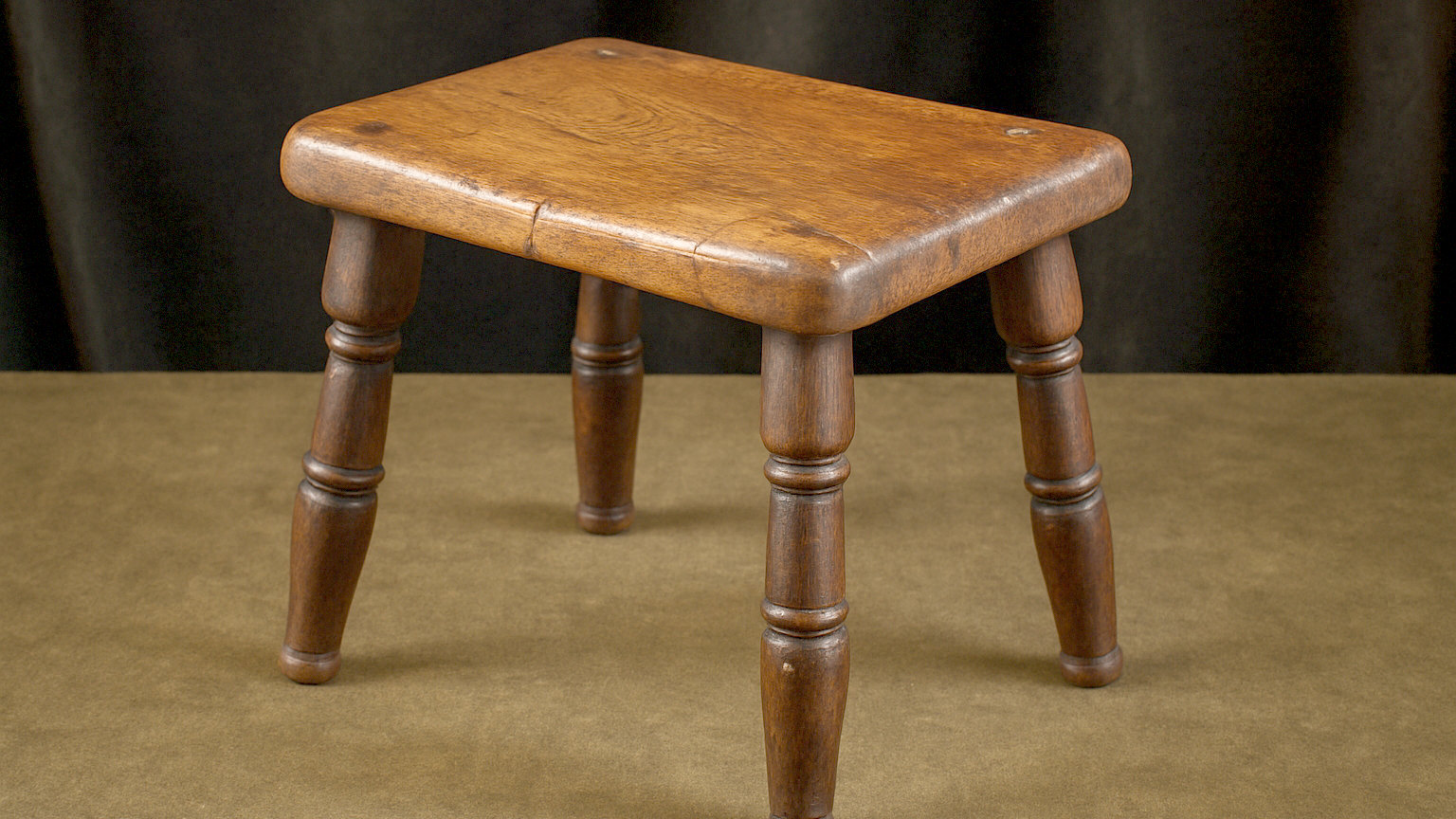
A stool built from four turned legs joined by rails at the top and stretchers near the floor, with the joints pegged rather than glued or screwed. The seat is a solid plank sitting on the frame.
Look at the pegs, which should be visible on the outside of the legs where the rail tenons enter. They should stand slightly proud, because timber shrinks around them over centuries while the peg itself does not, and that slight projection is difficult to fake convincingly.
Where should the wear be?
On the stretchers, above everything. Feet rested on them constantly, so the upper surface of the stretchers should be visibly worn, sometimes down to a shallow hollow on the front one.
The seat edges should be worn where people gripped to move the stool and where they sat. The feet should show abrasion and frequently rot damage from stone floors. A stool worn on the stretchers and nowhere else is more convincing than one worn evenly all over.
How do you assess the seat?
By shrinkage and by colour. A solid plank seat shrinks across the grain over centuries, so it becomes narrower than the frame beneath and may overhang unevenly at the ends.
Look underneath, which nobody finished. There should be hand tool marks, an oxidised but paler colour than the top, and evidence of how the seat was fixed. Replaced seats are common, so compare the timber and the colour against the frame and check whether the fixing holes correspond.
What do the turnings tell you?
Period and quality. Leg turning followed fashion, moving through a series of recognisable profiles, and the crispness of the cutting indicates the workshop.
Compare all four legs, which on a genuine stool were turned by one hand in one session and should match closely while showing the tiny variation of hand work. Perfectly identical legs suggest machine turning. A replaced leg usually differs in colour or in the exact profile of a bead.
What about footstools and benches?
Footstools are much later as a general form and frequently upholstered, so they are assessed like any upholstered furniture: the show wood and the underside carry the evidence.
Benches and forms are essentially long stools and are checked the same way. Look at whether a long seat is a single plank or several, and at how any joints between boards were made. Very long benches suffer the usual size problem and sell for less than their quality deserves.
How do you spot a reproduction?
Machine evidence and wrong wear. Look for circular saw marks on unfinished surfaces, machine cut joints, screws instead of pegs, and perfectly regular turning.
Check whether the wear tells a coherent story. Artificial distressing is usually spread evenly and appears in places no foot or hand would reach. Genuine stools also acquire a particular colour on the seat top from centuries of use that is quite different from applied stain.
Are they good value?
Small stools are useful, fit anywhere and remain affordable, which makes them one of the better entry points into early oak. Good early joint stools with strong colour and honest wear are genuinely sought after and priced accordingly.
Buy on surface and originality rather than on decoration. Check the frame is sound by pressing down firmly and testing for racking, and expect some looseness, since pegged joints move with the seasons and that is normal rather than a fault.
What about upholstered tops?
Many stools have a drop in or fixed upholstered seat, which conceals the frame in the usual way. Lift out a drop in seat and check the rails underneath for splits radiating from tack holes.
Count the layers of tack holes, since each reupholstery leaves a row and several generations of them indicate genuine age. Modern staples indicate recent work rather than a problem in itself.