The settle is a long wooden bench with a back, and it is among the oldest furniture forms still in domestic use. It is also one of the most frequently made up, because old oak panelling and church fittings have been converted into settles for well over a century, and telling a genuine one from an assembly requires reading the construction.
What is a settle?
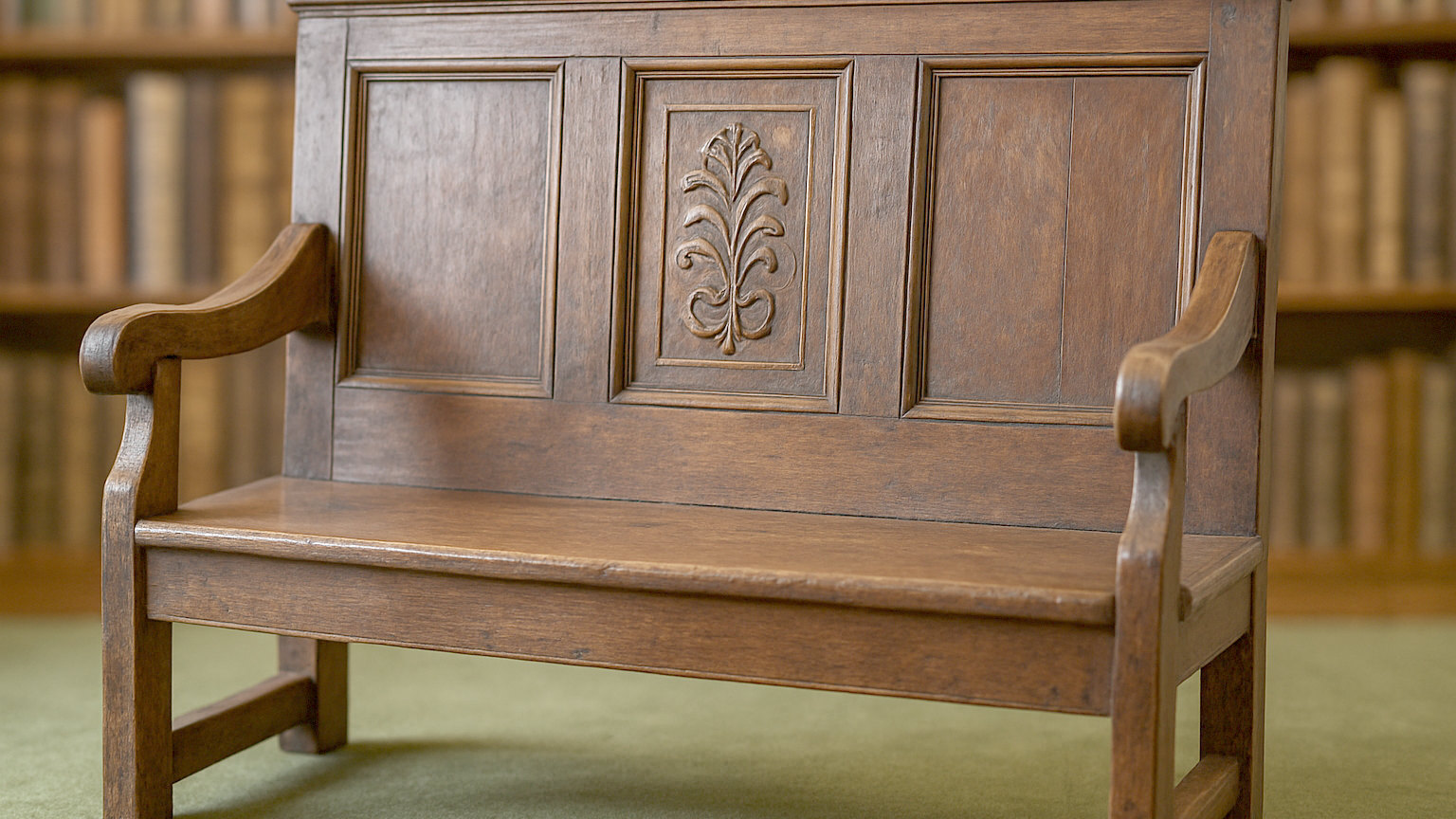
A long seat with a tall panelled back and usually arms at each end, made to stand against a wall and provide draught free seating near a fire.
Some have a hinged seat with storage beneath, called a box settle, and some incorporate a canopy or hood. The back is normally panelled in the same construction as a chest, with a frame of stiles and rails and panels floating in grooves.
How do you tell a genuine one from a made up piece?
By whether the components were made for each other. Converted panelling shows panels of inconsistent size, joints that have been cut to fit rather than made to fit, and mouldings that stop or change part way along.
Look at the back from behind, which nobody finishes on a genuine settle and which conversions frequently tidy up. Check whether the frame members run the full length or have been pieced, and whether the panel proportions repeat regularly.
What do the panels tell you?
Age and originality. A genuinely old panel has shrunk within its frame over centuries, leaving a narrow strip of unfaded timber where it has pulled away from the moulding.
That strip is excellent evidence and difficult to fake. Look at every panel: consistent shrinkage across all of them suggests they have been together throughout, while one panel showing none is likely a replacement.
Where should the wear be?
On the seat, on the arms where hands rested, and on the front edge where legs rubbed. The upper back should show little wear, since nothing touched it.
Genuine wear on a settle is heavily concentrated and highly logical. A piece worn evenly all over, including on the upper panels, has been distressed rather than used. Look also at the feet, which stood on stone floors and should show damp damage.
What about church furniture?
A great deal of settle like seating came out of churches during nineteenth century restorations and was sold into the domestic market, sometimes intact and sometimes cut down.
Pew ends carved with distinctive motifs are frequently incorporated into made up settles. That does not make the timber less old, but it does make the object an assembly rather than a piece of domestic furniture, and it should be described accordingly.
How do you check a box settle?
Open the seat and look inside. The interior should show the same age and tool marks as the exterior, with an unfinished surface, hand tool evidence and consistent oxidation.
Check the hinges, which on early pieces are hand forged straps or wooden pin arrangements. Look for splits in the seat boards, which are wide planks that shrink, and check whether the box was original or added by boarding in an open framed settle.
What condition issues matter?
Rot at the feet and lower rails from damp floors, splits in seat boards, and losses to carved decoration. Check for woodworm, particularly in sapwood and in the base.
Look for replaced sections in the back, which are common where panels split. As with any early oak, original surface matters greatly, and a stripped and repolished settle is worth considerably less than one with its accumulated colour intact.
Are they worth buying?
Genuine early settles in good original condition are sought after and priced accordingly. Made up examples are worth far less and should be bought as decorative furniture rather than as antiques.
They are large and unyielding, which limits the market and keeps prices reasonable relative to their age. Measure carefully, sit on one before buying since comfort varies enormously, and check the back is genuinely vertical rather than leaning, which suggests the frame has racked.