Chairs made for reading and writing form a distinct group, because they were designed around a task rather than around a dining table. Many revolve, tilt or adjust, and that mechanism is engineering rather than joinery, which makes it one of the more precisely datable features on any piece of seating.
What forms are there?
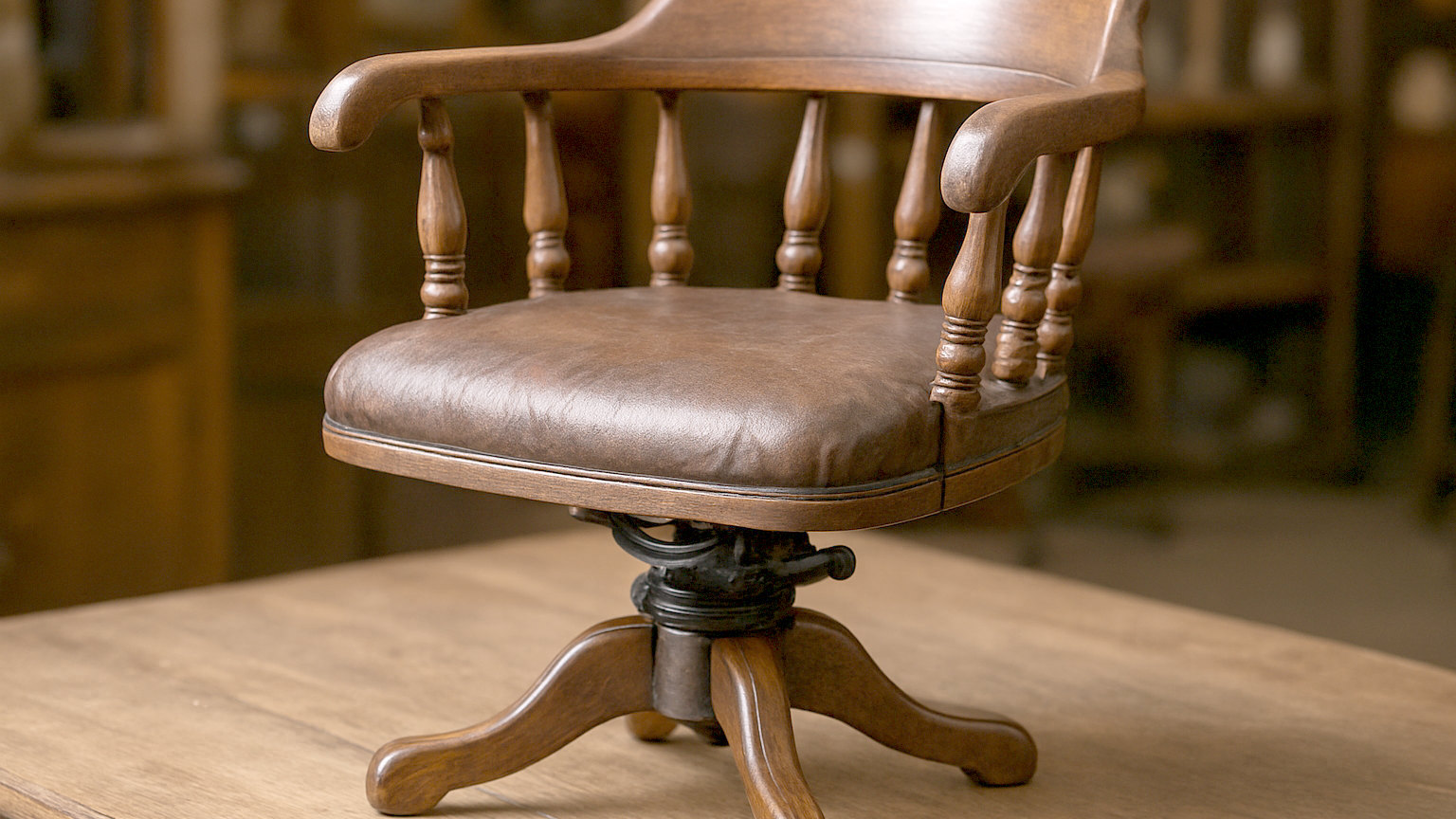
Desk chairs with a low curved back and arms, frequently called captains chairs, which sit on a revolving base. Library chairs with deeper seats for reading. Tub chairs with a continuous curved back and arms.
Also folding library steps disguised as chairs, and reading chairs designed to be sat on facing backwards with a shelf on the back rail. Establishing which form you have determines what should be present and what is likely to be missing.
What does the mechanism tell you?
A great deal. Early revolving chairs use a simple screw pillar, where the seat turns on a coarse thread and rises or falls as it revolves.
Later mechanisms add a separate height adjustment and a sprung tilt, using cast iron components that are frequently marked with a maker name or a patent reference. Those marks are worth looking for on the underside, since they date the chair precisely and identify the manufacturer.
How do you check a revolving base?
By operating it. Turn the seat through a full rotation and feel whether it moves smoothly or binds, and check whether the height adjustment works through its range.
Look underneath at the cast components for cracks, which are common in iron and difficult to repair. Check the timber where the mechanism is fixed to the seat, since the screws pull out and the timber splits under the leverage of somebody leaning back.
What about the legs and castors?
Revolving chairs usually stand on four splayed legs, sometimes with castors. Original castors are worth checking, since they are frequently replaced with modern substitutes that look wrong.
Look at whether the castors match each other, whether they are of an appropriate type for the period, and whether they turn. Brass or ceramic wheels in cast housings are typical of the better chairs. Modern plastic castors substantially spoil the look and should be reflected in the price.
How do you assess the leather?
By whether it is original and what condition it is in. Original leather on a desk chair is frequently a hundred years old and dry, cracked and worn on the front edge of the seat.
That is expected, and worn original leather is generally preferable to a modern replacement, which changes the character considerably. Check for splits at the seams, loss around the buttons on buttoned work, and whether the stuffing beneath has collapsed.
Should worn leather be replaced?
Only when it is genuinely beyond use. Recovering a buttoned leather chair is expensive skilled work, and the result rarely matches the depth of colour that old leather develops.
Consider feeding and consolidating instead, which a leather specialist can do. Where replacement is unavoidable, choose a hide and colour appropriate to the period rather than a modern uniform finish, and keep any original leather that comes off.
What condition issues matter most?
Splits in the seat where the mechanism attaches, cracks in cast components, and failure at the joints between arms and back where people push against them.
Sit in the chair and lean back, since that is the load these were designed for and the load that breaks them. Test the tilt mechanism if there is one, and check the spring is present and functional. A chair that racks noticeably or drops under weight needs work before use.
Are they worth buying?
Good desk chairs sell steadily and have held their value better than most seating, because they are useful, comfortable and suit a modern study or home office.
Original leather, a working mechanism and original castors are what separate a good example from an ordinary one. Buy on comfort and soundness, sit in it properly before deciding, and budget for any leather work before agreeing a price rather than afterwards.