Hall chairs puzzle people because they are conspicuously uncomfortable, with hard seats, upright backs and no upholstery. That was deliberate. They were furniture for a space where visitors waited briefly and servants sat, and understanding the purpose explains the construction and what to look for.
What is a hall chair?
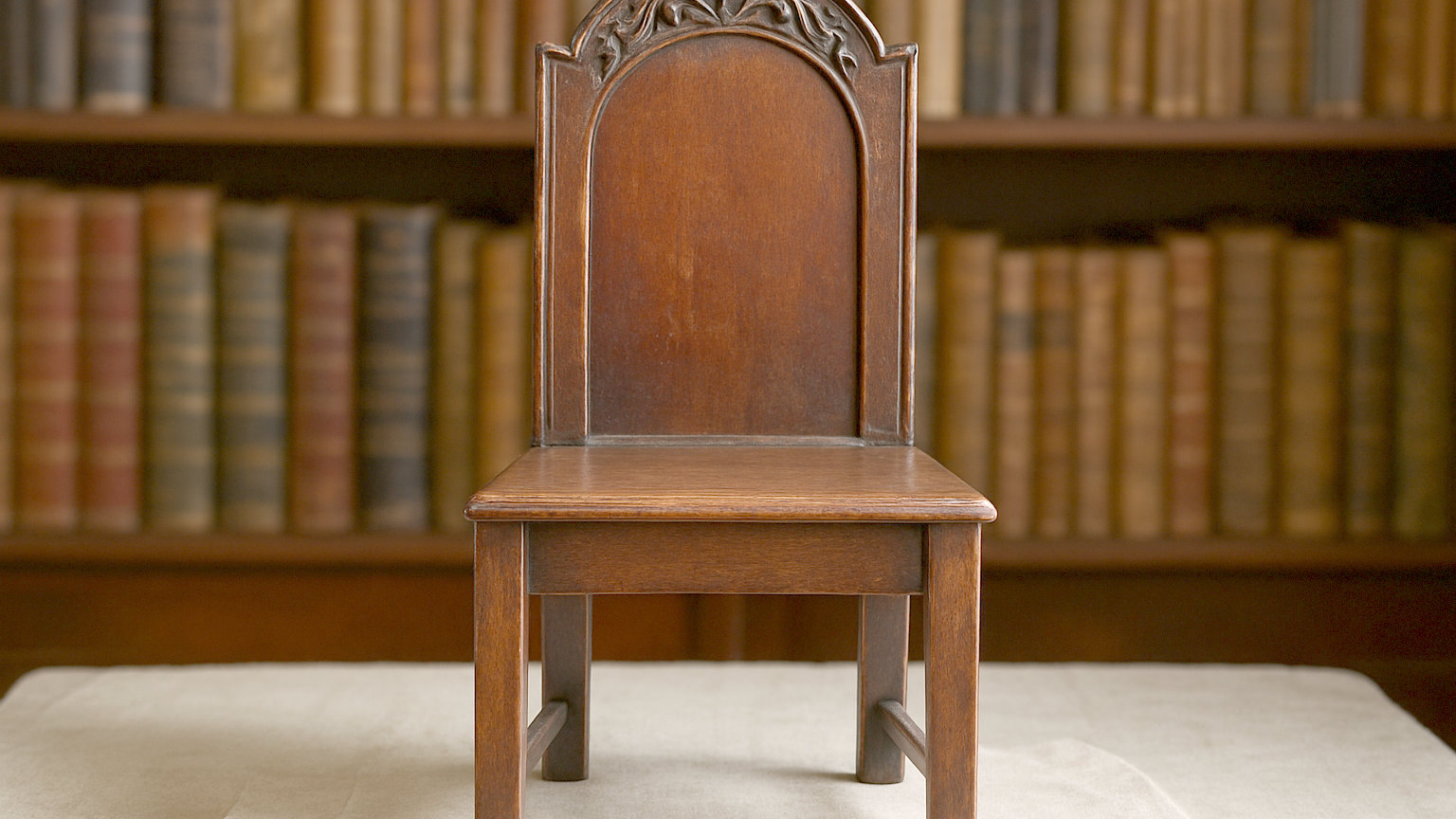
A chair made for an entrance hall, with a solid timber seat, no upholstery and a decorative back designed to be seen from the front as you enter.
They were made in pairs or sets and placed against the wall of a hall or passage. Comfort was not the point, since nobody was expected to sit for long. The back was the decorative element and frequently carried a painted or carved device.
Why do they carry a crest?
Because they announced the household. Many hall chairs have a painted armorial crest or a carved cartouche in the centre of the back, identifying the family whose house it was.
That crest is genuinely useful, since it can frequently be identified and traced to a family and therefore a house. A chair with an identifiable and documented crest is worth considerably more, and the research is a real addition to value rather than a curiosity.
Should a crest be repainted?
No. Original painted decoration, however worn, is worth far more than a repaint, and overpainting a faded crest is a common and costly mistake.
Look at the paint surface under raking light for fine crazing consistent with age, and be sceptical of anything that looks fresh, evenly applied or too crisp. Where a crest has been repainted, the piece is worth noticeably less and it should be described honestly.
What is a corner chair?
A chair with the back running around two adjacent sides, so it sits diagonally with one leg to the front. They are sometimes called writing chairs or roundabout chairs.
The construction is quite different from a conventional chair, with a shaped seat and an arm rail supported on turned columns. Check that all the columns are present and match, since these break and are frequently replaced. The front leg takes unusual load and is a common failure point.
How do you assess the seat?
A solid timber seat, often dished or shaped, and it should show genuine wear where people sat. Look for a shallow hollow and for polish built up over generations.
Check the seat for splits, which are common since it is a wide board that shrinks across the grain. Look underneath for tool marks and for the colour of unpolished timber, which should be paler than the top but consistently oxidised.
What about sets and pairs?
Hall chairs were made in pairs and larger sets, and a matched pair is worth substantially more than two singles, following the usual rule.
Line them up and compare heights, the exact profile of the back, and the crest if present. Painted crests on a genuine pair were done by the same hand and should match closely while showing the small variation of hand work. Two chairs with identical crests may be later decorated.
What condition issues matter?
Splits in the seat, breaks at the junction of back and seat, and losses to any pierced or carved decoration in the back. The backs are frequently elaborately shaped and the thin sections break.
Check the legs for repairs and replacement, comparing colour and turning across all four. Because these chairs were rarely upholstered, everything is visible, which makes assessment easier than on most seating.
Are they worth buying?
They are among the cheapest antique chairs available, precisely because they are uncomfortable and most people cannot see a use for them. That makes them good value as decorative furniture.
They work well as occasional chairs, in a hall as intended, or as a pair flanking a fireplace. Buy on the quality of the back, the presence of original paint or carving, and the soundness of the seat, and expect an identifiable crest to add real interest.