Wardrobes are the largest furniture most houses contain and were designed accordingly: built to dismantle into sections so they could be carried upstairs. That construction is practical and it means components get separated, so the first question with any wardrobe is whether all of it is still there.
How do they come apart?
Typically into a cornice, a carcass or two, a plinth or base, and the doors, held together with bolts, keyhole plates or simple wedges rather than permanent joints.
Look for the fixings inside at the top and bottom corners and along any vertical join. Understanding how a wardrobe dismantles matters practically, since attempting to move one intact is how they get damaged and how they fail to fit up staircases.
What is most often missing?
The cornice, which sits loose on top and is left behind when a wardrobe is moved. Then the plinth, then interior fittings such as sliding trays, hanging rails and hat shelves.
A wardrobe missing its cornice looks abruptly truncated and is worth noticeably less. Check the top for the marks and fixing points where a cornice sat, which will be visible as unfaded timber and screw holes even when the piece is long gone.
What should the interior contain?
It varies by type. A hanging wardrobe has a rail or hooks, while a gentleman wardrobe has a bank of sliding trays or shelves on one side and hanging space on the other.
Count the trays against the available runners, since missing trays are common. Look for the ghost marks of removed shelves and rails. Original interior fittings add value and their absence should be reflected in the price.
How do you assess the doors?
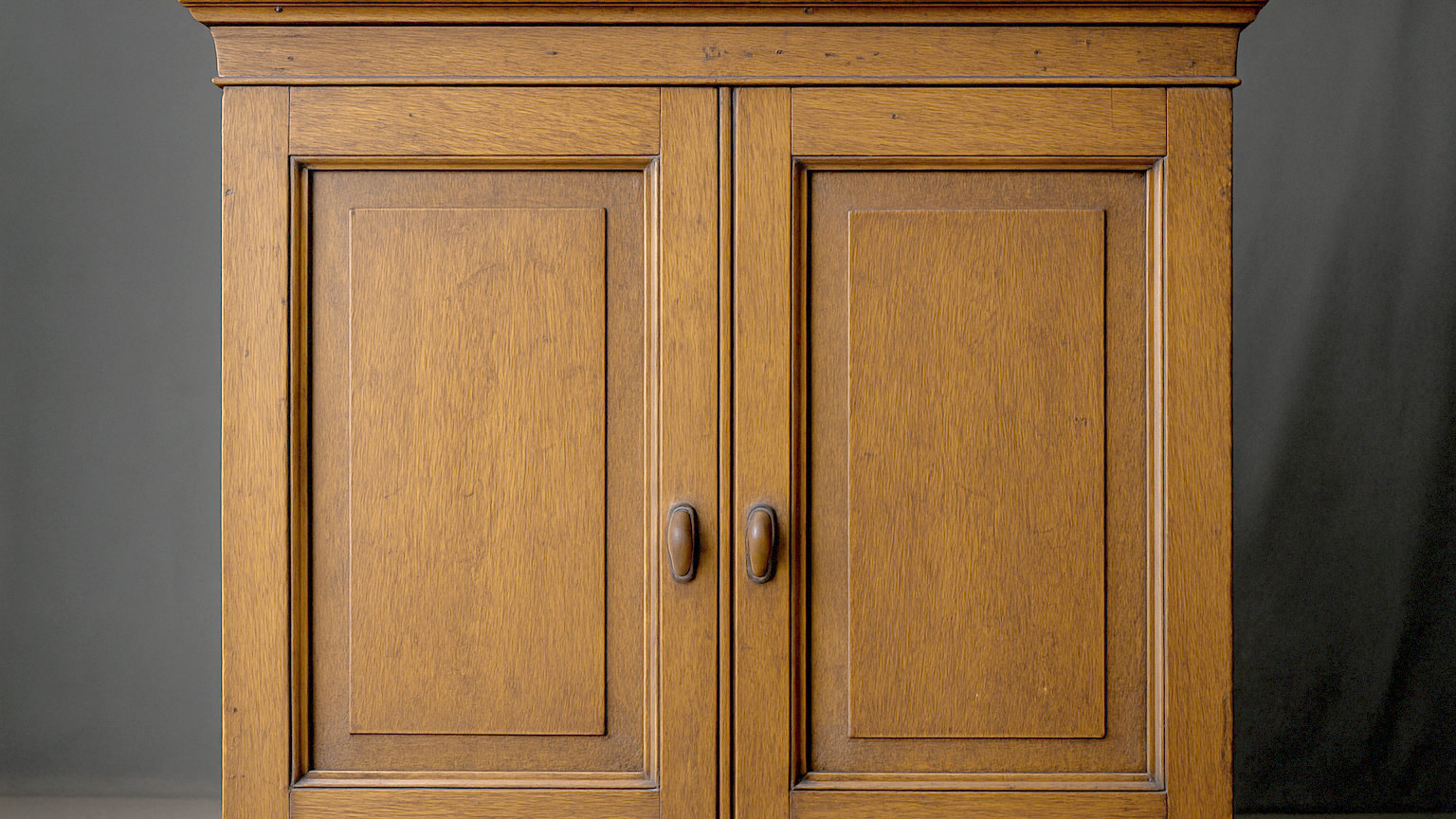
By whether they hang square and close flush. Doors on tall furniture drop over time as the hinges wear, and a door that catches on the frame indicates the carcass has racked or the hinges need attention.
Check the hinges are original and that the screws hold rather than turning in enlarged holes. Look at the lock and escutcheon for wear consistent with the piece. Keys are usually missing and can be replaced by a locksmith.
What about the mirror?
Many wardrobes have a mirrored door, and the plate is worth assessing as you would any antique mirror. Early plate is thin, grey toned and frequently foxed.
Replacing original plate with modern glass reduces value even though it looks better. Check whether the mirror sits properly in its rebate and whether the backing boards are original, and be aware that a very large plate is heavy and puts strain on the door and its hinges.
How do you date one?
By the same evidence as any case furniture. Pull out a drawer or a tray and examine the dovetails, the linings and the runners.
Look at the back for saw marks and fixings, at the secondary timbers, and at the colour of unpolished surfaces. Machine cut dovetails and circular saw arcs place a piece firmly in the industrial era whatever the style of the front suggests.
What condition problems matter?
The plinth and feet, which stood on damp floors and frequently rotted or were replaced. Check underneath for fresh timber and modern fixings.
Look for splits in the carcass sides, which are wide panels that shrink, and for lifting veneer on veneered examples. Check that the piece stands square and that the doors still align, since a wardrobe stored in a damp place distorts.
Are they worth buying?
They are among the cheapest antique furniture available, because they are enormous and most modern bedrooms have fitted storage. Good quality examples sell for very little.
Measure everything before committing: the room, the ceiling height, and crucially the route in, including stair turns and landing width. Confirm the wardrobe genuinely dismantles and that you know how, since that is what makes the difference between a purchase and a problem.
Can they be reduced in size?
They frequently have been, and it shows. Look for a carcass that seems shallow for its height, or a cornice that no longer matches the width beneath it.
Reduction substantially reduces value and is generally visible in the proportions before you find the physical evidence.