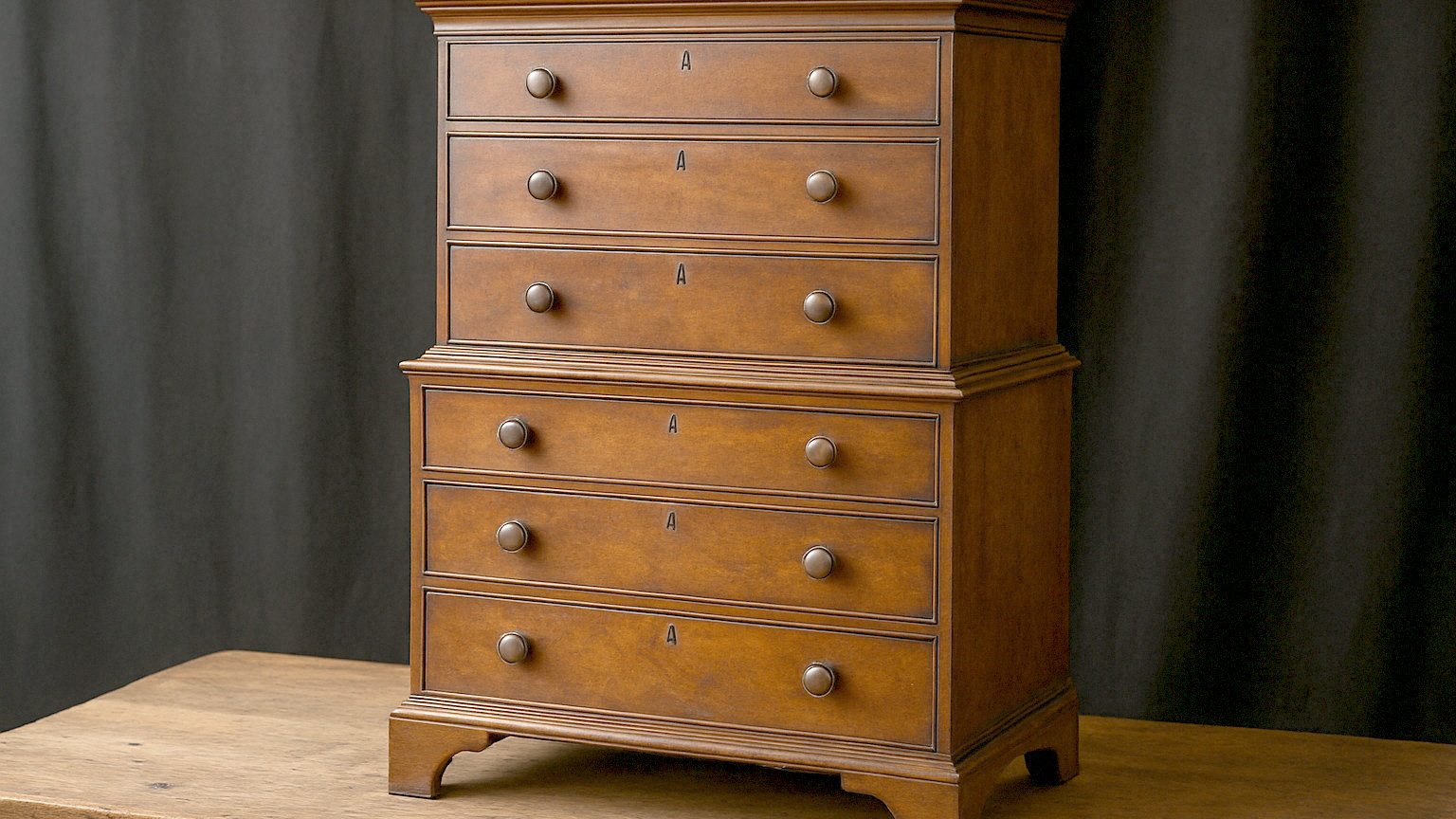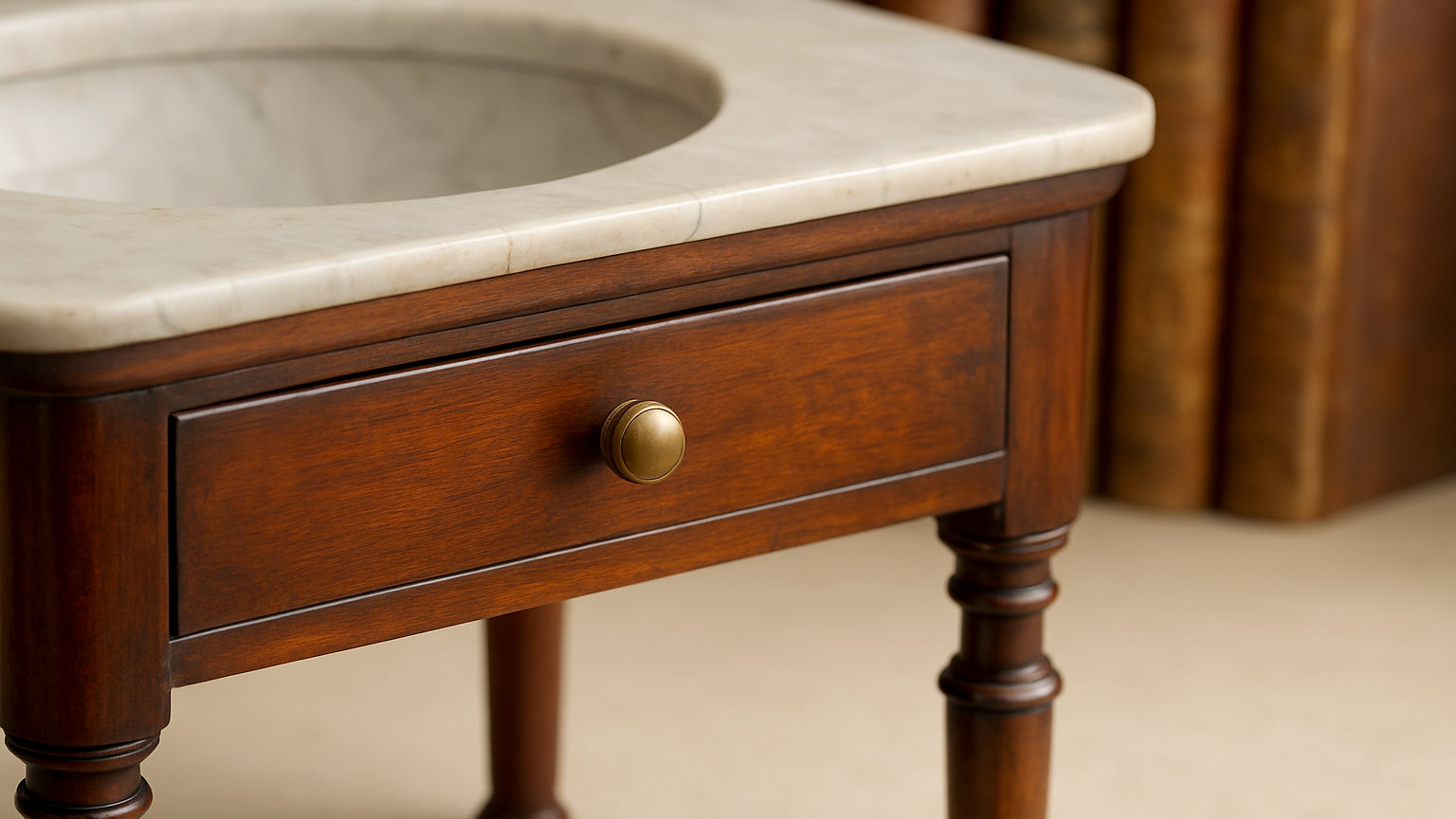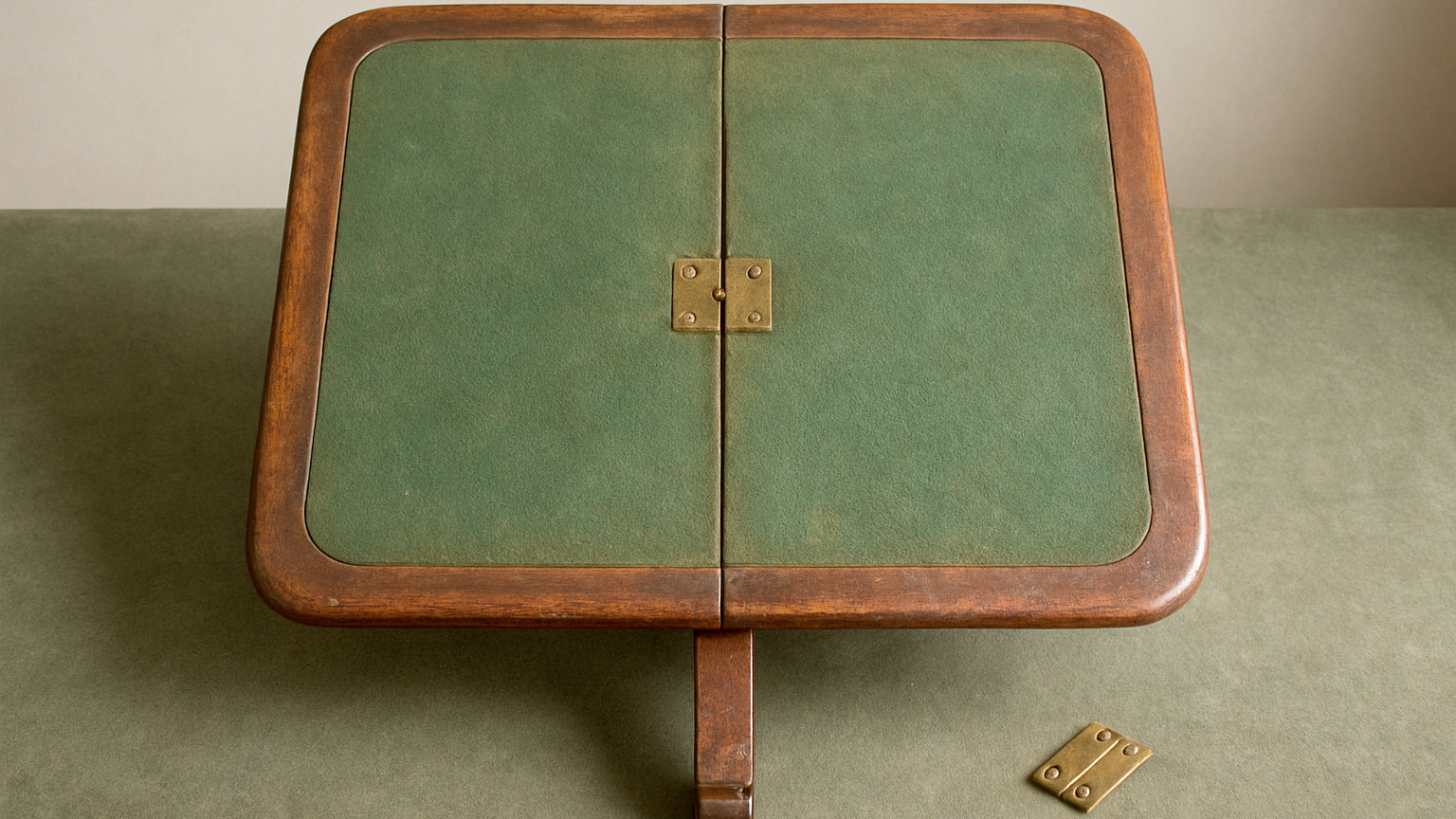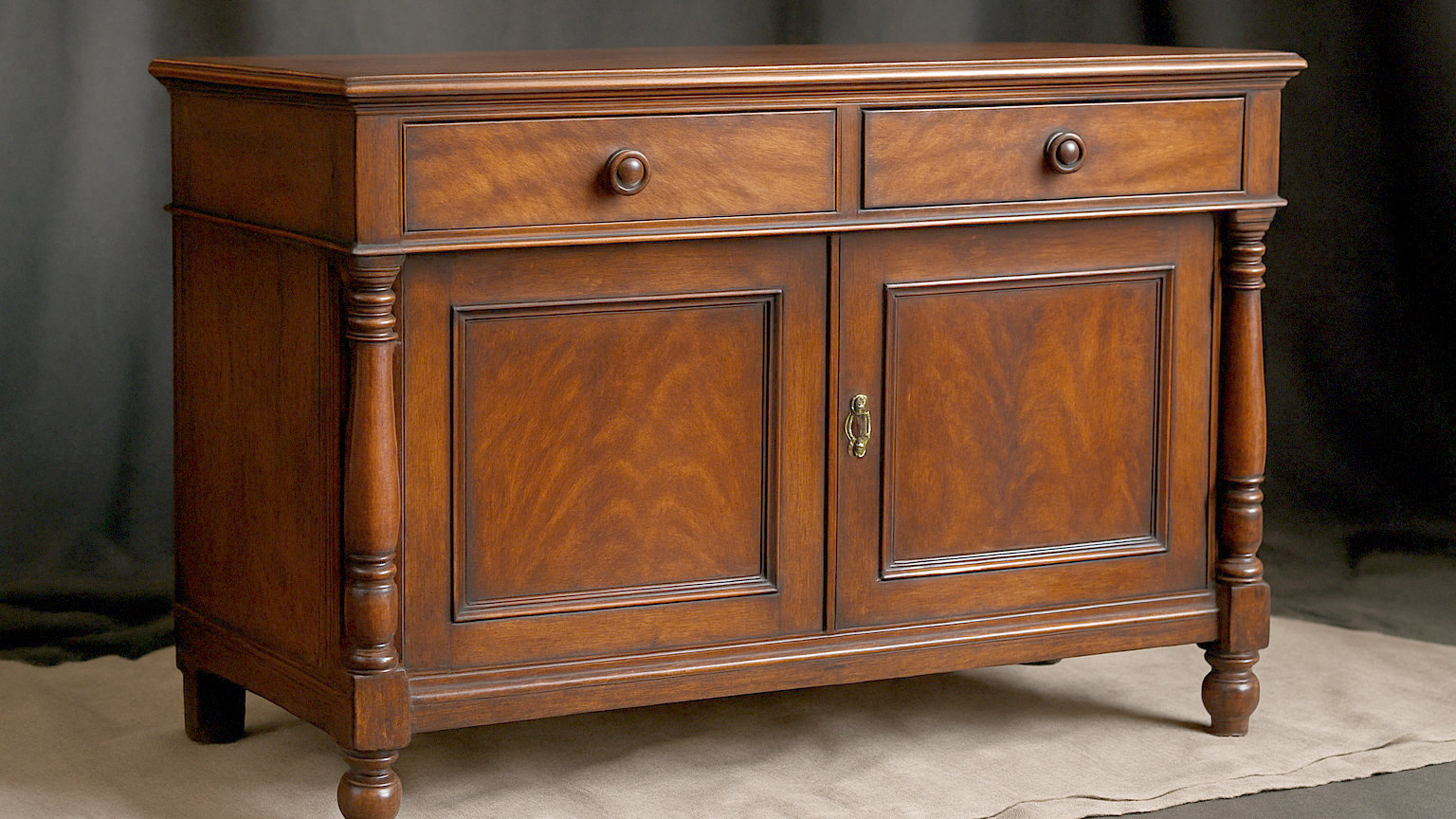
The sideboard was the centrepiece of a formal dining room, built to hold plate, linen and bottles and to carry dishes on their way to the table. Formal dining largely disappeared and the sideboard fell with it, which means good examples now sell for a fraction of what the workmanship warrants.
What are the parts?
A long top surface for serving, with an arrangement of drawers and cupboards beneath, standing on legs or on a plinth. The classic form has a central drawer flanked by deeper drawers or cupboards on each side.
Some have a shaped back rail, others a raised superstructure of shelves and small cupboards. The deeper side compartments were frequently fitted for specific purposes, and what is inside them is the most informative part of the piece.
What is a cellaret drawer?
A deep drawer fitted with divisions to hold bottles upright, sometimes lined with lead or zinc so it could be filled with ice. It is a strong indicator of a purpose built dining sideboard.
Open every deep drawer and look for divisions, lining, or the marks where divisions once were. A cellaret drawer that has lost its divisions shows a pattern of glue marks and unfaded timber. Some also have a lock, since bottles were kept secured.
What else was fitted inside?
Compartments for cutlery, baize lining for plate, and sometimes a drawer fitted for linen. Look for the ghost of any lining and for tack holes where baize was fixed.
One side compartment is occasionally fitted differently from the other, which is original rather than odd. Check for a concealed compartment behind or below a drawer, which occurs on better pieces. Missing fitted interiors reduce value and are worth noting before agreeing a price.
How do you date one?
By the legs, the proportions and the construction. Earlier examples stand on slender tapering legs and are lighter in appearance; later ones become heavier, lower and stand on turned legs or a solid plinth.
Then check the drawers, which carry the real evidence. Pull one out and look at the dovetails, the linings and the runners. Hand cut dovetails with narrow pins, oak linings and genuine runner wear indicate an early piece regardless of what the front suggests.
What alterations are common?
Reduction in depth or length to fit a smaller room, and replaced legs or feet. Both are frequent and both reduce value substantially.
Check the proportions against the form: a sideboard that looks unusually shallow may have been cut down at the back, which shows in the backboards and in the drawer depths. Look underneath for fresh timber, unexplained joints and modern fixings.
What should you check on the top?
Whether it is original and what condition it is in. Sideboard tops took heavy use, with hot dishes, spills and years of polishing, so damage and refinishing are common.
Compare the timber and colour of the top against the carcass, and look underneath at the unpolished surface for consistent age and for fixing evidence. A replaced top is a significant fault on a piece where the top is the largest visible surface.
What are the handles telling you?
How many times fashion changed. Take a drawer out and look inside the front for filled holes from previous sets, since each generation of handles leaves its own pattern.
Original handles add real value, so check whether the fittings currently in place match the unfaded shadow on the timber behind them. Replacement handles of the correct pattern using existing holes are acceptable; fresh holes drilled through original timber are permanent damage.
Are they worth buying?
If you have the wall, they are among the best value in the market. Solid timber, hand cut joints, enormous storage, and prices well below what an equivalent new piece would cost.
Measure carefully, including the route into the room, since they are long and rigid. Buy on original surface, original handles and a sound original top, and expect large examples to be cheaper than smaller ones because fewer rooms can take them.