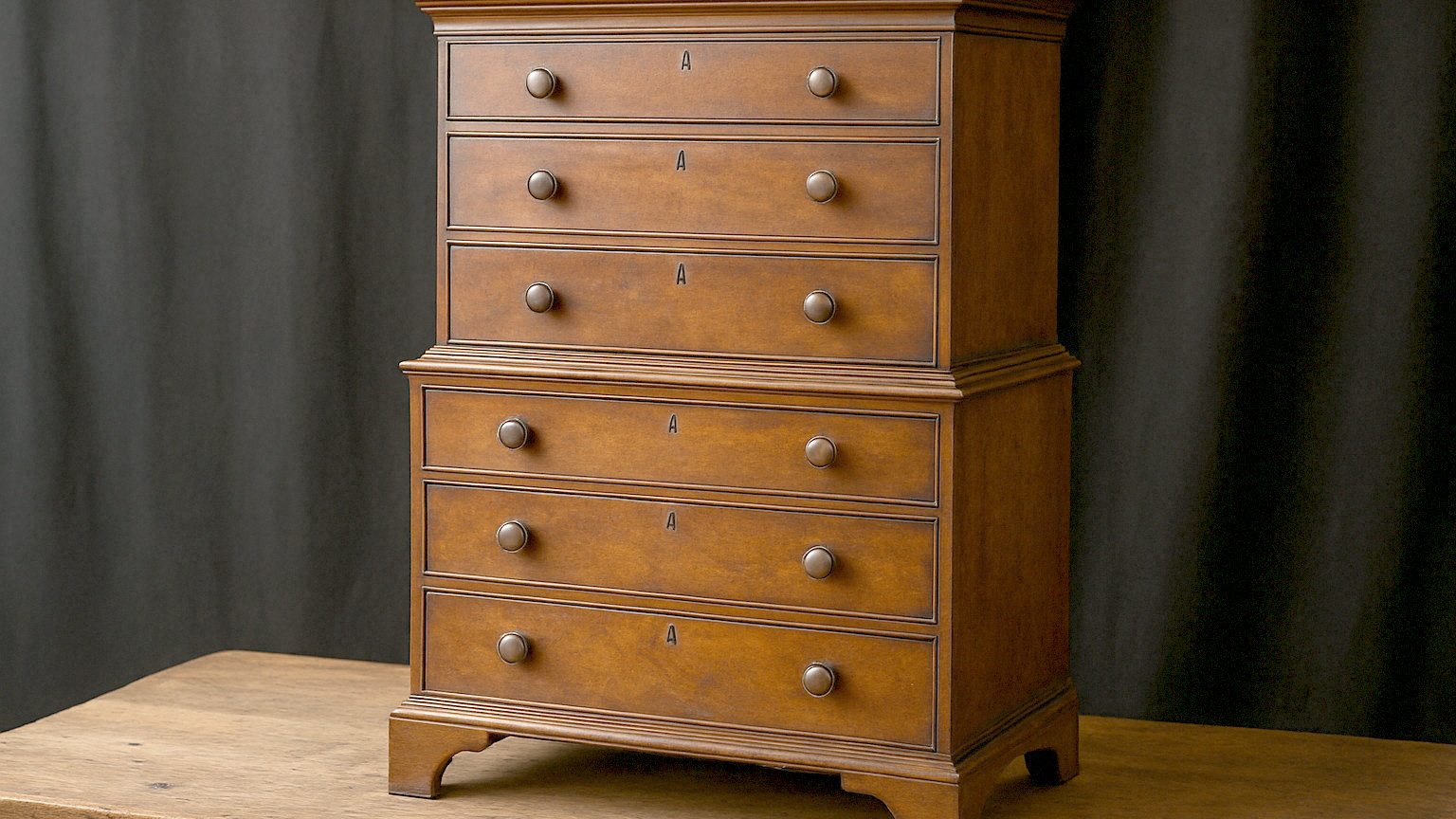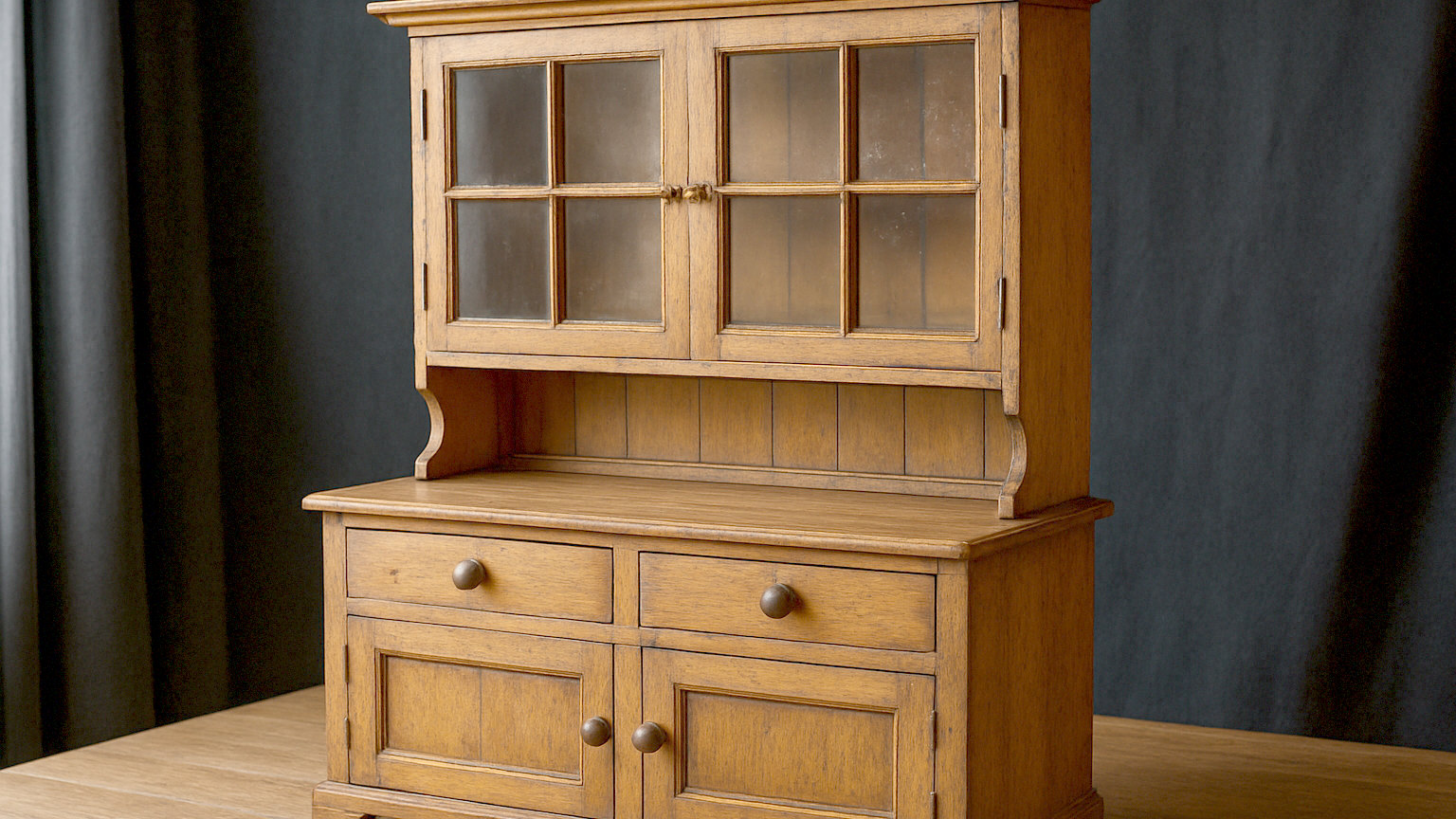
The dresser is the great piece of country furniture: a base with drawers and often a pot board or cupboards below, and an open rack of shelves above for displaying plates. Because the rack lifts off, dressers separate easily, and reuniting orphaned halves has been going on for a very long time. Checking the join is where any assessment starts.
What are the parts of a dresser?
The base is a low sideboard form, typically with a row of drawers along the top and either open space beneath supported on legs, a solid pot board at floor level, or cupboards.
The rack, sometimes called the delft rack, is a set of open shelves standing on the base, frequently with small cupboards or spice drawers incorporated and a shaped frieze along the top. Shelves usually have a shallow groove or a lip to stop plates sliding.
How do you check the rack belongs?
Measure first. The rack should sit comfortably within the depth and width of the base, neither overhanging nor floating with a wide margin either side. Look along the piece from the end to see whether the proportions agree.
Then look at how it sits. An original rack usually locates on the base in a definite way, and the underside of the rack and the top of the base should show corresponding wear and marks. Fresh timber, unexplained fixing holes or packing pieces all indicate a later pairing.
What should you compare between the two?
Timber, colour and construction. Both parts should be the same species with compatible figure, and the unpolished surfaces should have oxidised to the same tone, since both stood in the same room for the same period.
Compare the mouldings, the shaping of any frieze or bracket, and the quality of the joinery. Country makers had personal habits, and a rack made by a different hand usually shows it in the details of the cutting. Check the backboards on both sections for the same timber and the same fixings.
What does the back tell you?
A great deal, because nobody finished it. Look at the backboards for hand sawn marks, irregular widths, and fixings consistent with age, then compare base and rack.
Hand forged nails in one section and machine cut nails in the other is close to conclusive. Look also at the dirt and oxidation on the exterior back, which should be consistent in character across the join. Many genuine dressers have replaced backboards, so judge the whole rather than one detail.
What condition issues matter most?
Feet and the lower section, since dressers stood on flagged and often damp floors. Replaced feet are extremely common and acceptable if sympathetically done, but should be reflected in the price.
Check the drawers for wear on the runners and for replaced linings. Look at the pot board for splits and repairs, since it carried weight. Examine the rack shelves for the grooves that held plates and for genuine wear where plates actually stood, which should be irregular rather than uniform.
How do you judge a country piece?
By honesty of construction rather than refinement. Country furniture was made by local craftsmen from local timber for local use, so slight asymmetry, simple joinery and evidence of hand work are correct rather than defects.
Look for good proportion, an attractive colour built up over generations, and a surface that has never been stripped. Original untouched surface is worth a great deal more than a piece that has been cleaned back and repolished to a uniform modern finish.
Are dressers good value now?
Large ones are, because size limits the buyers. A full dresser needs a substantial wall and a high ceiling, and many houses cannot take one, which has pushed prices down considerably.
Measure your space carefully including ceiling height, and check the piece will get through your doors in two parts. Smaller dressers in good original condition hold their value better, and a genuinely matched base and rack in untouched surface remains a desirable thing.