A display cabinet exists to show things through glass, which means the glazing is not incidental to the piece but the whole point of it. Original glass, intact glazing bars and complete shelves are what separate a good cabinet from an ordinary one, and all three are straightforward to assess.
How do you recognise original glass?
By looking along the surface rather than through it. Tilt your head until reflections travel across the pane, and old glass shows faint waviness, slight ripples and subtle distortion.
Modern float glass is optically flawless, which is exactly what gives it away. A cabinet retaining all its original panes is worth noticeably more, and since replacement is common it is worth checking every pane rather than one.
What are astragal bars?
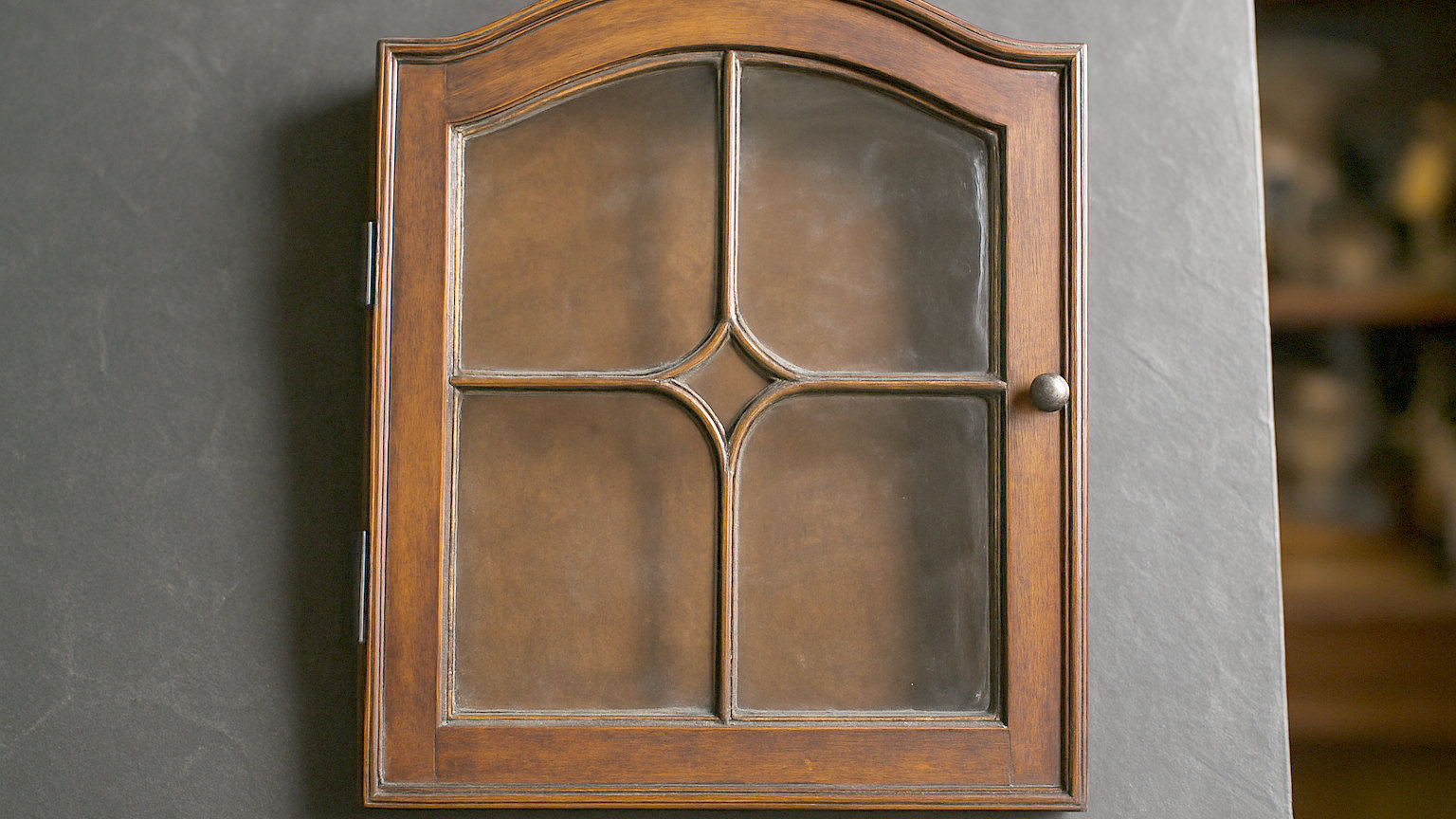
The glazing bars dividing a door into individual panes, named for the moulding profile used. Their pattern and thickness are both dating features.
Earlier bars are heavier in section, becoming progressively finer as glass improved and larger panes became affordable. Check whether the bars genuinely separate individual panes or are applied over a single modern sheet, which is a common and value reducing alteration.
What should you check on the doors?
That they hang square, close flush and that the hinges are original. Doors on tall cabinets drop as hinges wear, and a door that catches indicates the carcass has racked.
Check the lock and escutcheon for wear consistent with the piece, and try the door catch. Keys are usually missing and a locksmith can supply one. Look at the glazing bar joints for splits, since these are thin sections under stress.
What about the shelves?
Count them against the available supports, since missing shelves are common and replacements rarely match. Look for the ghost marks and peg holes where shelves once sat.
Shelves may be timber or glass. Original glass shelves are thicker and less uniform than modern replacements. Check the supports themselves, whether pegs in bored holes or applied bearers, and whether they are complete and original.
What is a vitrine?
A display cabinet glazed on the sides as well as the front, sometimes on the top too, made so contents can be viewed from several directions. Frequently they stand on legs rather than a plinth.
The additional glazing makes them more vulnerable and more valuable when intact. Check every pane including the sides, and look at the corner joints where three glazed faces meet, since these are structurally delicate.
What does the interior tell you?
Whether it was made to display. Look for a lined back panel, in fabric, mirror or a contrasting timber, which was there to set off the contents.
Mirror backs are common and the plate should be assessed as any antique mirror. Fabric linings are frequently replaced and that is acceptable. Check for evidence of original lining if none survives, since a stripped interior looks wrong and reduces value.
How do you date one?
By construction rather than style, since display cabinets were made in every revival manner. Pull out any drawer and examine the dovetails, linings and runners.
Look at the back for saw marks and fixings, at the secondary timbers, and at veneer thickness on veneered examples. Machine cut dovetails and thin veneers place a piece in the industrial era whatever the front suggests.
What condition issues matter?
Cracked and replaced glass, broken glazing bars, missing shelves, and damage to the feet. Check the piece stands square and that the doors still align.
Look for lifting veneer, particularly on curved sections, and for lost inlay on decorated examples. A cabinet stored damp will have distorted, and doors that no longer meet properly are the first sign.
Are they worth buying?
Small cabinets are useful and reasonably priced. Large ones have fallen a long way, since few modern rooms display china formally, which makes good quality examples remarkable value.
Buy on the glazing above everything, since original glass and intact bars are what cannot easily be replaced. Measure the route into the room, and check the doors work properly before agreeing anything.