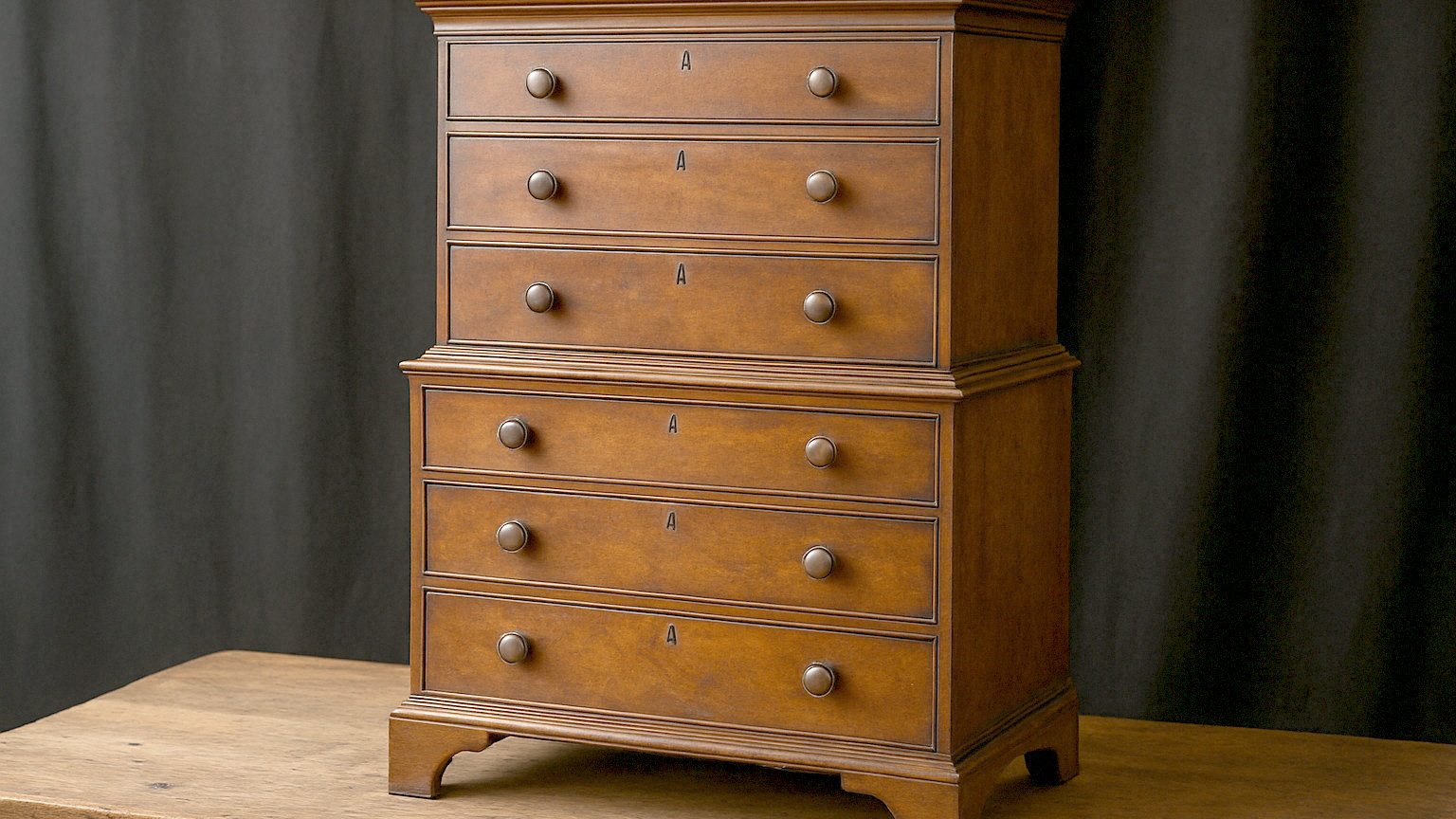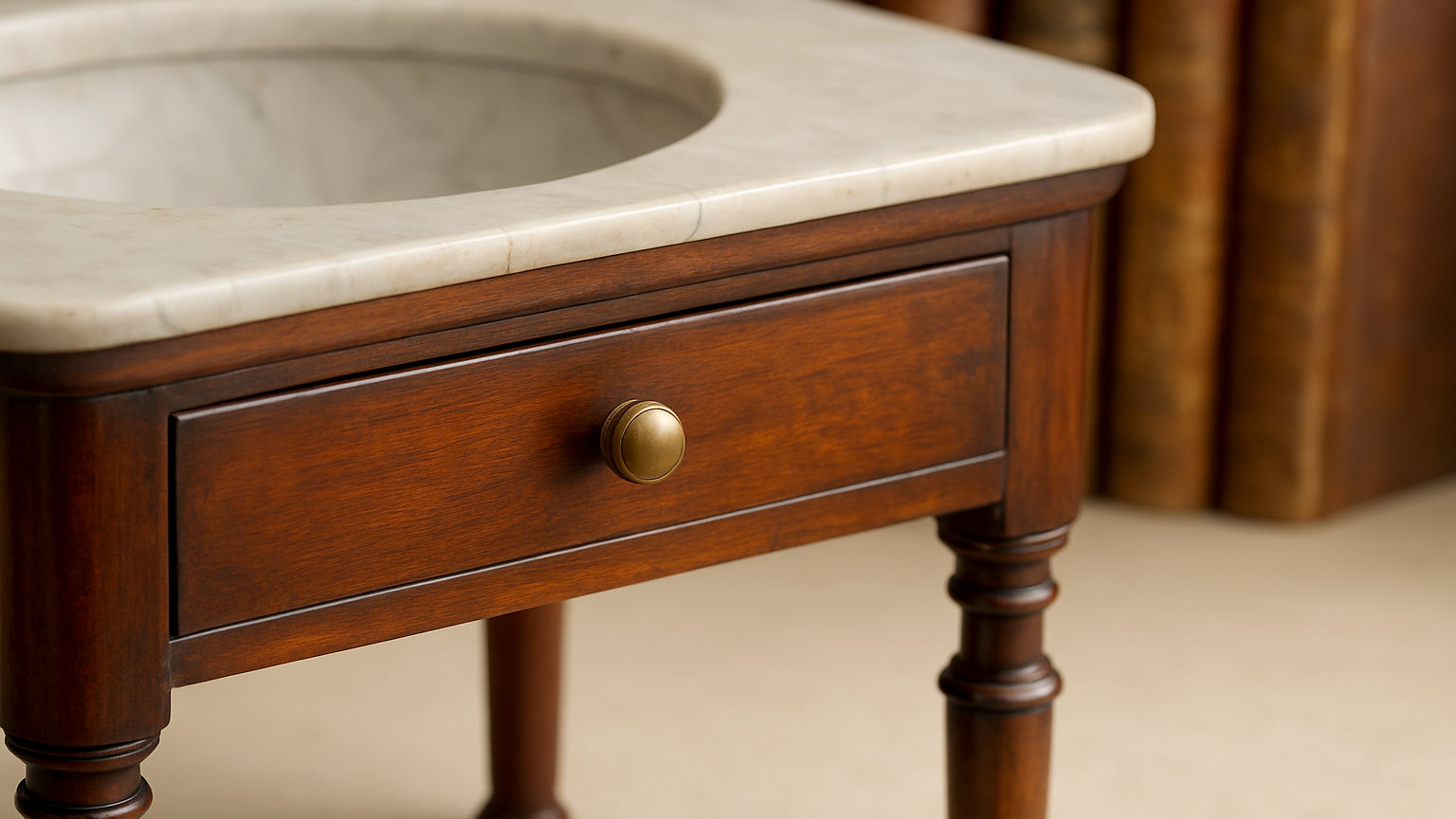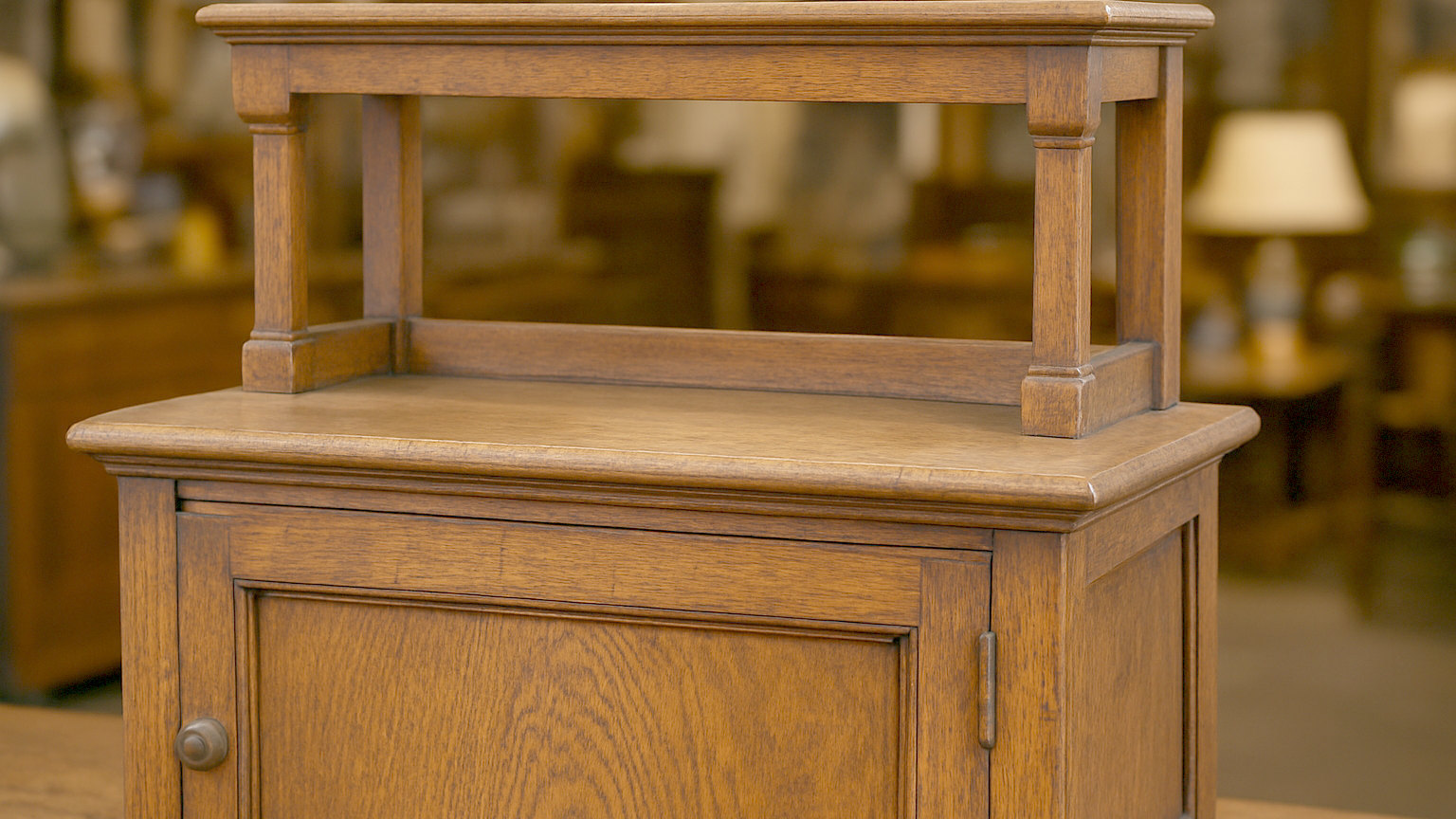
Chiffoniers and credenzas are low side cabinets designed for a drawing room, holding china and linen with a surface above for display. They were made in enormous numbers, they vary hugely in quality, and a good many have been altered since, usually by removing or adding a shelf superstructure.
What is a chiffonier?
A low cabinet with cupboard doors below and frequently a shelf or shelves above the top, supported on turned or shaped uprights, sometimes with a mirror at the back.
The form is essentially a side cabinet with display shelving added, and the shelves are what distinguish it from a plain cupboard. Some have a single drawer above the doors. Sizes vary from modest to substantial, and the smaller ones are considerably more saleable.
What is a credenza?
A longer, lower cabinet, frequently with a bowed or curved front, a central cupboard flanked by curved glazed end sections, and elaborate decoration in marquetry and gilt metal mounts.
These are display pieces rather than storage, and quality varies enormously from finely inlaid examples with cast mounts to plainly made pieces with stamped decoration. Judge by the quality of the inlay and the crispness of the mounts.
Where do marriages show?
At the join between the base and any superstructure. The shelving was frequently removed to modernise a piece, and equally frequently added later to a plain cabinet to make it more decorative.
Look at the top surface for filled holes, unfaded patches where uprights stood, or fresh timber where a superstructure was removed. Compare the timber, colour and construction of the shelving against the base, and check whether the two meet cleanly or have been packed to fit.
What should you check on the doors?
That they hang square, close flush and that the hinges are original. Doors on cabinets drop over time and the resulting misalignment strains the frame.
Where doors are glazed, check whether the glass is original by looking along the surface at an angle for slight waviness and distortion. Where doors have grille panels backed with fabric, check the grille is complete, since these are frequently damaged and difficult to replace.
How do you assess the decoration?
By whether it is inlaid or applied and how crisply it is executed. Genuine marquetry is let into the surface with clean joints between the elements; transfer printed or painted imitation is flat and sits on top.
Gilt metal mounts should be cast with sharp detail and secured with pins or screws. Stamped mounts from thin sheet are lighter and softer in definition. Check mounts are complete and matching, since losses are common and replacements rarely match.
What does the back tell you?
A great deal, since nobody finished it. Look at the backboards for timber, jointing and fixings, and compare against any superstructure.
Hand forged nails in one section and machine cut nails in another is close to conclusive evidence of a marriage. Look at the dirt and oxidation, which should be consistent across the whole back. Fresh timber anywhere on the back deserves an explanation.
What condition issues matter?
Lifting veneer and lost inlay, since these pieces are usually veneered over a softwood carcass and the glue is animal based. Check edges, corners and any curved surface, which are the first to fail.
Look at the feet and the plinth, which stood on damp floors, and at the interior for shelf supports and any lining. Marble tops, where fitted, chip and crack, so check the edges and whether the top is original to the piece.
Are they good value?
Very. Large examples have fallen a long way because they need a substantial wall, and even good quality pieces with fine inlay sell for a fraction of what the workmanship would cost to reproduce.
Smaller chiffoniers are genuinely useful and fit most rooms. Buy on the quality of the veneer and inlay, the completeness of the mounts, and whether any superstructure is original, since that last point changes the value more than anything else.