Bookcases and glazed cabinets are large, tall and awkward, which means they have been cut down, split, married and rebuilt more than almost any other furniture form. A tall piece that will not fit a lower ceiling gets shortened rather than sold, and the evidence is usually visible if you look at the proportions and the top.
What are the parts?
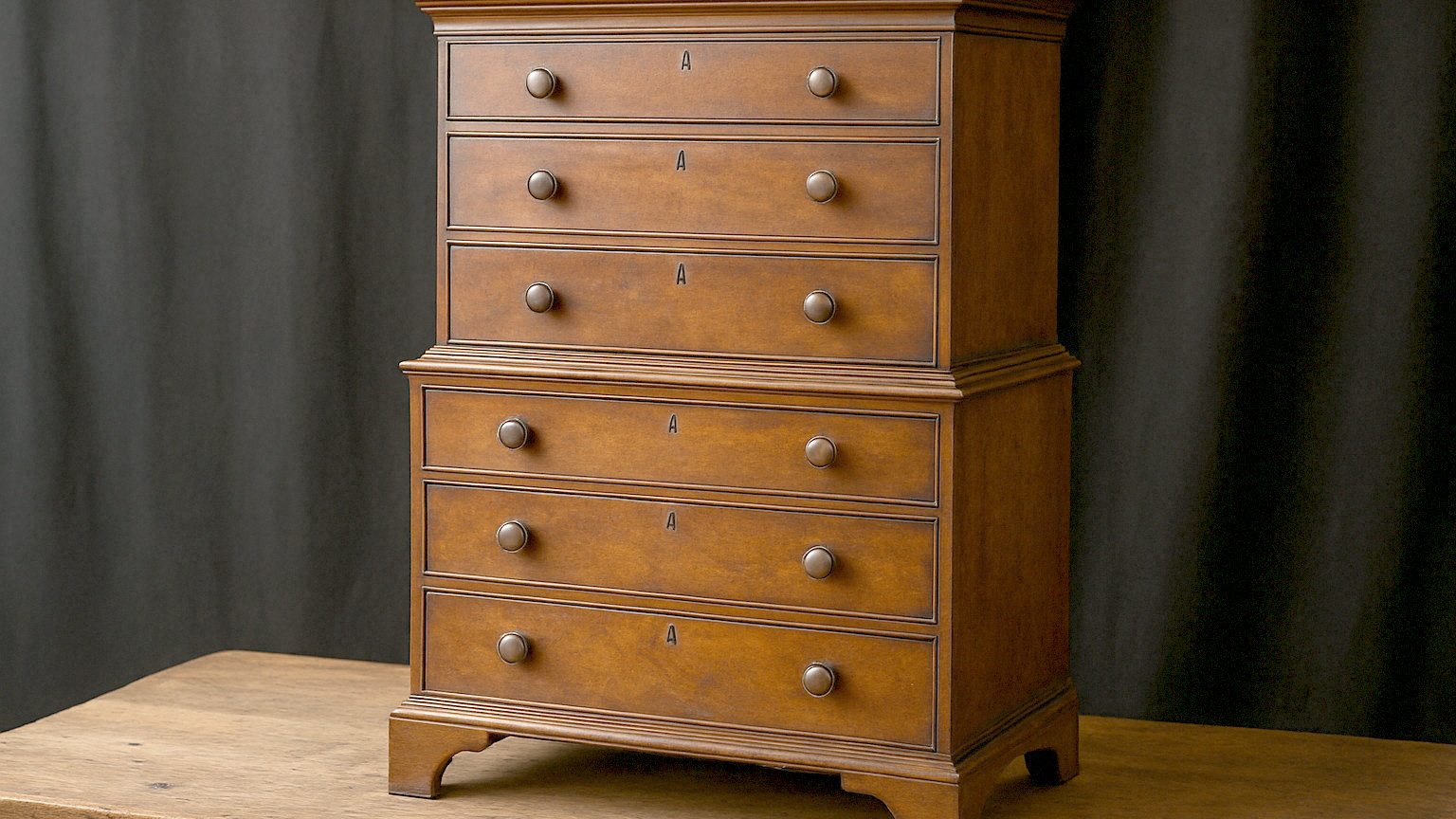
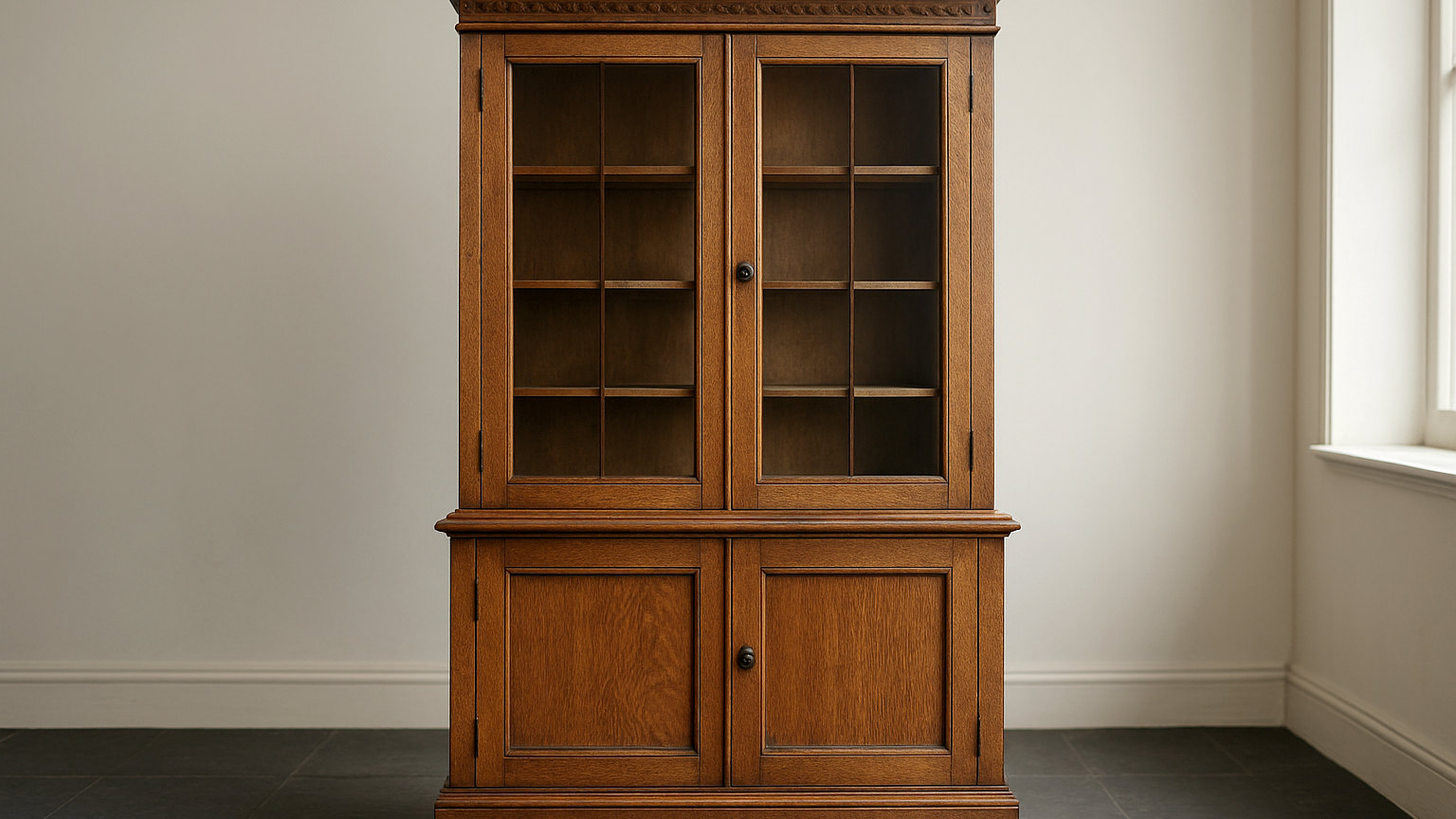
Usually a base section with cupboards or drawers, an upper section with shelves behind glazed or solid doors, and a cornice moulding running across the top.
The two sections are separate carcasses, which is how the piece was carried upstairs and which is exactly why marriages are common. The cornice is frequently a separate component again, sitting on top rather than fixed permanently.
How do you spot a cut down piece?
By the proportions and the cornice. A bookcase that has been shortened usually looks slightly squat, with the upper section too short relative to the base.
Check the top of the upper carcass where the cornice sits. If the piece has been reduced in height, the cut is normally made there, and you will find fresh unweathered timber, saw marks that do not match the rest, or a cornice refitted with modern fixings. Look at whether the glazed doors have also been shortened, which shows in the spacing of the glazing bars.
What do the glazing bars tell you?
Period and quality. Bar profiles changed over time, moving from heavier sections to increasingly fine ones as glass improved and larger panes became affordable.
Look at the thickness of the bars and how the pattern is arranged, since astragal patterns follow recognisable fashions. Check whether the bars are genuinely structural, holding individual panes, or applied over a single sheet of modern glass, which is a common and value reducing alteration.
What about the glass itself?
Early glass is thin, slightly uneven, and shows faint waviness or subtle distortion when you look through it at an angle. Modern float glass is optically flawless.
Look along the surface rather than straight through, tilting until reflections travel across the pane. Ripples and slight variation indicate old glass. Replaced panes are common and acceptable, but a bookcase retaining all its original glass is worth noticeably more and the difference is easy to check.
How do you check the shelves?
For originality and for wear. Adjustable shelves sit on pegs in bored holes, on ratcheted supports or on applied bearers, and the arrangement is informative.
Look at whether the shelves show genuine wear where books stood, usually as a faint line along the front and slight sagging in the middle on longer spans. Count the shelves against the available positions, since missing shelves are common and replacements rarely match. Check the timber and colour against the carcass.
What should you compare across the join?
Timber, colour, patina and construction, exactly as with any two part piece. Pull a drawer from the base and compare the linings and dovetails against anything similar in the top.
Look at whether the base is deeper and wider than the top by a sensible margin, and whether the moulding at the join aligns cleanly. Check the backboards on both sections for the same timber, the same jointing and the same fixings, since these are the least disguised surfaces on the piece.
Are they worth buying now?
Large ones are extremely cheap, because they need a tall wall and a high ceiling that most modern houses do not have. Smaller glazed cabinets hold their value better.
Measure your ceiling height before committing, including whether the cornice will clear it, and check the piece can be carried in sections up your stairs. A sound bookcase of usable size in original condition remains genuinely useful and costs a fraction of what the equivalent would cost new.
What about the doors?
Check they hang properly, close flush and that the hinges are original and sound. Doors on tall cabinets drop over time and the resulting misalignment strains the frame.
Look at the locks and escutcheons, which should show wear consistent with the piece. Keys are frequently missing and can usually be replaced by a locksmith, though an original key adds a little.