Case furniture is generous with evidence, because the maker finished the front carefully and left everything else exactly as the tools produced it. Pull one drawer out of a chest and you have access to joints, saw marks, timber choice and wear patterns, all of which carry dates. Thirty seconds of looking inside beats an hour of admiring the outside.
What should you check first?
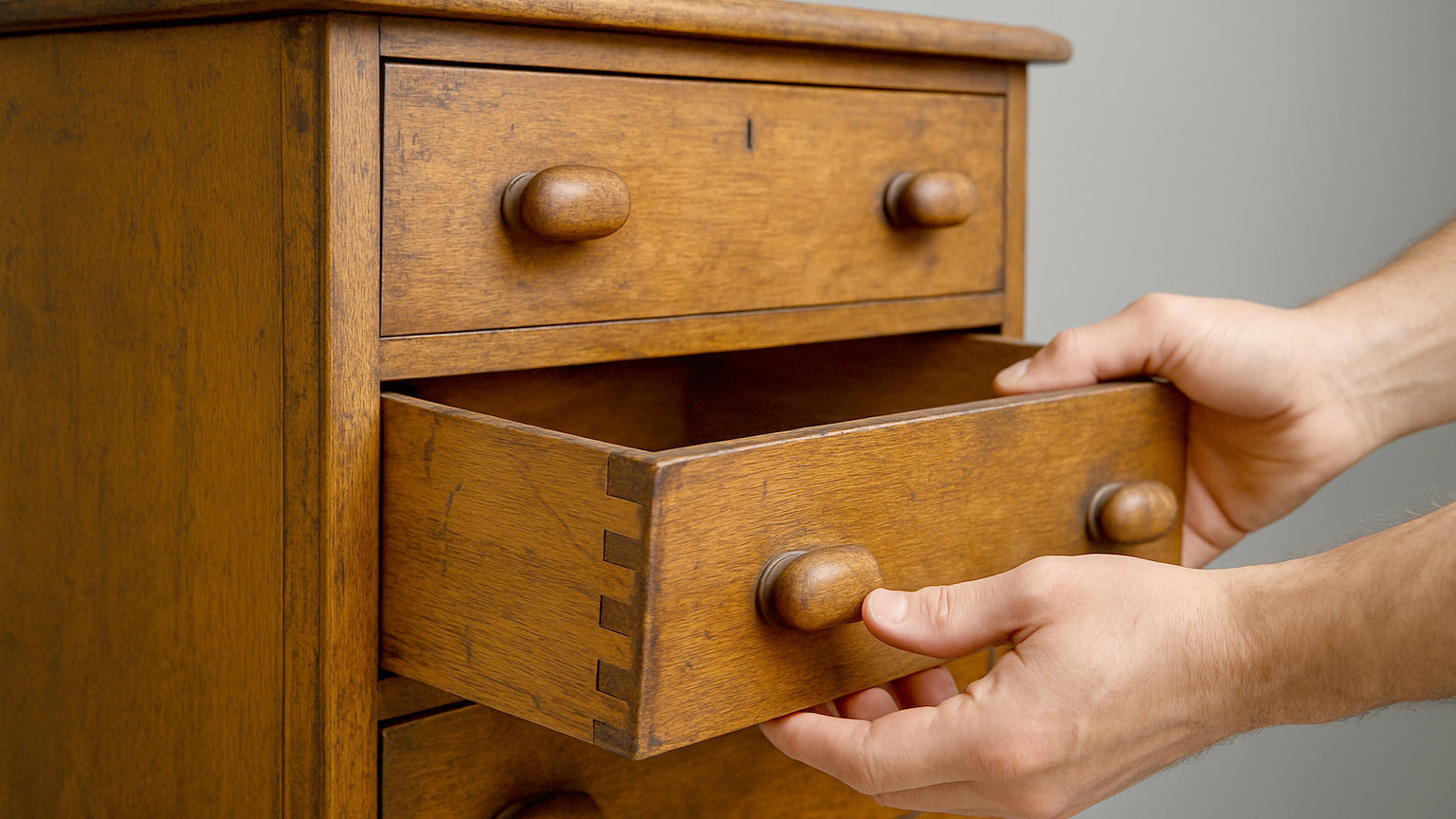
Take out the second drawer down, which is usually the easiest to handle, and turn it so you can see the joint where the front meets the side. That corner joint is the single most informative feature in the whole piece.
Look at the number of dovetails, their spacing, and the width of the pins between them. Hand cut joints are few, unevenly spaced, and have narrow pins, sometimes almost knife thin. Machine cut joints are numerous, perfectly even, and have pins the same width as the tails.
What do the drawer linings tell you?
Linings are the sides, back and bottom of the drawer, and their thickness is a useful indicator. Earlier work tends to use thicker linings, often of oak, while later work becomes thinner and frequently uses pine.
Look at how the bottom is fitted. An early drawer bottom is usually a solid panel with the grain running from side to side, set into grooves and sometimes with a slip of wood added to support it. A bottom with the grain running front to back, or a thin sheet of manufactured board, indicates later work or a replacement.
How do runners date a piece?
Drawers slide on runners, and over a long life the sliding wears a visible dip. A drawer that has run for two centuries shows real wear on the underside of its sides, and the runners inside the carcass wear correspondingly.
Replaced runners are extremely common and entirely acceptable, since they are consumable parts. What matters is whether the wear on the drawer itself is consistent with the age claimed. A drawer showing no wear at all in a chest presented as very old is worth questioning.
What does timber colour reveal?
Wood oxidises where air and light reach it and stays pale where they do not. Compare the outer face of the drawer side, which is enclosed, with the top edge, which is more exposed. There should be a clear difference in tone, developed gradually.
Look at the back of the carcass too. The exterior back should be noticeably darker than the interior. Uniform colour throughout suggests either stripping and refinishing or a piece that is simply not as old as it appears. Genuine patina has depth and variation and cannot be applied evenly.
Which alterations most affect value?
Replaced handles are the most common alteration and the easiest to detect. Look inside the drawer front for filled holes that do not match the current fittings. Old handle positions leave marks, and a drawer front with three sets of filled holes has been through three fashions.
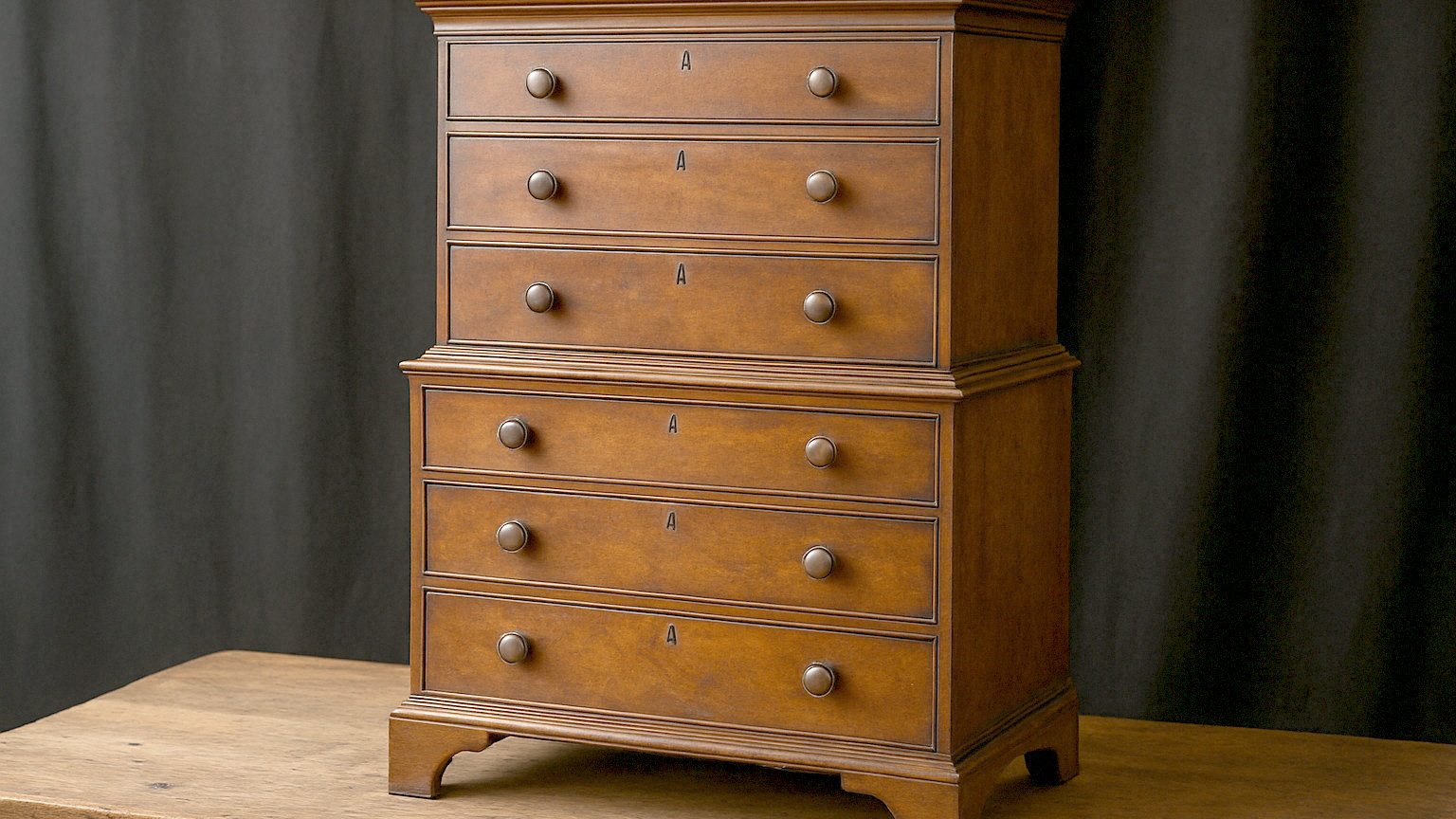
More serious are reduced depth, where a chest has been cut down to fit a modern room, and replaced feet, which sat on damp floors and rotted. Check the proportions: a chest that looks slightly squat may have lost its original feet or a section of its base.
Why do bracket feet matter so much?
They are the part most likely to have been replaced and one of the parts that most affects how the piece reads. Look underneath and compare the timber, the colour and the fixing method of the feet with the carcass above.
Replacement feet are not fatal to value, and a well made sympathetic replacement is far better than a rotten original. But they should be disclosed and reflected in the price, so look for yourself rather than relying on the description.
Is an ordinary period chest worth buying?
For use, yes, and the value proposition is unusually good at the moment. Solid timber chests with hand cut joints are stronger than most modern equivalents, they were made to be repaired, and prices for plainer examples are modest because supply is plentiful.
Buy on condition and proportion rather than on age alone. A well proportioned chest of medium size with original surface, original handles and honest wear will hold its value far better than a larger or heavily restored example.