Wall sconces are among the oldest lighting forms still in use and among the most altered, because a fitting mounted on a wall was converted rather than replaced each time the fuel changed. Most surviving examples have been through at least one conversion, and how sympathetically that was done decides much of the value.
What is a sconce?
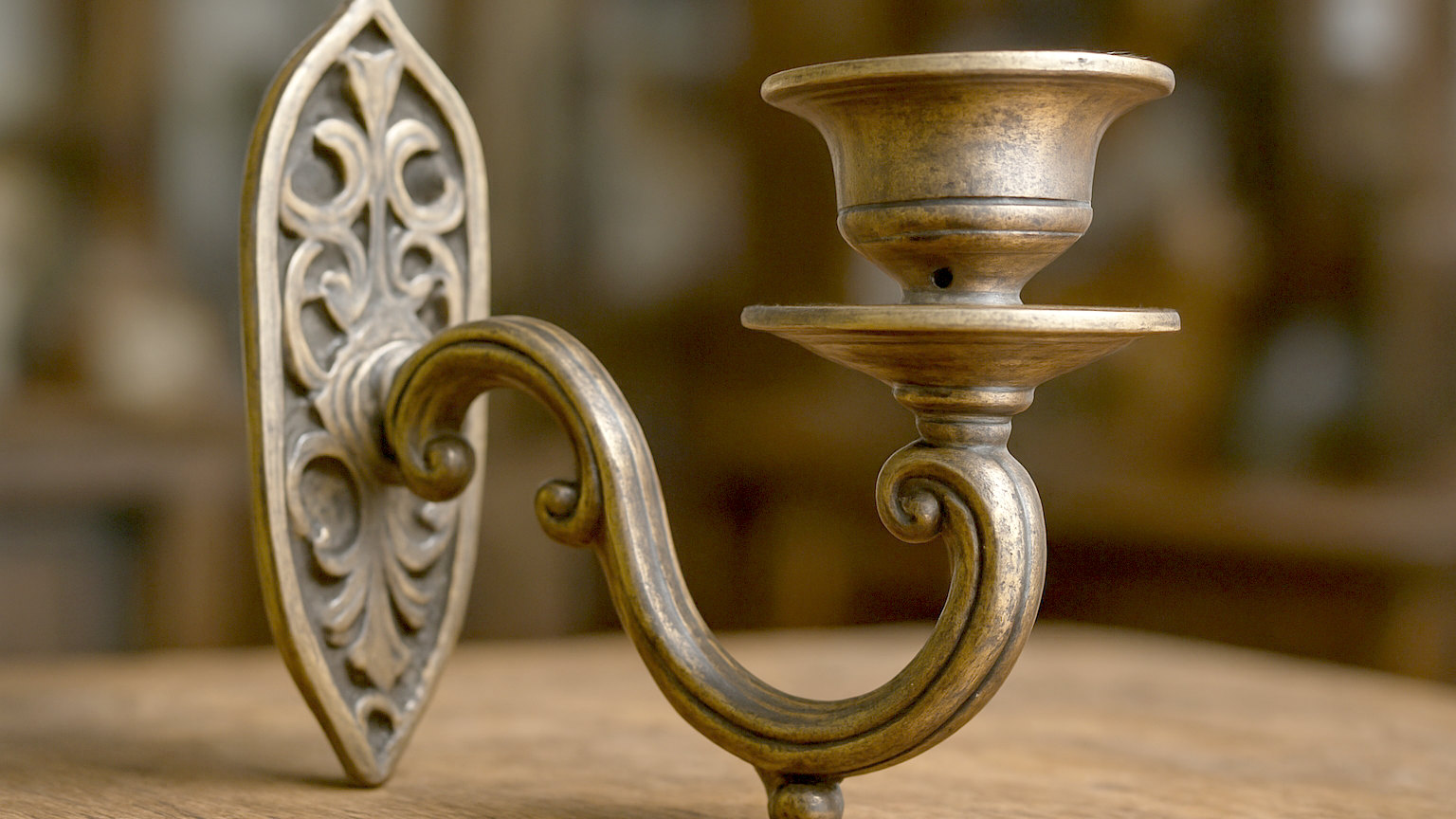
A light fitting mounted on a wall rather than standing or hanging, consisting of a backplate fixed to the wall and one or more arms carrying candles or, later, burners and bulbs.
The backplate is the decorative element and carries most of the identification. It may be metal, carved and gilded wood, or wood with applied gesso, and on some forms it incorporates a mirror to reflect and multiply the light.
What is a girandole?
A sconce incorporating a mirror in the backplate, so the candle flames are reflected. They were frequently made in pairs and are among the most decorative lighting objects of their period.
Check the mirror plate carefully, since original early plate is thin, grey toned and frequently foxed, and replacing it with modern glass removes a substantial part of the value. Check the gesso and gilding on the frame as you would any gilded object.
How do you date a sconce?
By the backplate style and the construction of the arms. Backplate outlines followed fashion closely, moving through shaped, scrolled, oval and rectangular forms.
Look at whether the arms are cast, which indicates better quality, or formed from sheet and seamed. Check how the arms attach to the backplate, since original fixings and their wear tell you a great deal. Candle nozzles and drip pans vary by period and are frequently replaced.
How do you assess a conversion?
By what was done to the original fabric. A sympathetic conversion passes cable through existing holes or behind the backplate, leaving the candle nozzles in place and reversible.
A destructive one drills fresh holes through a gilded backplate or a metal casting, removes the original nozzles, or cuts away structure to accommodate a lamp holder. Look behind the backplate and inside the arms for fresh drilling, and check whether original components survive even if unused.
What condition issues matter?
Losses to gesso and gilding on wooden backplates, splits in cast arms, and repairs in soft solder which show as dull grey deposits. Check where each arm meets the backplate, since that joint takes the leverage.
On mirrored sconces, check the plate for replacement and the frame for regilding, both of which reduce value. Count the arms, nozzles and drip pans and check they match each other in casting quality and wear, since replacements are common.
Why do pairs matter so much?
Because sconces were made and used in pairs, and a pair is worth substantially more than two singles. They were designed to flank a chimneypiece or a mirror.
Compare the two carefully: height, backplate outline, arm curve, casting detail and wear should all correspond. Assembled pairs are common. On girandoles, check both mirror plates for consistent age and foxing, since a replaced plate in one is a giveaway.
What about wiring and mounting?
Assume any existing wiring is unsafe regardless of appearance, since old insulation perishes invisibly. Rewiring must be done by a qualified electrician, and metal sconces need an earth connection that early fittings never had.
Mounting matters too. Fix into masonry or a stud rather than plasterboard alone, and check the backplate fixing points are sound rather than cracked. Never hang a heavy metal sconce from a single screw into plaster.
Are they worth buying?
Good pairs sell well and always have, because they are decorative, useful and fit anywhere. Single sconces are considerably cheaper and can be attractive in the right position.
Buy on the quality of the backplate and the completeness of the arms and nozzles. Budget for professional rewiring before use, and check whether a conversion has damaged original fabric, since that is what separates a good example from an ordinary one.