Antique lighting covers three quite different technologies, and most surviving pieces have been through at least one conversion as households moved from oil to gas to electricity. That is entirely normal and does not automatically reduce value. What matters is how sympathetically the change was made and whether the original components survive.
How do you date an oil lamp?
Start with the burner, which is the mechanical heart of the lamp and usually the most informative part. Burners were made by specialist firms and are frequently stamped with a name, a size and sometimes a patent reference.
Burner design evolved steadily, from simple single wick arrangements to duplex burners with two flat wicks and then to more efficient designs with circular wicks and air tubes. The style and complexity of the burner brackets the lamp reasonably well, and any stamped name gives you a firm to research.
What are the parts of a lamp worth knowing?
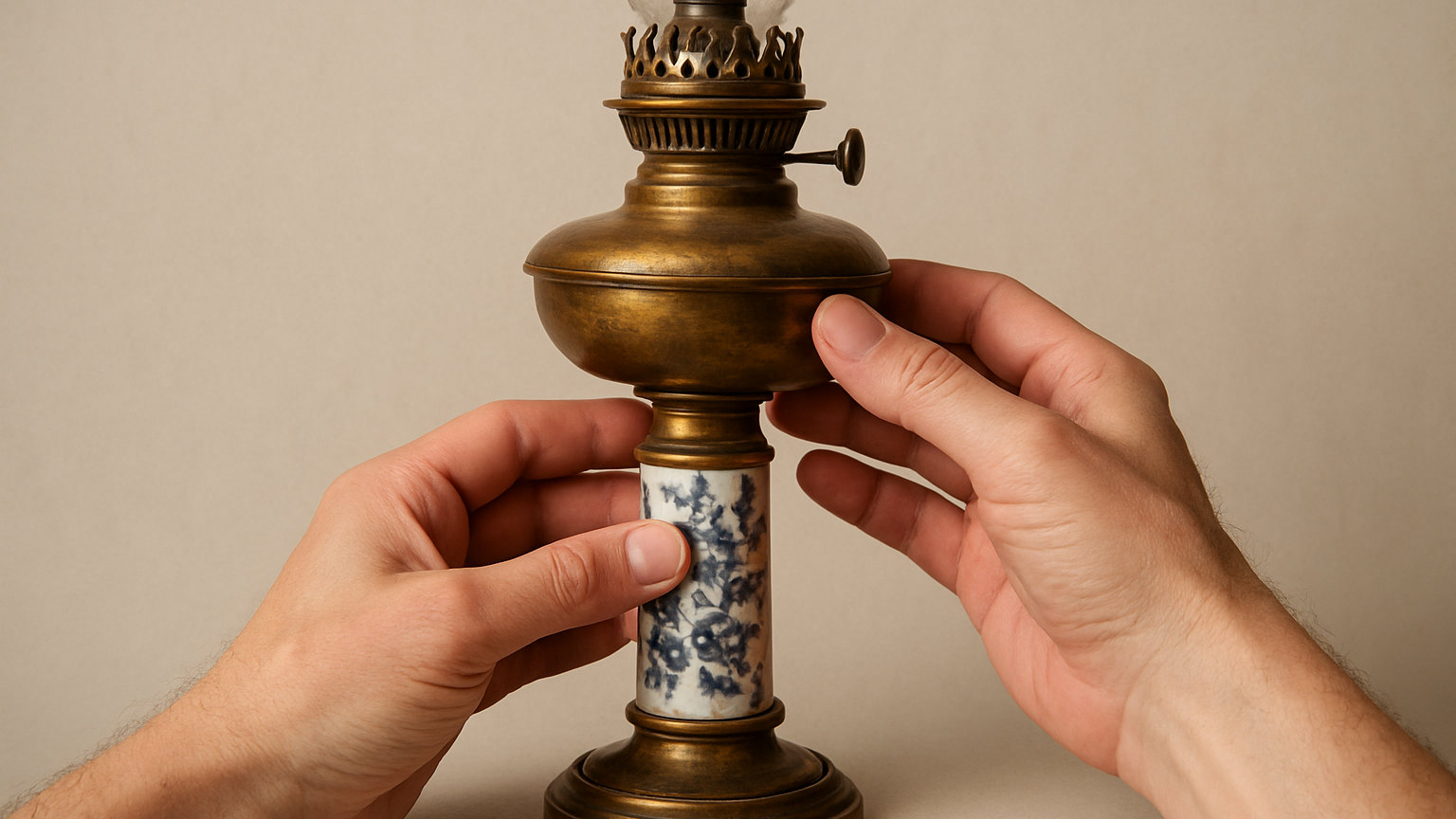
The reservoir or font holds the fuel and is the main decorative element, made in glass, ceramic, brass or a combination. The burner sits on top and carries the wick. The chimney is the glass tube that draws air through the flame, and the shade sits above or around it.
Shades and chimneys are the parts most often broken and replaced, since both are thin glass sitting directly above a flame. A lamp with its original matching shade is worth considerably more than one with a later substitute, and correct shades can be difficult to find.
Does conversion to electricity reduce value?
It depends entirely on what was done. A reversible conversion that leaves the original burner and font intact and simply passes a cable through an existing opening does little harm and may even help saleability.
A conversion that drilled a new hole through a ceramic or glass font, discarded the burner, or cut away original metalwork is destructive and does reduce value. Look underneath and inside for fresh drilling, and check whether the original burner is present even if it is no longer in use.
What condition problems should you look for?
Cracks and chips in glass fonts, particularly around the neck where the burner screws in, since that area is stressed by tightening. Hold the font up to the light and turn it slowly.
On ceramic lamps look for hairline cracks radiating from the mounting. On metal, check for splits at seams and for repairs using soft solder, which appears as a dull grey deposit. Corrosion inside a brass font from long standing fuel is common and often only cosmetic.
Are old lamps safe to use?
Not without work. Any antique electrical fitting must be rewired by a qualified electrician before it is connected, and every original flex should be treated as unsafe regardless of how sound it looks. Old rubber insulation perishes invisibly and old fittings have no earth.
Lamps still burning fuel need a sound font with no cracks, a correctly sized wick and the right chimney, and should never be left unattended. Some early lamps were designed for fuels that are far more volatile than modern paraffin, so never assume a lamp is safe with whatever is available today.
What about chandeliers and wall fittings?
Completeness drives the price. A chandelier missing drops, arms or pans loses value quickly, and matching replacements for cut glass drops are hard to source and expensive.
Count the arms and check they match each other in casting quality and wear. Weight matters practically as well as commercially, since a heavy fitting needs proper structural fixing rather than an ordinary ceiling rose. Take photographs and measurements before removing anything, because reassembly is far harder than it looks.
Where does the value sit in this market?
In quality, completeness and decorative appeal rather than in age alone. A handsome complete oil lamp with its original shade will outsell a plainer earlier one without.
Named makers and unusual designs attract premiums, as does anything in the more collected decorative styles. Ordinary paraffin lamps survive in large numbers and remain very affordable, which makes them one of the better entry points into collecting.